A practical guidance document outlining best practices for government procurement of data-driven technologies to improve transparency, accountability, and oversight.
On May 19, 2023, the Digital Benefits Network published a new, open dataset documenting authentication and identity proofing requirements across online SNAP, WIC, TANF, Medicaid, child care (CCAP) applications, and unemployment insurance applications.
This page includes data and observations about authentication and identity proofing steps specifically for online applications that include MAGI Medicaid.
This brief describes the TANF Data Collaborative (TDC), an innovative approach to increasing data analytics capacity at state Temporary Assistance for Needy Families (TANF) agencies.
This report details the development and deployment of My File, an open-source digital document management tool designed to help individuals securely store and share documents needed to access public services.
This field guide provides research-based design principles for creating clear, usable forms that help voters accurately complete election-related paperwork and successfully take action.
Minnesota is a good example of an organization that started small in its drive to integrate benefits programs. For instance, its recent statewide rollout of its online integrated benefit application website, MNbenefits.mn.gov, started as a pilot in 2020 with Code for America. The pilot encompassed two counties including Hennepin County, where Minneapolis is located. The pilot later expanded to four counties, then 16 and a tribal nation. The final roll out, which took 12 months to implement, included the state’s 87 counties and three tribal nations.
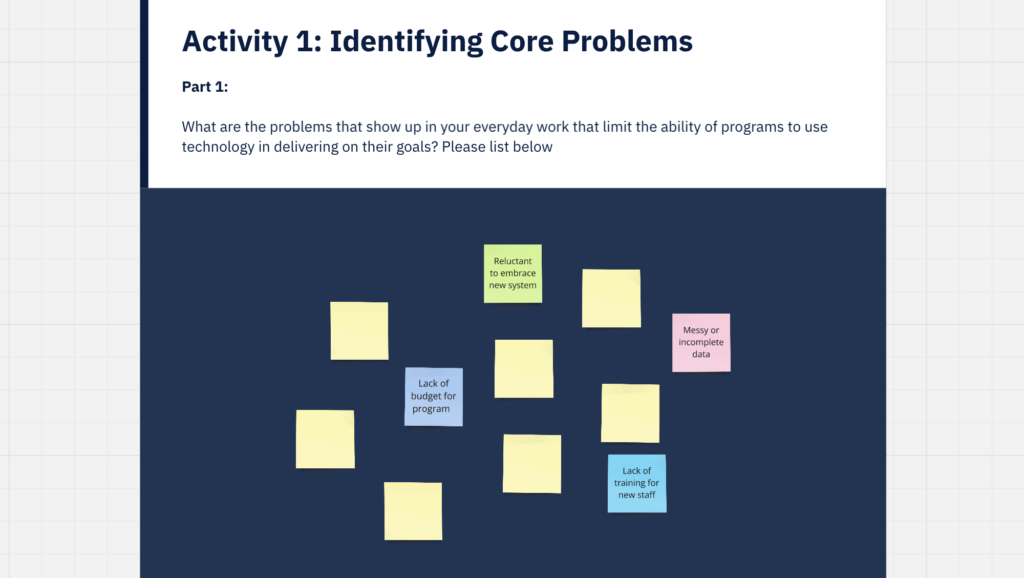
This workshop guide offers teams an opportunity to jointly work toward understanding core problems impacting digital delivery in their organization. The guide is structured in two parts: (1) a Miro template and (2) a Facilitation Guide.
This session from FormFest 2024 focused on how to help people get the assistance they need from the U.S. Department of Health and Human Services’ work on the Low Income Home Energy Assistance Program (LIHEAP) and the Maryland Social Services Administration’s work to improve welfare support for kinship caregivers.
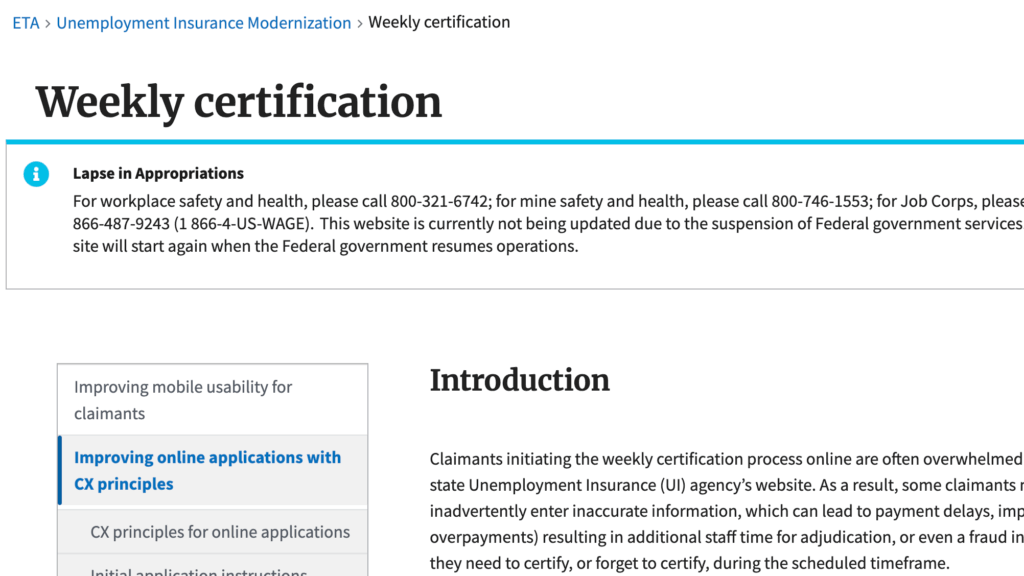
This resource provides guidance and best practices for the weekly or bi-weekly certification process that claimants must complete to maintain eligibility for unemployment insurance (UI) benefits.
The U.S. Department of Health and Human Services (HHS) announced it is rescinding prior blanket waivers that allowed discrimination based on religion, sexual orientation, and gender identity in taxpayer-funded programs.
U.S. Department of Health and Human Services (HHS)