This session from FormFest 2024 focuses on accessibility, featuring British Columbia’s work to improve legal form usability and tips from the Wisconsin Department of Public Instruction on making forms more accessible overall.
The report evaluates the feasibility, costs, taxpayer interest, and operational challenges of implementing an IRS-run free direct e-file tax return system, as required by the Inflation Reduction Act.
This paper concludes that the substantial COVID-19 unemployment insurance expansion had limited disincentive effects on job searches, particularly among lower-income individuals, despite high wage replacement rates.
This paper outlines the need for comprehensive reforms to improve the U.S. government's capacity to effectively implement policies, focusing on reducing bureaucratic inefficiencies, enhancing workforce structures, and leveraging digital infrastructure.
This issue brief describes the Pennsylvania case study, outlines the historical context, and offers strategies and recommendations for successfully implementing Fast Track.
This report examines how the U.S. federal government can enhance the efficiency and equity of benefit delivery by simplifying eligibility rules and using a Rules as Code approach for digital systems.
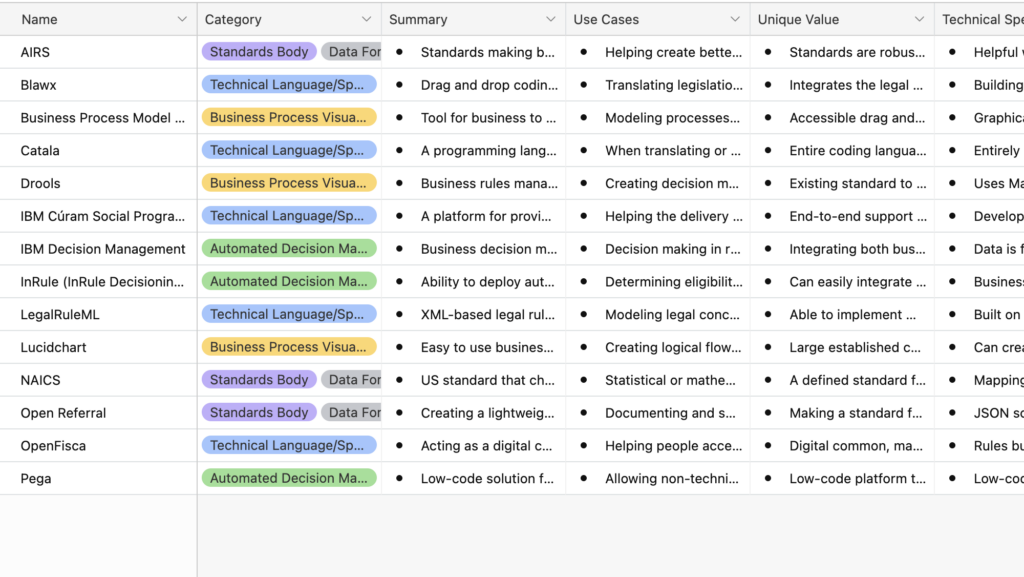
There are frameworks available that could inform the standardization of communicating rules as code for U.S. public benefits programs. The Airtable communicates the differences between the frameworks and tools. Each entry is tagged with different categories that identify the type of framework or tool it is.
In this video, Susan S. Gibson, chair of the Pandemic Response Accountability Committee's (PRAC) Identity Fraud and Redress Working Group, speaks with Jeremy Grant of the Better Identity Coalition, about the challenges of identity fraud for benefits program during the COVID-19 pandemic.