This memo provides guidance on conducting usability testing under the Paperwork Reduction Act (PRA), clarifying when PRA approval is required, and offering strategies for quickly implementing improvements based on usability feedback for federal forms and websites.
This review evaluates the UK public sector's use of digital technology, identifying successes and systemic challenges, and proposes reforms to enhance service delivery.
This design system accessibility checklist ensures that all components and design tokens meet or exceed the WCAG 2.1 AA standards, aligning fully with Government of Canada accessibility requirements.
Executed on March 28, 2024, this memorandum establishes new agency requirements and guidance for AI governance, innovation, and risk management, including through specific minimum risk management practices for uses of AI that impact the rights and safety of the public.
This brief outlines research recommendations to better understand and improve income support and employment services for low-income and at-risk LGBT populations.
U.S. Department of Health and Human Services (HHS)
This case study examines how Michigan’s Department of Health and Human Services uses data practices to advance racial equity in child welfare through identity-informed data collection and anonymous decision-making.
U.S. Department of Health and Human Services (HHS)
Executed April 3, 2025, this memo provides federal agencies with government-wide guidance for accelerating AI adoption through innovation, governance, and public trust.
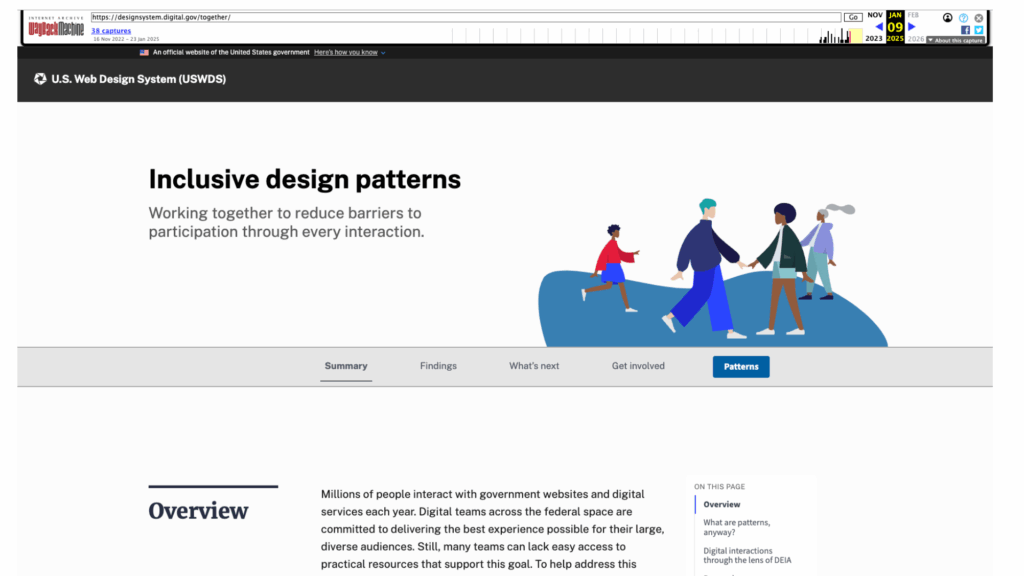
USWDS provides a new library of guidance and examples focused on key digital interactions that foster effective. inclusive, and equitable digital experiences.
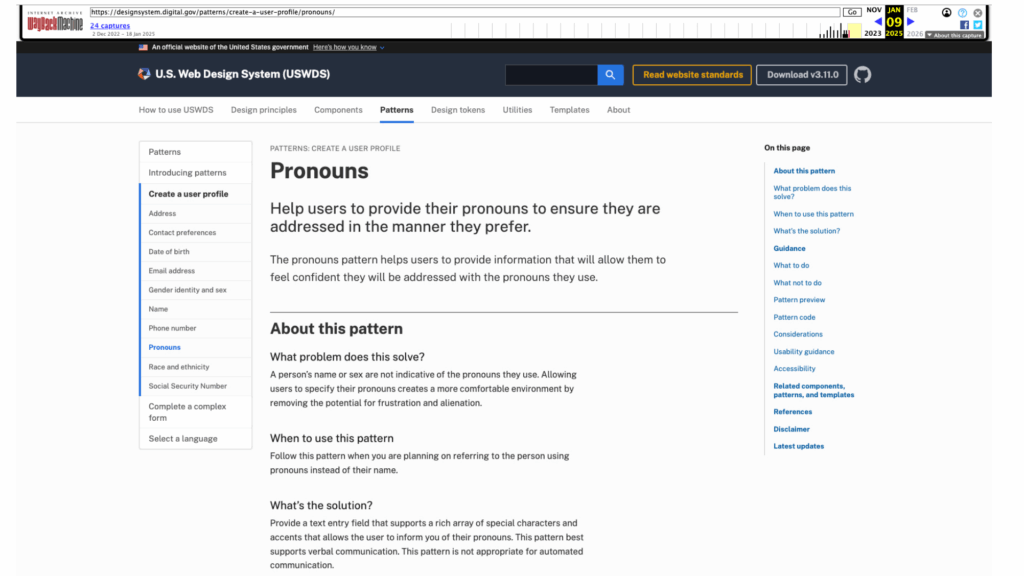
This page provides a U.S. Web Design System pattern for collecting pronoun information in user profiles in a way that respects identity, supports data standards, and promotes inclusion.
This report offers a detailed assessment of how AI and emerging technologies could impact the Social Security Administration’s disability benefits determinations, recommending guardrails and principles to protect applicant rights, mitigate bias, and promote fairness.
This guide introduces privacy-enhancing technologies (PETs) and provides practical guidance for government agencies on selecting and implementing them to securely use, share, and protect sensitive data.