This brief provides research recommendations to improve programs serving LGBT youth, focusing on homelessness and sexual health education services funded by the U.S. Department of Health and Human Services.
U.S. Department of Health and Human Services (HHS)
This case study examines how Michigan’s Department of Health and Human Services uses data practices to advance racial equity in child welfare through identity-informed data collection and anonymous decision-making.
U.S. Department of Health and Human Services (HHS)
Executed April 3, 2025, this memo provides federal agencies with government-wide guidance for accelerating AI adoption through innovation, governance, and public trust.
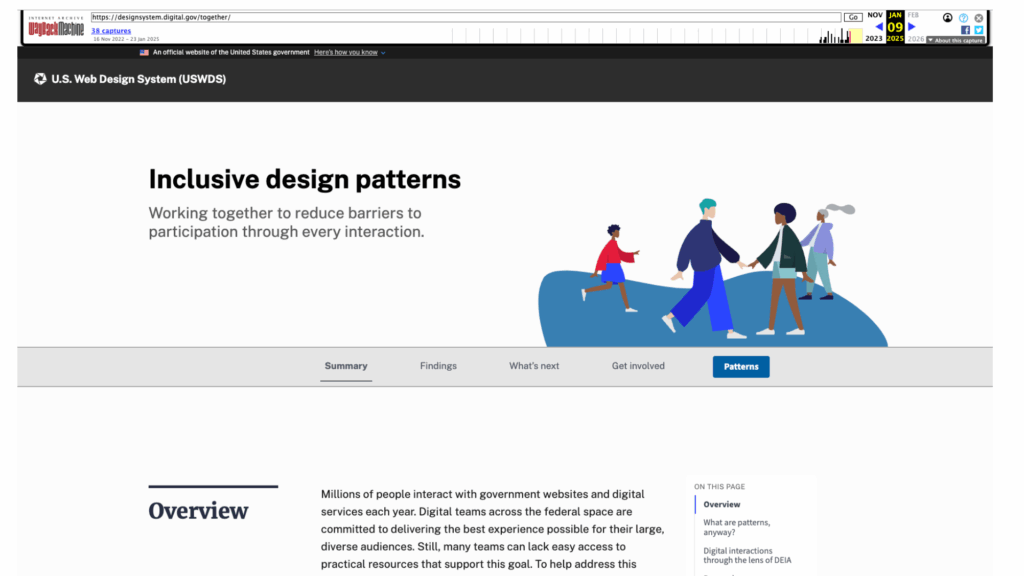
USWDS provides a new library of guidance and examples focused on key digital interactions that foster effective. inclusive, and equitable digital experiences.
Monthly SNAP participation data for the United States and every state, from October 1988 through the latest month published by USDA Food and Nutrition Service (generally a 3-month lag).
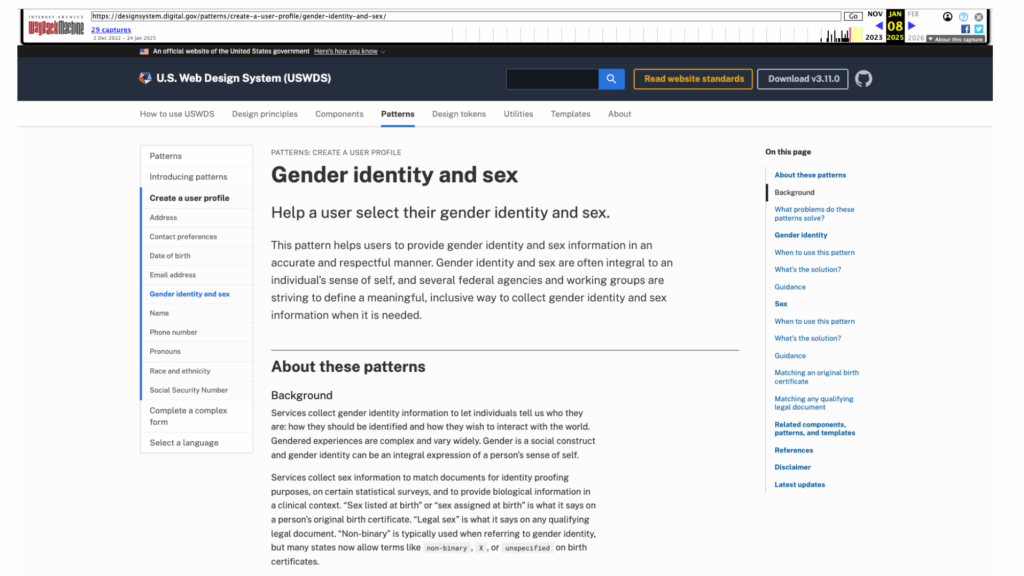
When creating a user profile, this U.S. Web Design System pattern helps users to provide gender identity and sex information in an accurate and respectful manner.
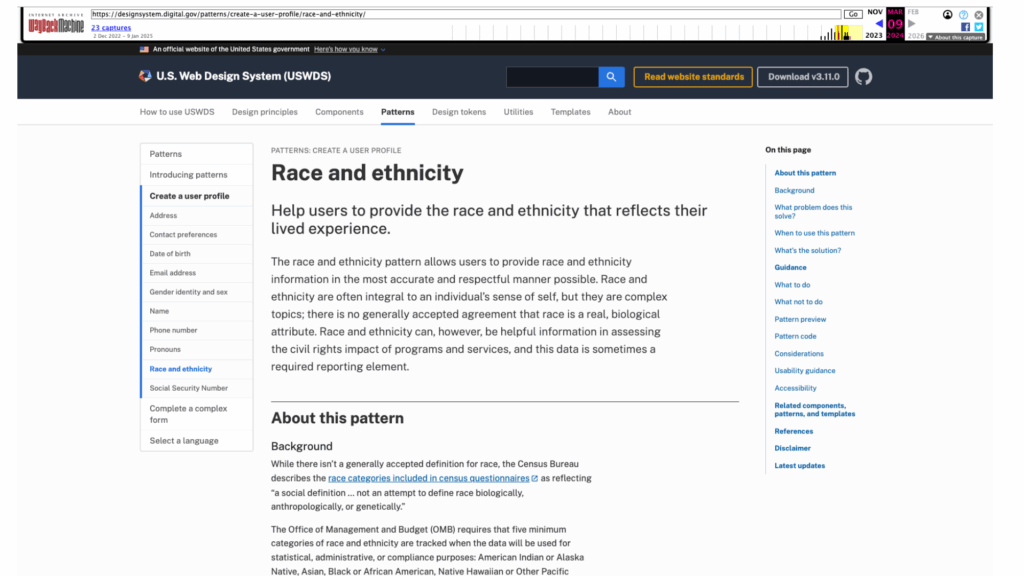
This page provides a U.S. Web Design System pattern for collecting race and ethnicity information in user profiles in a way that respects identity, supports data standards, and promotes inclusion.
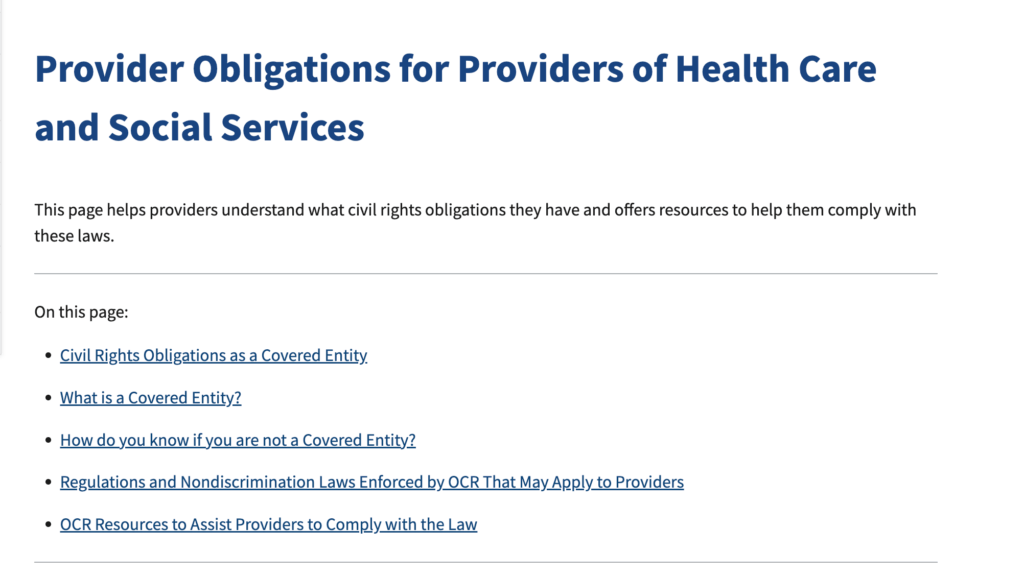
This web-page outlines the nondiscrimination and civil-rights obligations that health-care and social-services providers must meet if they receive HHS funding or act as covered entities.
U.S. Department of Health and Human Services (HHS)
This report highlights the agency's role in transforming federal digital services through human-centered design, agile technology, and cross-agency collaboration.