This report details the Department of Homeland Security’s progress in modernizing its digital services and websites to improve accessibility, usability, and customer experience, as mandated by federal law.
This report describes key elements of the American Rescue Plan Act and how it would reduce the projected poverty rate for 2021. Various projections regarding the effects of the policy are described in this report.
This memorandum provides guidance to agencies on how to design and deliver websites and digital services to the public and to assist agencies as they continue to implement the 21st Century Integrated Digital Experience Act1 (21st Century IDEA). It summarizes relevant statutory requirements, clarifies policy requirements, and expands best practices for agency websites and digital services.
Usability tests can help teams develop products that are user-centered, accessible, and inclusive. This guide will help you create a robust plan to promote a successful usability test.
In this panel conversation from the Better Identity Coalition’s 2022 policy forum, “Identity, Authentication, and the Road Ahead," representatives from industry and government discuss priorities for authentication and identity management.
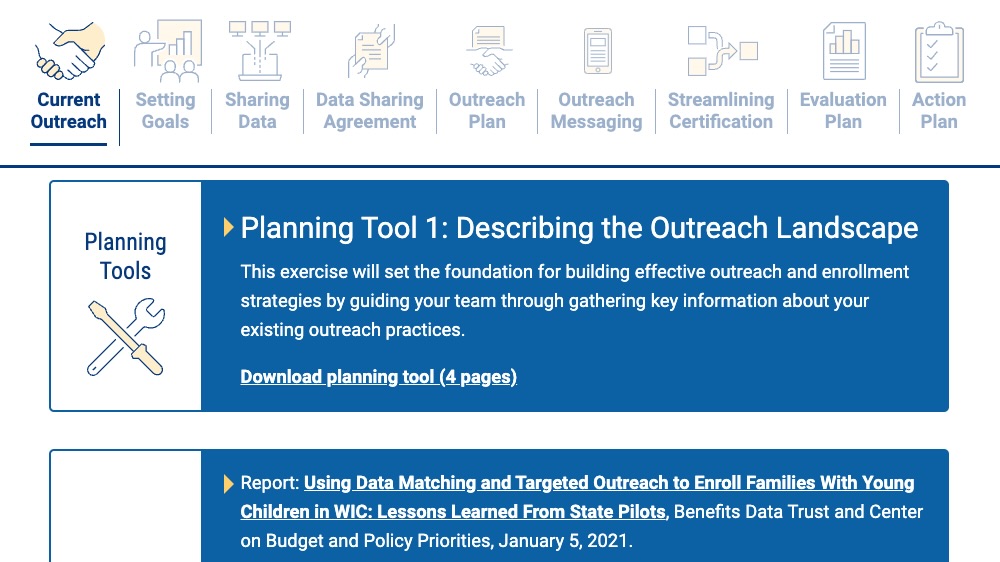
The toolkit provides strategies for state and local WIC agencies to enhance enrollment by utilizing data from Medicaid and SNAP for cross-program data matching and targeted outreach.
This session from FormFest 2024 focuses on accessibility, featuring British Columbia’s work to improve legal form usability and tips from the Wisconsin Department of Public Instruction on making forms more accessible overall.