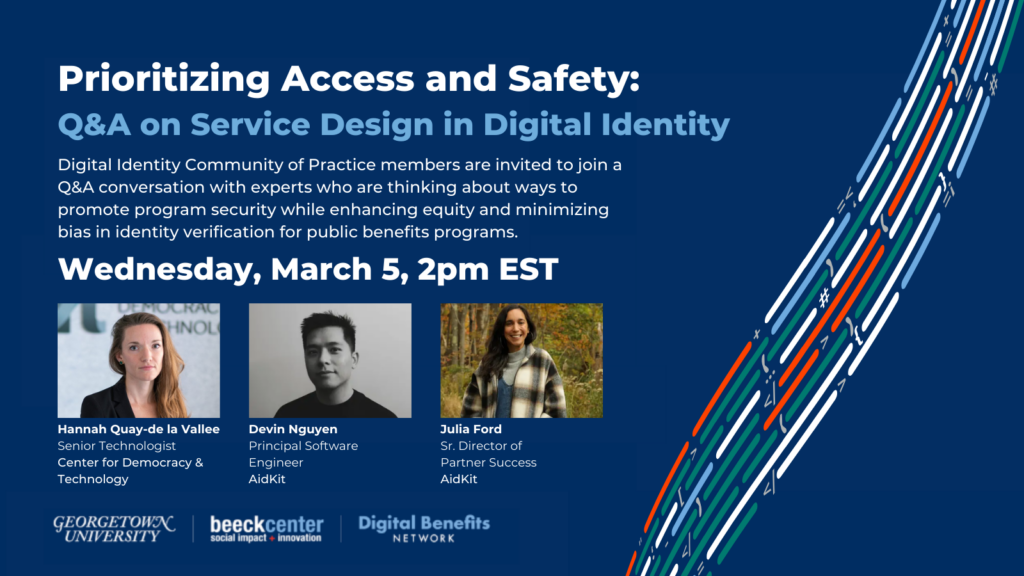
The Digital Benefit Network's Digital Identity Community of Practice held a session to hear considerations from civil rights technologists and human-centered design practitioners on ways to ensure program security while simultaneously promoting equity, enabling accessibility, and minimizing bias.
This resource introduces the "Layer Cake" approach, a framework for driving behavior change in government systems and public services by addressing all layers of service delivery, from frontline staff to policymakers, with an emphasis on human-centered design and civic participation.
In this brief, they present a definition of HCD that is applicable to the context of human services delivery, differentiate HCD from similar design and problem-solving approaches, and describe how HCD is being used in human services.
U.S. Department of Health and Human Services (HHS)
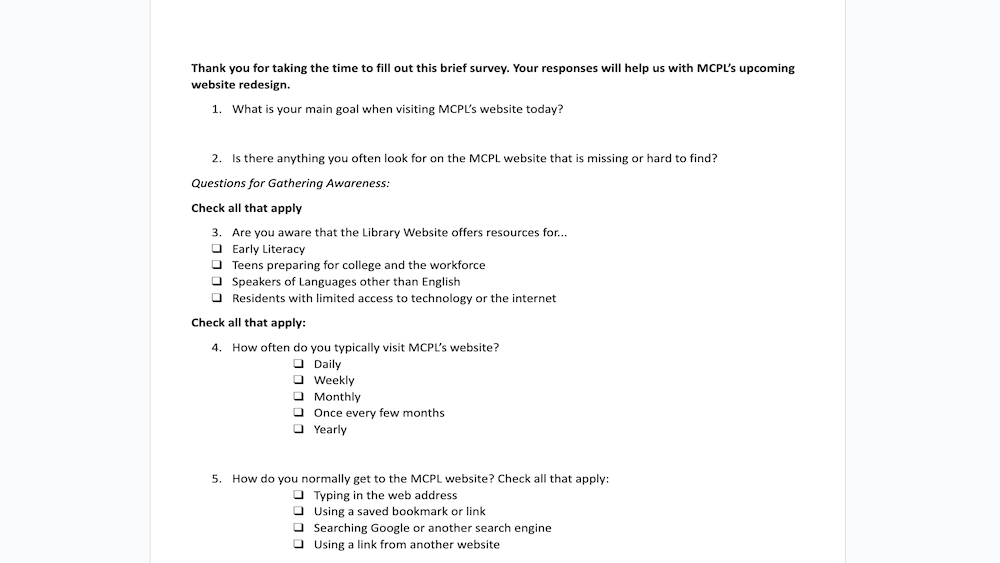
The folder for conducting user surveys for the Montgomery County Public Libraries website redesign includes materials such as Homepage Usability Questions and a comprehensive Website Survey. These tools are designed to gather user feedback on the homepage's functionality and overall website experience, helping inform improvements that align with user needs and expectations.
Montgomery County Public Library (MCPL) Digital Strategies Team
Through the ACCESS project, key collaborators have shared insights into current and future opportunities for alignment within their agencies, including potential enablers for and barriers to alignment activities.
American Public Human Services Association (APHSA)
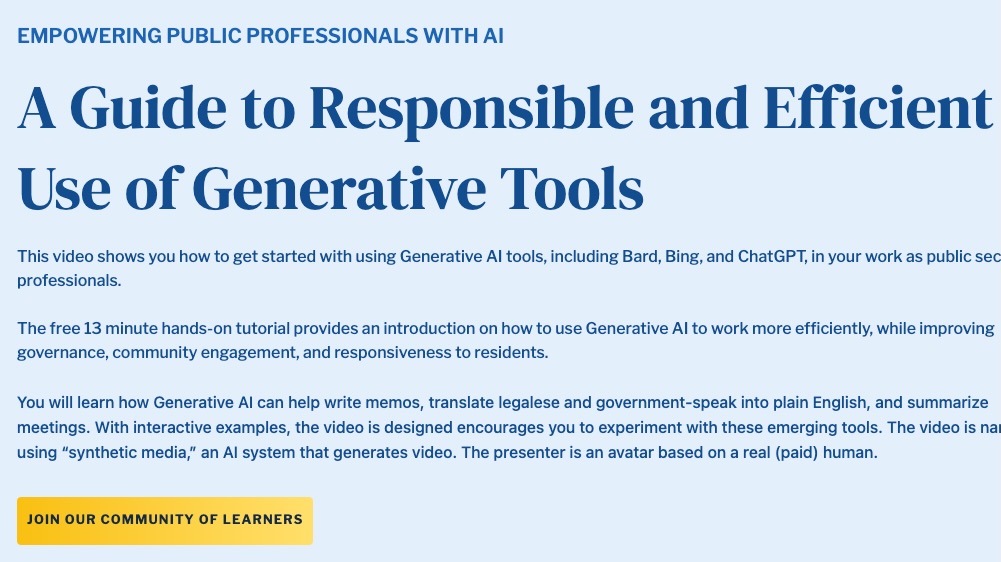
This video shows you how to get started with using Generative AI tools, including Bard, Bing, and ChatGPT, in your work as public sector professionals.
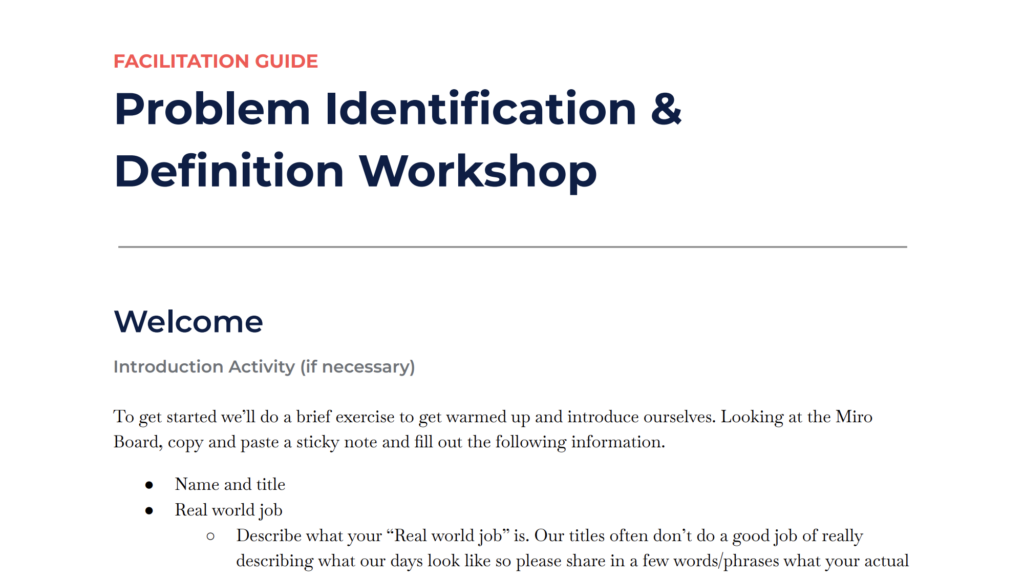
This workshop guide offers teams an opportunity to jointly work toward understanding core problems impacting digital delivery in their organization. The guide is structured in two parts: (1) a Miro template and (2) a Facilitation Guide.