This section of the Building Resilience plan outlines strategies to improve reemployment outcomes for unemployment insurance (UI) claimants by expanding access to services, updating work search requirements, and increasing use of Short-Time Compensation programs.
This article shares insights from Minnesota-based focus groups, revealing that low-income women navigating unemployment insurance often face confusion and uncertainty around eligibility, complex administrative processes, and additional challenges related to childcare, housing stability, and mistrust of benefit systems.
This report investigates how D.C. government agencies use automated decision-making (ADM) systems and highlights their risks to privacy, fairness, and accountability in public services.
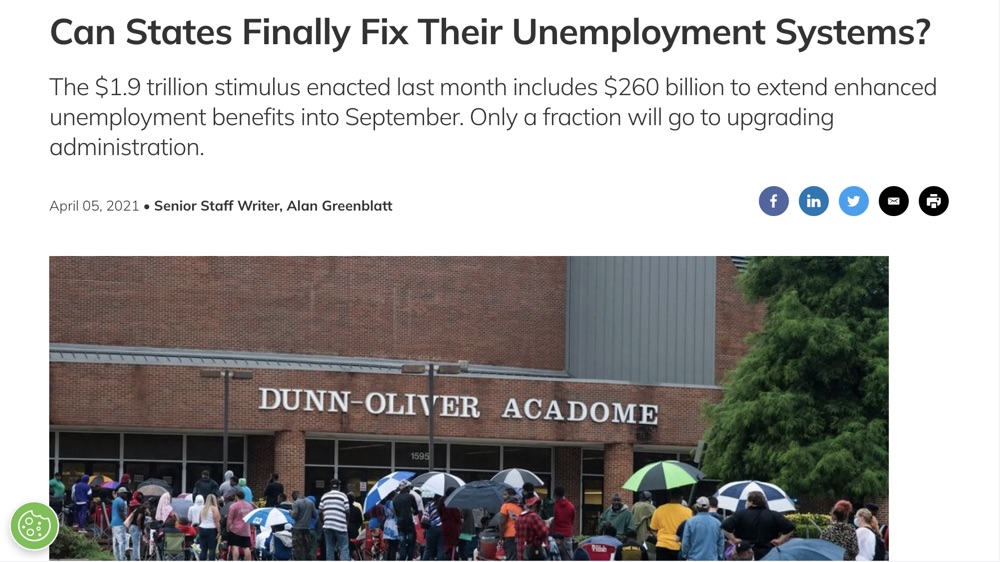
This article explores ongoing efforts to modernize state unemployment insurance (UI) systems, addressing long-standing inefficiencies and challenges exposed by the COVID-19 pandemic.
This piece highlights promising design patterns for account creation and identity proofing in public benefits applications. The publication also identifies areas where additional evidence, resources, and coordinated federal guidance may help support equitable implementations of authentication and identity proofing, enabling agencies to balance access and security.
Research from the Department of Labor shows that document management systems reduce barriers for claimants and help states be more efficient. With additional improvements and investment, these systems can be even more effective in serving the public and reducing backlogs in times of crisis.
This report details findings and lessons from a project to develop a calculator to help people anticipate how a change in earnings from employment would affect their net income and information on their estimated effective marginal tax rate.
U.S. Department of Health and Human Services (HHS)
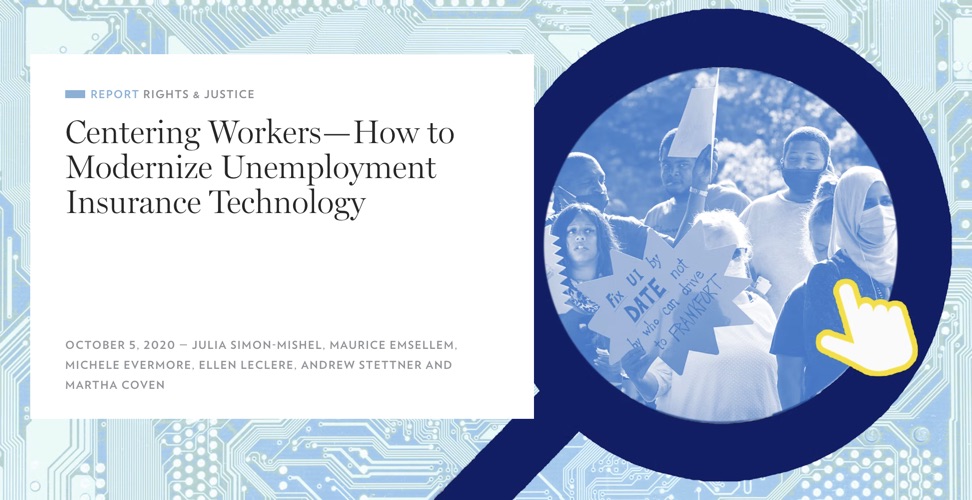
This report outlines how modernizing unemployment insurance (UI) technology with a worker-centered approach can improve access, efficiency, and equity in the UI system.
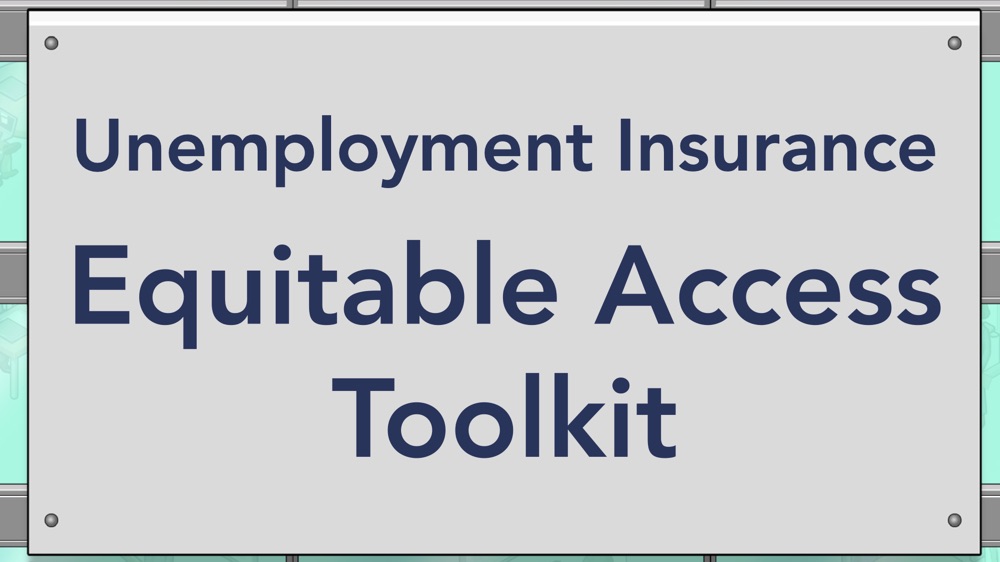
The Unemployment Insurance Equitable Access Toolkit contains common equity recommendations, promising practices, and insights, represented visually as a different floor of an agency office building, compiled in one interactive document.
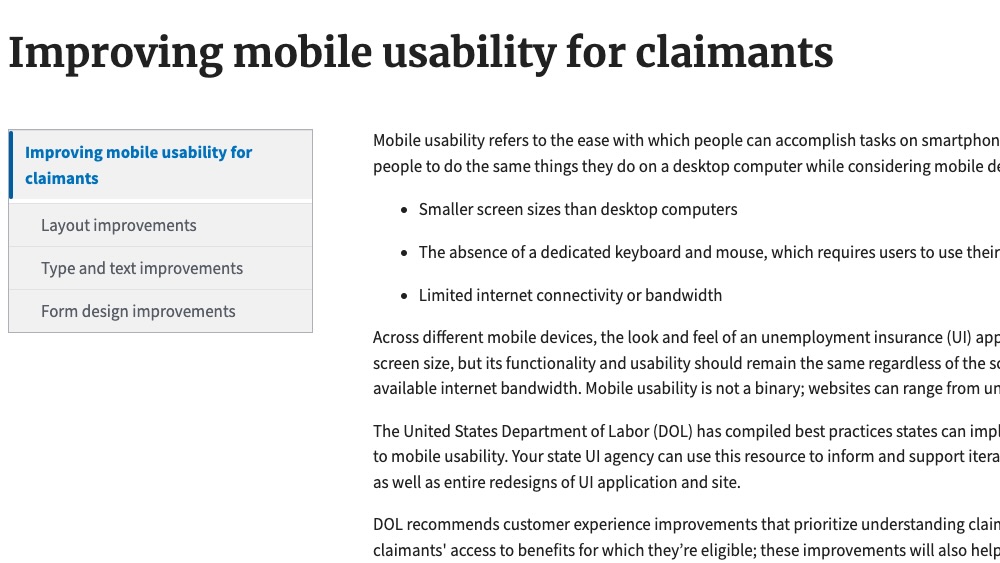
This webpage from the U.S. Department of Labor (DOL) provides guidance on improving mobile usability for Unemployment Insurance (UI) systems to enhance customer experience and accessibility.
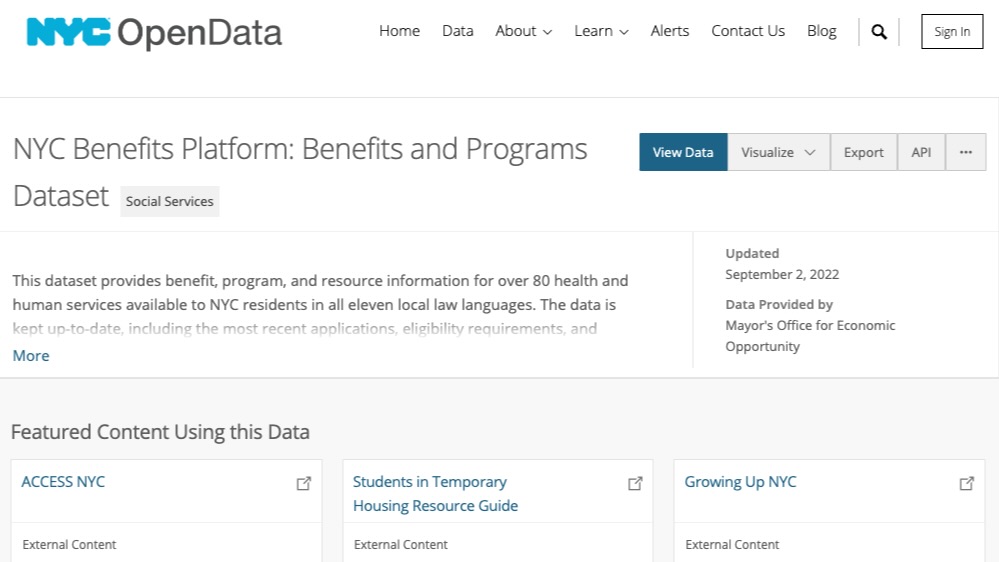
Data provided by the NYC Mayor’s Office for Economic Opportunity regarding benefit, program, and resource information for over 80 health and human services available to NYC residents in all eleven local law languages.