In this report, the U.S. Chamber of Commerce Foundation examines benefits cliffs – the loss of eligibility for public safety-net programs and benefits they provide as income rises above eligibility limits.
The Policy2Code Prototyping Challenge explored utilizing generative AI technology to translate U.S. government policies for public benefits into plain language and code, culminating in a Demo Day where twelve teams showcased their projects for feedback and evaluation.
This report explores how public benefit systems can better support young adults by addressing the barriers they face in accessing and maintaining vital services like SNAP, Medicaid, and WIC.
This resource provides guidance on streamlining enrollment across public benefit programs to improve efficiency, reduce administrative burdens, and enhance access for eligible individuals and families.
This guide provides practical insights for benefits administrators on redesigning benefits systems using human-centered design to ensure all eligible residents can access crucial social safety net resources.
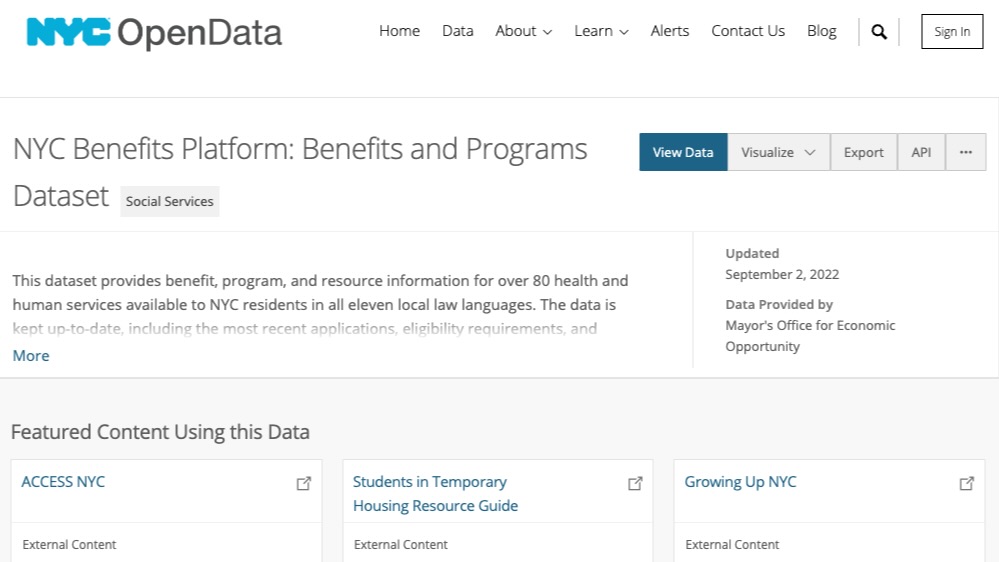
Data provided by the NYC Mayor’s Office for Economic Opportunity regarding benefit, program, and resource information for over 80 health and human services available to NYC residents in all eleven local law languages.
This article examines how Chile’s SUSESO is balancing cost-focused procurement criteria with ethical AI concerns in its medical claims automation process.
The Advancing Economic Mobility for Low-Income Families report, published by the National Governors Association (NGA) Center for Best Practices, provides policy options for governors to strengthen economic security, workforce participation, and wealth-building opportunities for low-income families.
This Urban Institute report examines how public investments in children's health, education, and welfare yield significant short- and long-term benefits for both individuals and society.