A modernized public benefits system would better serve program participants, administrators, policy makers, and taxpayers. This paper proposes a set of principles both define the desired future state and outline the values that shape decision making along the way. Practices describe the processes needed to achieve modernization.
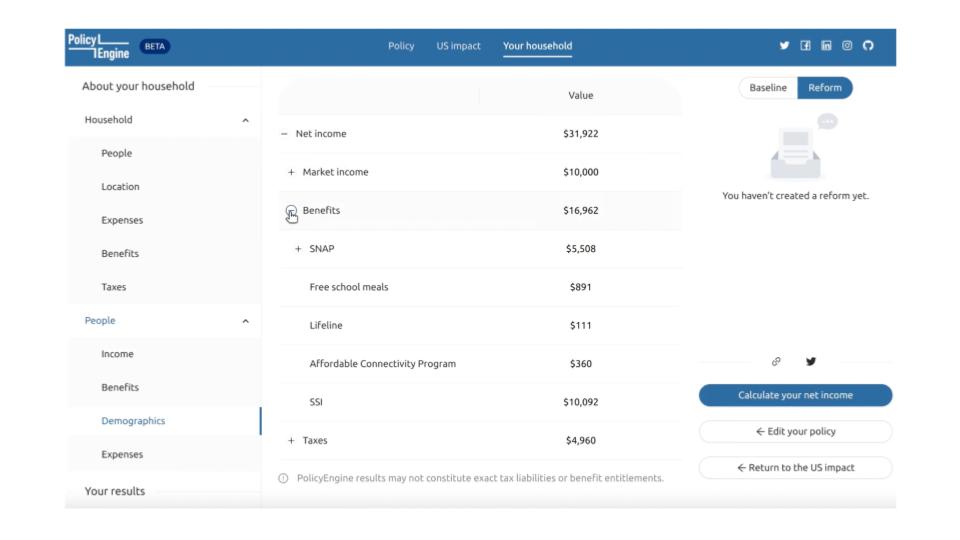
PolicyEngine is a nonprofit that provides a free, open-source web app enabling users in the US and UK to estimate taxes and benefits at the household level, while also simulating the effects of policy changes. By combining tax and benefits data, PolicyEngine helps individuals and policymakers better understand the impacts of existing policies and proposed reforms, using microsimulation models built from legislation and enhanced survey data.
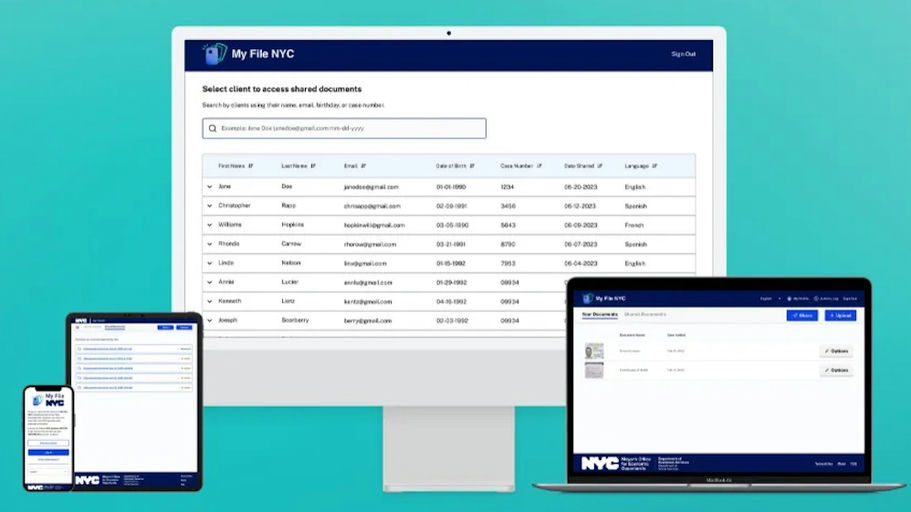
My File NYC is a document storage and sharing website that provides New York City residents a safe place to store and share vital documents when applying for City services.
This Urban Institute report examines how public investments in children's health, education, and welfare yield significant short- and long-term benefits for both individuals and society.
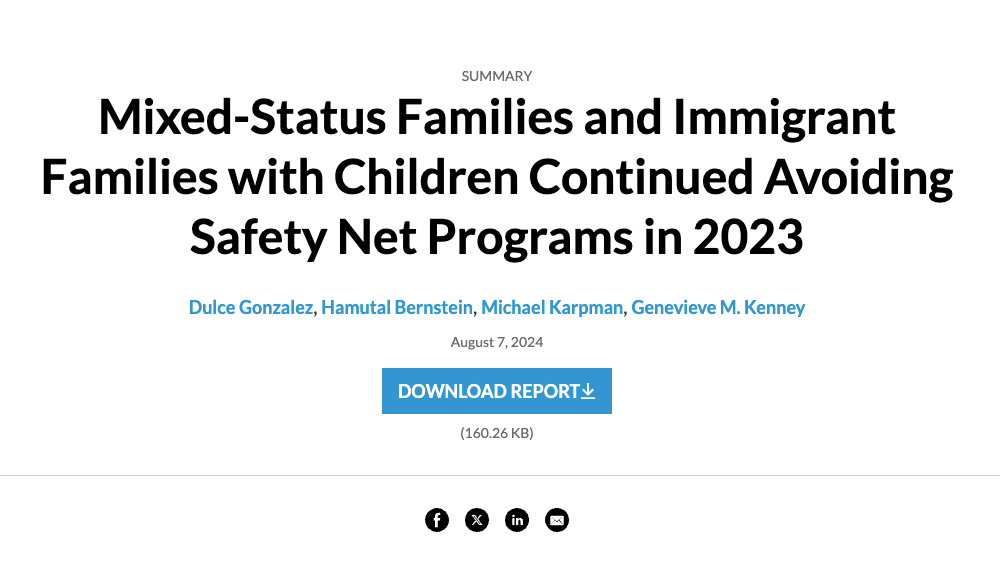
This Urban Institute report highlights how immigrant and mixed-status families continued to avoid safety net programs in 2023 due to lingering fears around the public charge rule.
Millions in government benefits go unclaimed annually due to complex applications and lack of awareness. Simplifying processes, targeted outreach, and streamlined support can increase accessibility and ensure eligible individuals receive assistance.
In this summary, the authors use WBNS data to provide updated estimates of chilling effects in 2023 among immigrant families (i.e., in which the respondent or a family member living with them was not born in the US).
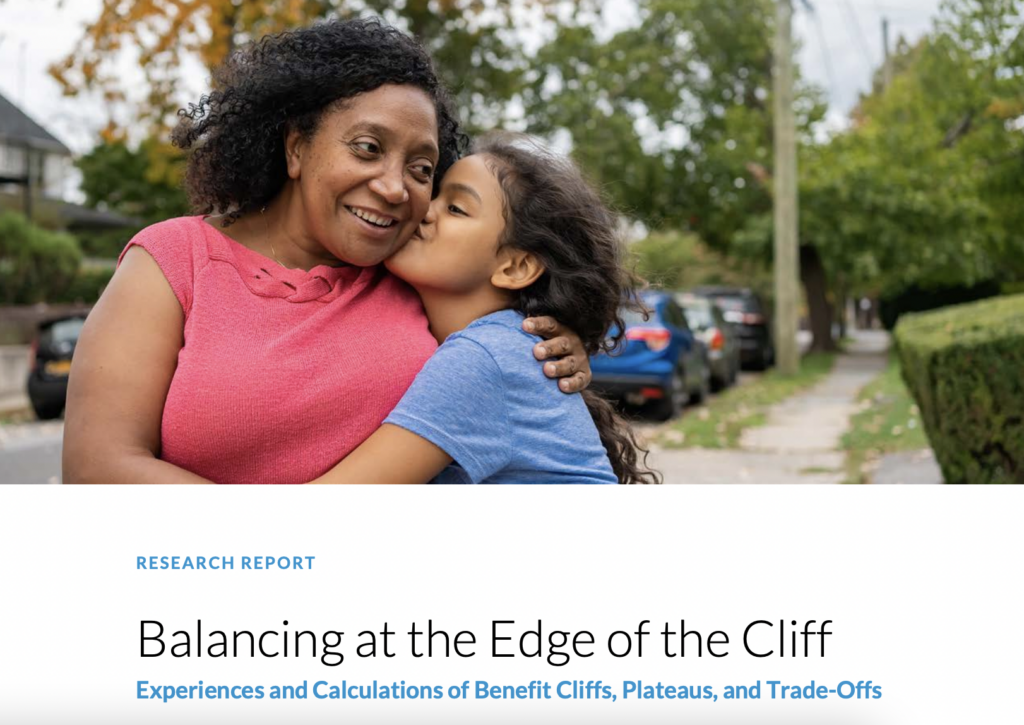
This Urban Institute report explores the impact of benefit cliffs, plateaus, and trade-offs on families receiving public assistance, examining how changes in earnings affect access to essential benefits like SNAP, Medicaid, and housing subsidies.
This report summarizes progress made with agencies and members of the public to identify and reduce burdens that individuals, families, and small businesses face every day when interacting with government programs.
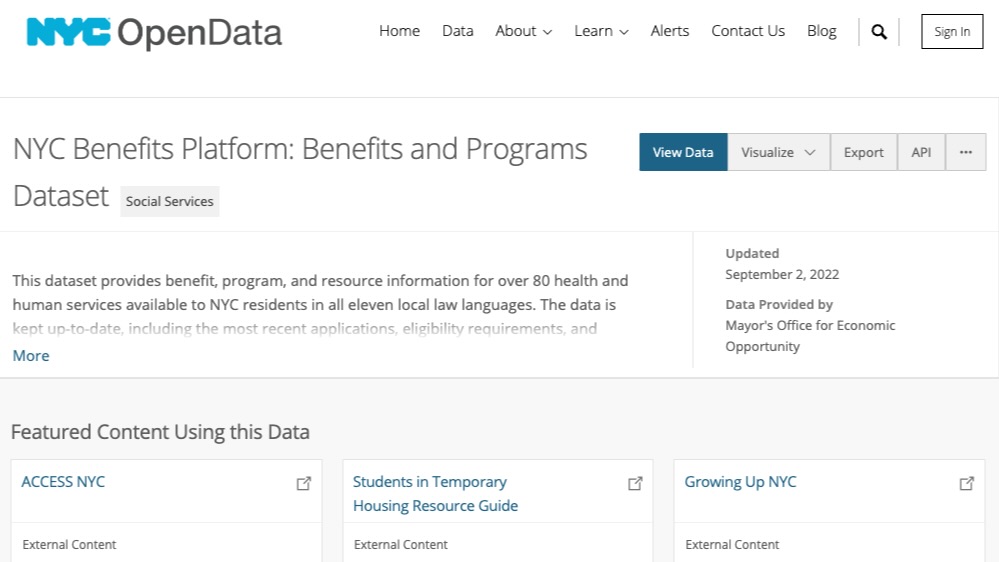
Data provided by the NYC Mayor’s Office for Economic Opportunity regarding benefit, program, and resource information for over 80 health and human services available to NYC residents in all eleven local law languages.