Code for America describes its work building the P-EBT online application and the consulting it provided to 10 states regarding implementing the program in a quick, effective, and human-centered way. Despite herculean efforts among human services and education agencies to get P-EBT off the ground, there were a few key technological, operational, and logistical barriers that consistently got in the way and hampered a smooth rollout of the program across the country.
In response to the COVID-19 crisis, the federal government authorized a new emergency program, Pandemic EBT (P-EBT), to replace school meals with money for groceries while schools are closed. Code for America describes its efforts to launch an accessible, online P-EBT application under an accelerated timeline due to to immense demand caused by the pandemic.
The Center on Budget and Policy Priorities (CBPP) report highlights the disproportionate hardships faced by Black and Latina mothers during the COVID-19 pandemic, exacerbated by systemic inequities.
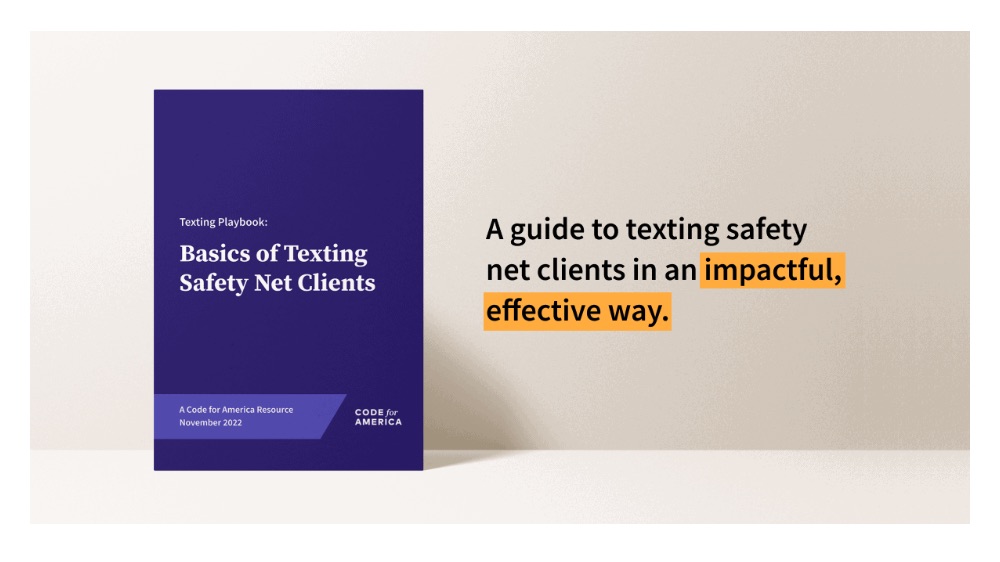
The Texting Playbook provides guidance and well-researched strategies to help state agencies implement texting in support of Medicaid, SNAP, WIC, and other benefits programs. It provides an overview of how to start texting clients; the types of messages to send, including real examples; Federal Communications Commision (FCC) policy guidance; how to encourage opt-ins and collect consent; how to avoid coming across as spam; and a cost analysis of texting.
A guide by New America to help cities and states set up cash assistance programs for their residents, based on the Alia Cares platform that the National Domestic Workers Alliance built to run their Coronavirus Cares Fund that provides emergency assistance for home care workers to support them in staying safe and at home to slow the spread of COVID.
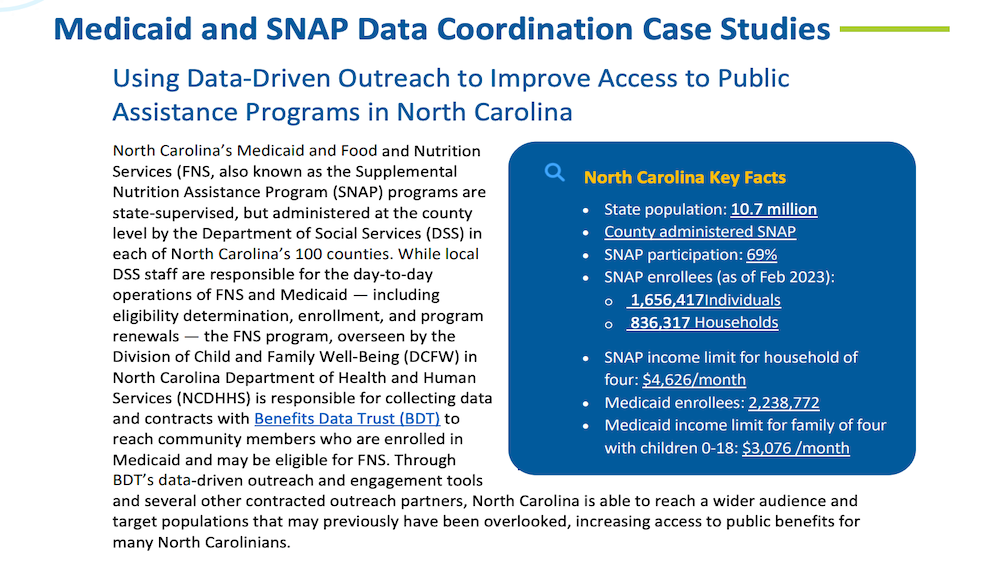
This case study series highlights innovative state strategies to improve data coordination between SNAP and Medicaid agencies and increase access for eligible people.
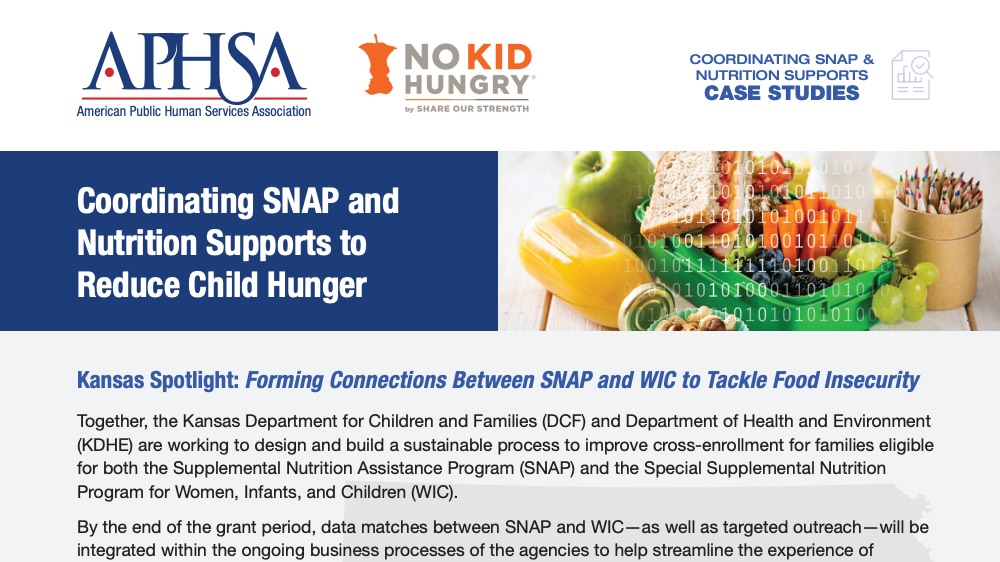
Together, the Kansas Department for Children and Families (DCF) and Department of Health and Environment (KDHE) are working to design and build a sustainable process to improve cross-enrollment for families eligible for both the Supplemental Nutrition Assistance Program (SNAP) and the Special Supplemental Nutrition Program for Women, Infants, and Children (WIC). This report outlines how Kansas will integrate data matches between SNAP and WIC—as well as targeted outreach— within the ongoing business processes of the agencies to help streamline the experience of accessing nutrition supports for clients. These functions will contribute to the agencies’ shared goal of reducing rates of food insecurity in Kansas.
American Public Human Services Association (APHSA)
Code for America offers government agencies a general overview of getting started with implementing text messaging services for clear, responsive communication during the COVID-19 pandemic.
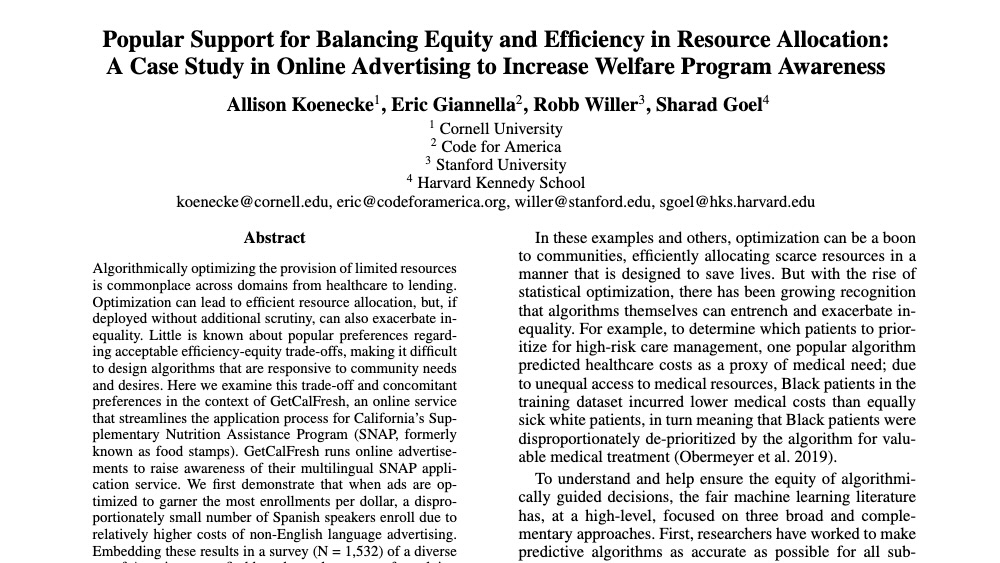
This study examines public attitudes toward balancing equity and efficiency in algorithmic resource allocation, using online advertising for SNAP enrollment as a case study.