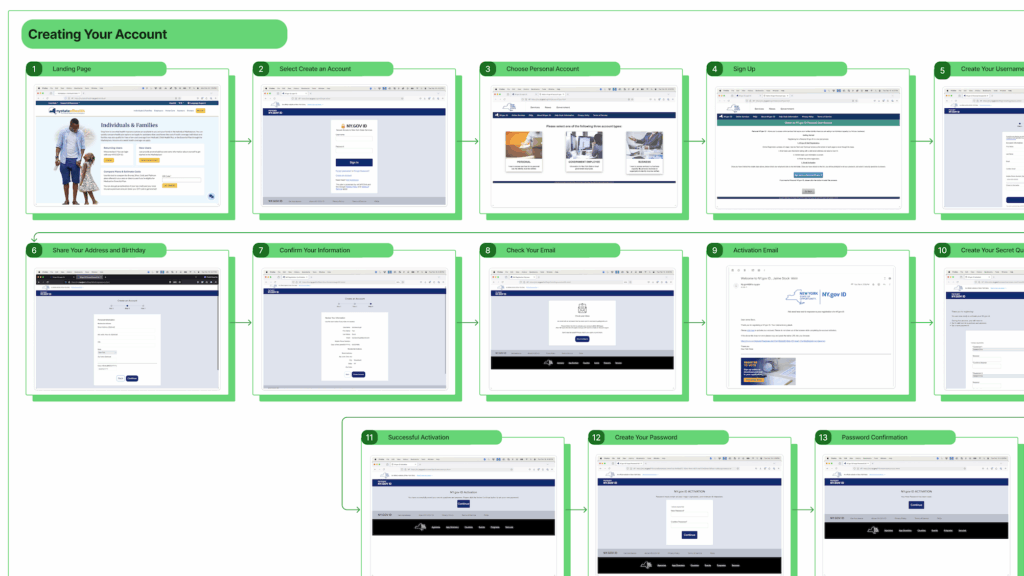
Created for use in the Digital Doorways research project, this design stimuli shows the steps of submitting an application, sharing personal information, and verifying identity for New York's online application for Medicaid.
Provides state and local Special Supplemental Nutrition Program for Women, Infants, and Children (WIC) agencies with a practical guide for developing or improving online WIC application systems.
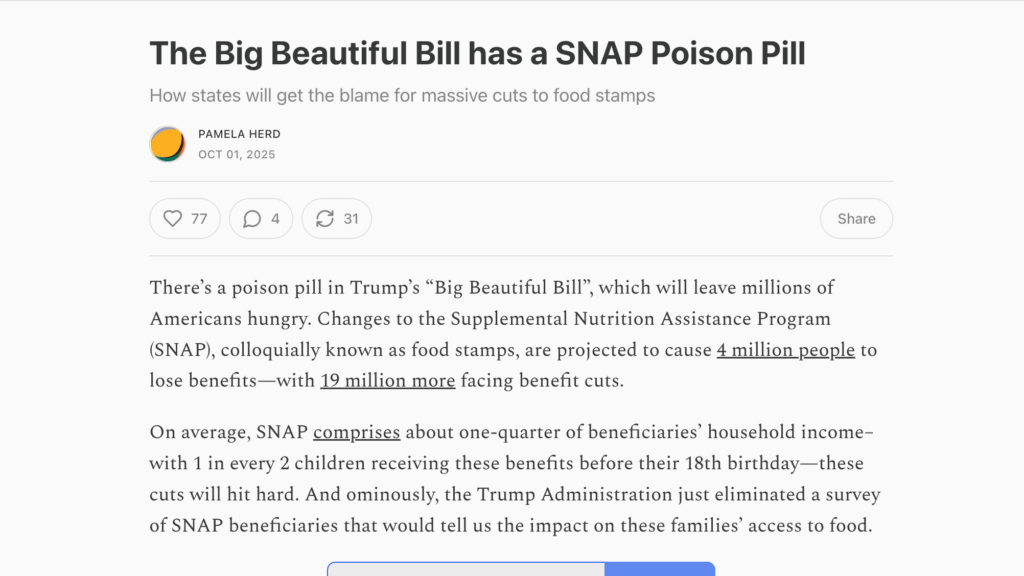
This blog discusses how the “Big Beautiful Bill” (H.R. 1) contains provisions that undermine SNAP and warns that states will be burdened by its fiscal and administrative impact.
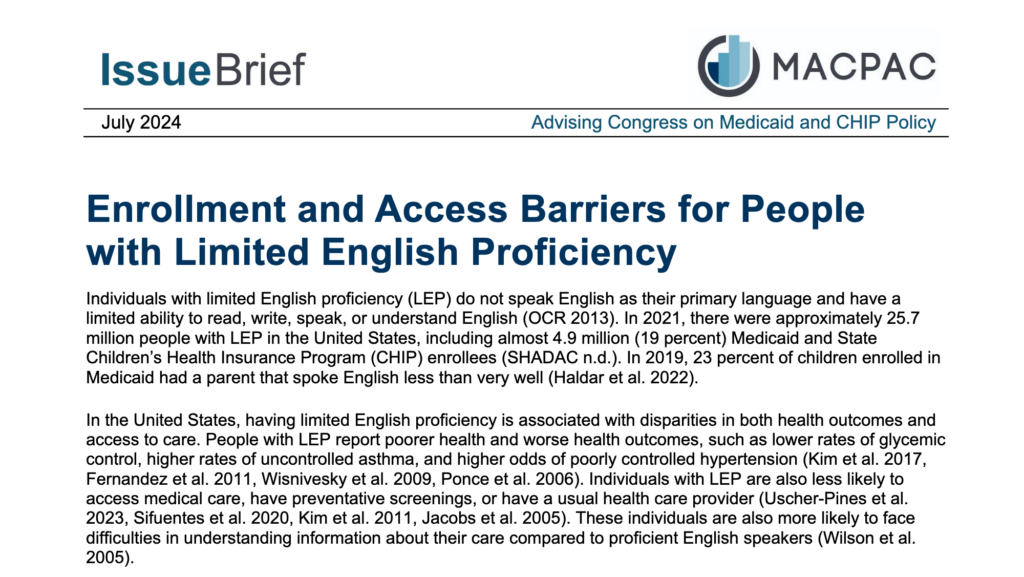
This issue brief examines how limited English proficiency creates barriers to enrolling in and accessing Medicaid and CHIP, and how states provide language access services to address these challenges.
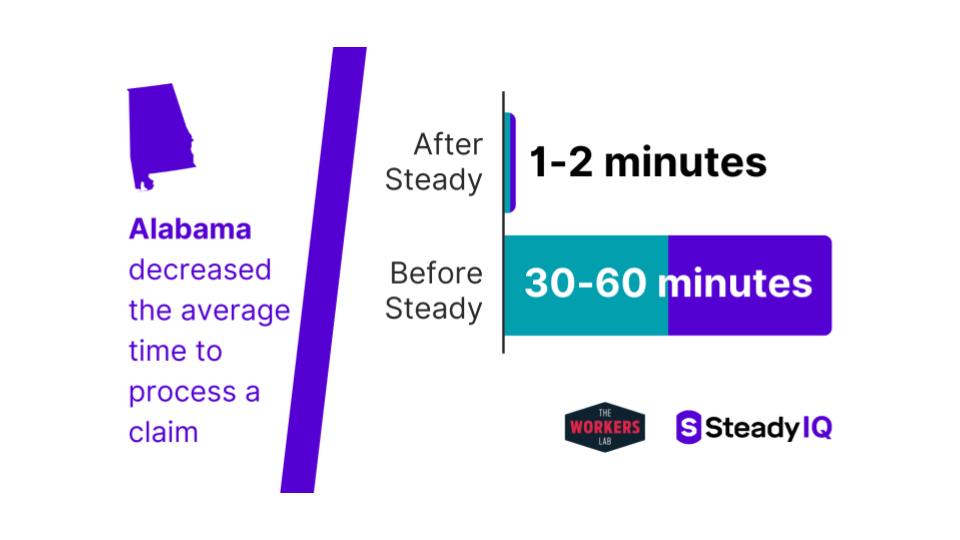
In response to COVID-19, the Workers Lab and Steady developed the "Income Passport" to streamline gig workers' unemployment benefit applications by pulling income data directly from gig platforms and financial accounts. This tool reduced manual verification time, helped prevent fraud, and improved workers' access to full benefits, with successful tests in Alabama and Louisiana demonstrating significant time savings and improved service delivery.
Building modular, open-source, human-centered software is necessary to create equitable government services fit for the digital age. Nava emphasizes addressing large scale digital service challenges by building and releasing small, modular software components that are loosely-coupled by well-defined APIs. This enables agencies to quickly and conistently deliver services that help people immediately, whilst also building a flexible foundation for long-term technical evolution.
Implementing an API standard for WIC Management Information Systems (MIS) would enable seamless integration of digital tools, enhancing service delivery and accessibility for participants and staff.
Demand for public benefits is rising in response to continued economic pressure on vulnerable people, in addition to changes in eligibility rules for some safety net programs. This report summarizes existing benefits access efforts, studies the successes and challenges of benefits expansion efforts through a subset of in-depth case studies, and analyzes the potential for sustaining, expanding, and replicating successful efforts.
Office of the Assistant Secretary for Planning and Evaluation (ASPE)
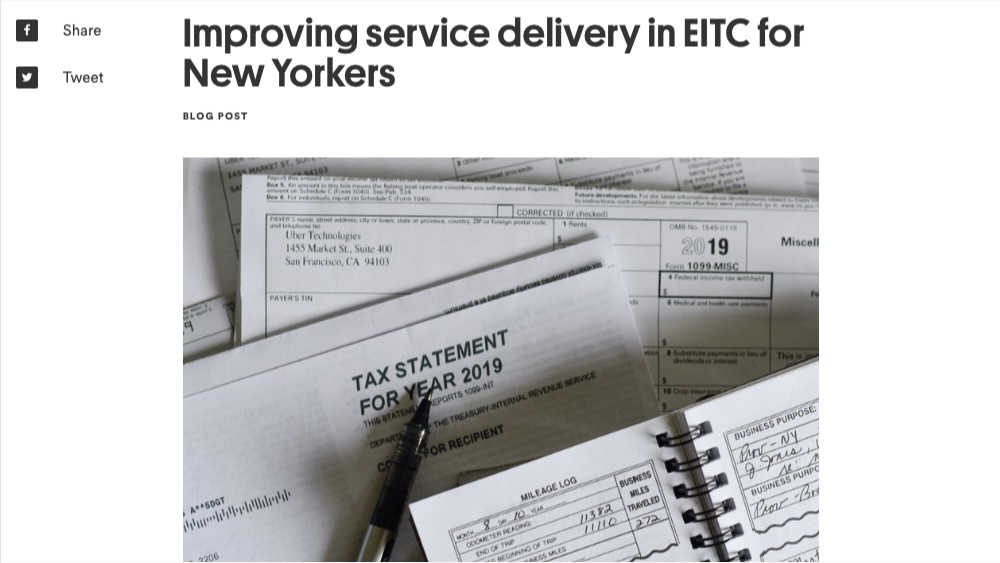
The Improving Service Delivery in EITC for New Yorkers initiative explores ways to enhance access to the Earned Income Tax Credit (EITC) through improved outreach, application processes, and service delivery.
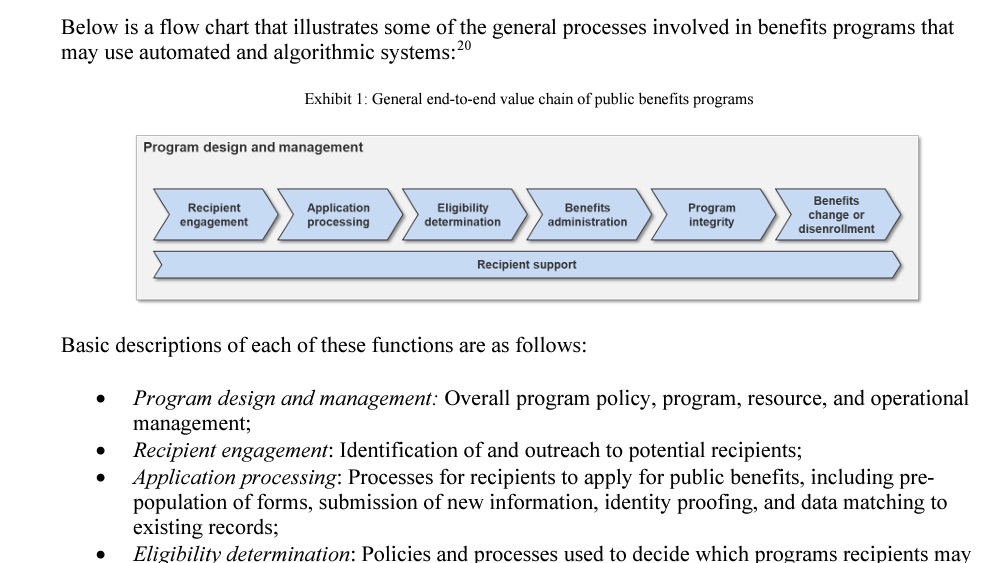
This plan promotes responsible AI use in public benefits administration by state, local, tribal, and territorial governments, aiming to enhance program effectiveness and efficiency while meeting recipient needs.
U.S. Department of Health and Human Services (HHS)
This playbook is designed to help government and other key sectors use data sharing to illuminate who is not accessing benefits, connect under-enrolled populations to vital assistance, and make the benefits system more efficient for agencies and participants alike.