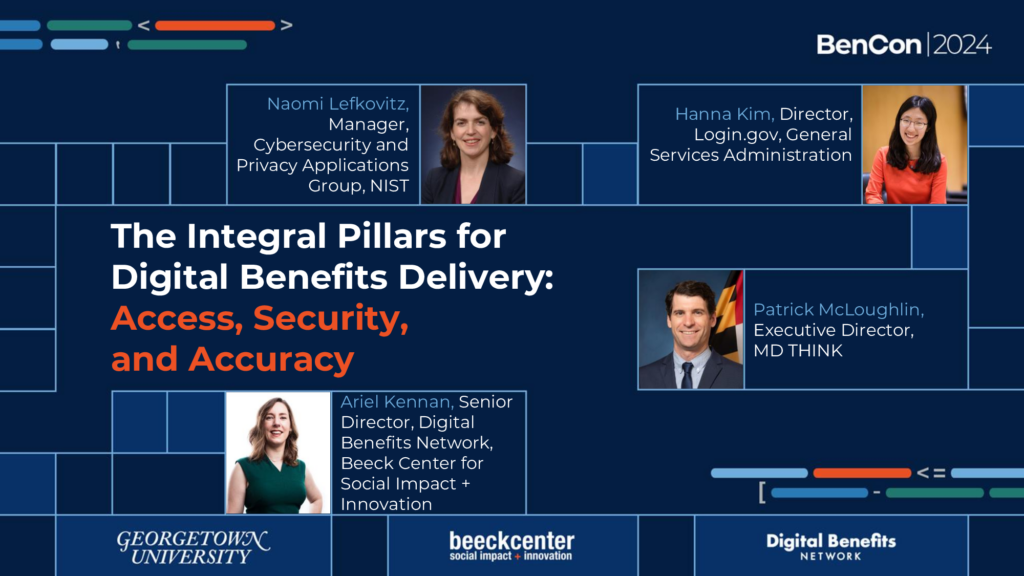
A recap of the two-day conference focused on charting the course to excellence in digital benefits delivery hosted at Georgetown University and online.
Government leaders discuss how to ensure seamless access to public benefits through breaking down silos, user-friendly digital identities, and privacy-focused security measures.
This page includes data and observations about account creation and identity proofing steps specifically for online applications that include MAGI Medicaid.
Digitizing public benefits policy will make the biggest impact for administrators and Americans, but only if it happens at the highest level of government.
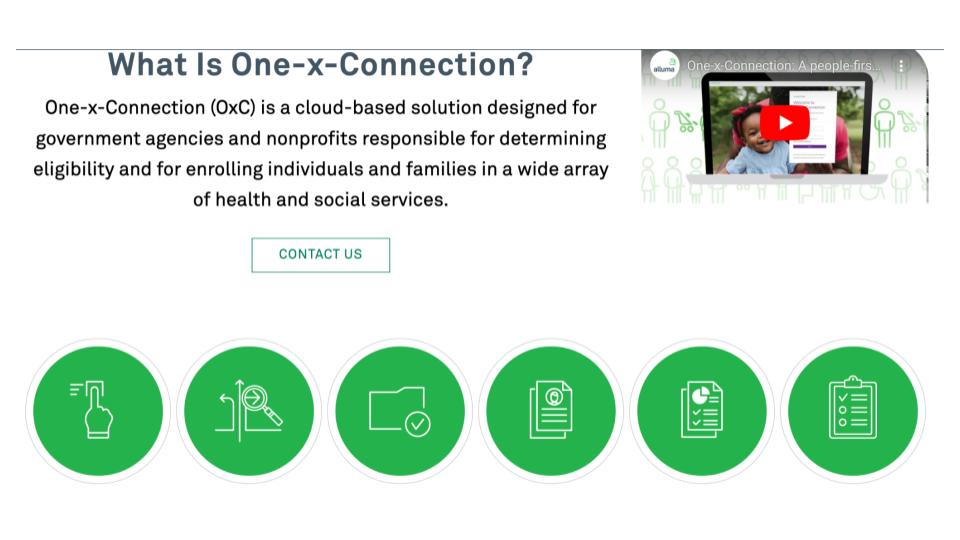
Alluma is a nonprofit that provides digital solutions to simplify eligibility screening and enrollment for social benefit programs, supporting cross-benefit access in 45 counties and two states. Their One-x-Connection product suite streamlines Medicaid and SNAP applications using a business rules engine, with a focus on human-centered design and anonymous, simplified eligibility checks, having helped screen over 10 million individuals and submitted over 67 million applications.
This is the summary version of a report that documents four experiments exploring if AI can be used to expedite the translation of SNAP and Medicaid policies into software code for implementation in public benefits eligibility and enrollment systems under a Rules as Code approach.
This brief analyzes the current state of federal and state government communication around benefits eligibility rules and policy and how these documents are being tracked and adapted into code by external organizations. This work includes comparisons between coded examples of policy and potential options for standardizing code based on established and emerging data standards, tools, and frameworks.
In December 2024, the Digital Benefits Network released an updated open dataset on authentication and identity proofing requirements across various public benefits applications to highlight best practices and areas for improvement in identity management.
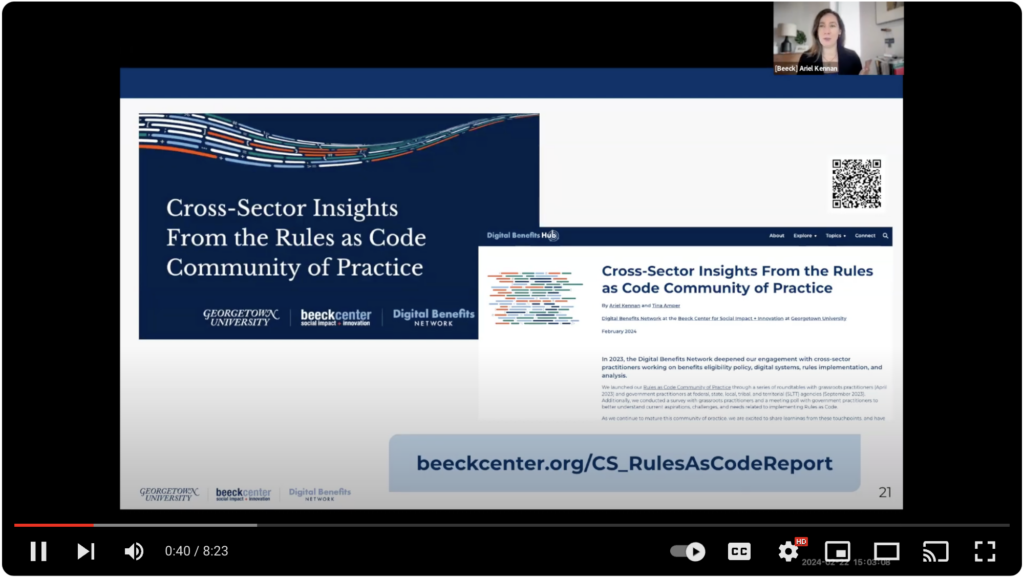
This report highlights key findings from the Rules as Code Community of Practice, including practitioners' challenges with complex policies, their desire to share knowledge and resources, the need for increased training and support, and a collective interest in developing open standards and a shared code library.
This report examines how the U.S. federal government can enhance the efficiency and equity of benefit delivery by simplifying eligibility rules and using a Rules as Code approach for digital systems.