Federal guidelines for digital identity services, outlining technical and procedural requirements for identity proofing, authentication, and federation.
National Institute of Standards and Technology (NIST)
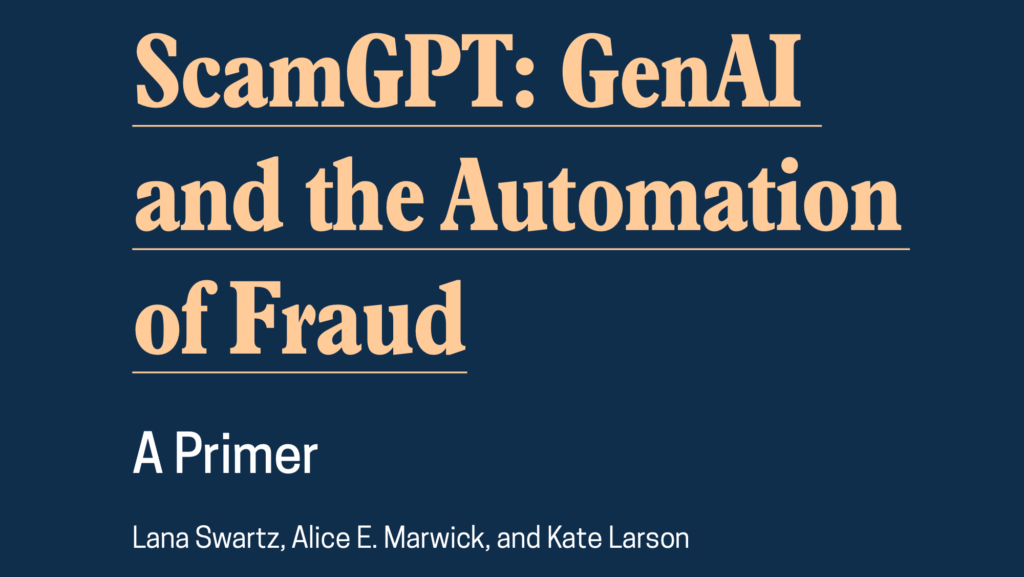
This report analyzes the growing use of generative AI, particularly large language models, in enabling and scaling fraudulent activities, exploring the evolving tactics, risks, and potential countermeasures.
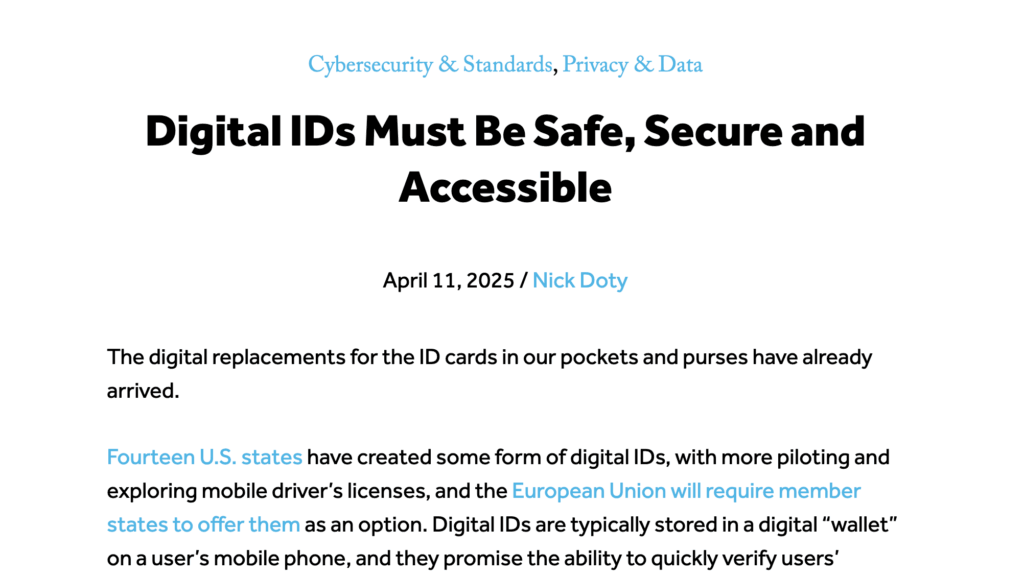
Digital IDs can improve convenience, but they risk surveillance, data misuse, and exclusion if not designed with privacy, security, and accessibility safeguards.
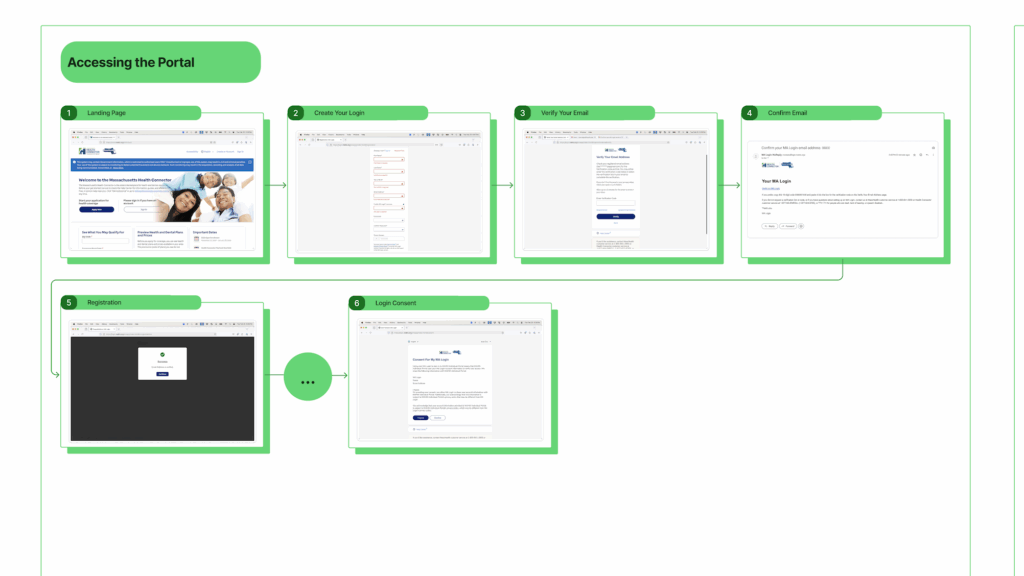
Created for use in the Digital Doorways research project, this design stimuli shows the steps of submitting an application, sharing personal information, and verifying identity for Massachusetts' online application for Medicaid.
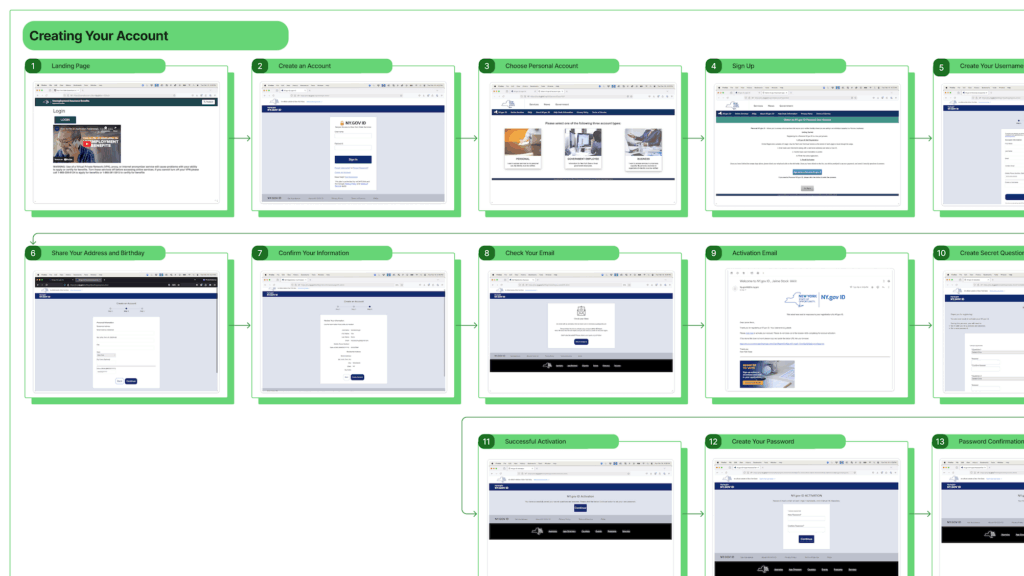
Created for use in the Digital Doorways research project, this design stimuli shows the steps of submitting an application, sharing personal information, and verifying identity for New York's online application for Unemployment Insurance.
A profile on FormFest spearker’s Barry Roeder, Barabara Deffenderfer, Glenn Brown, and Izzie Hirschy-Reyes highlighting how the Bay Area Housing Finance Authority and its partners use AI and human-centered design to streamline paper housing applications.
The City of San José’s Citywide Data Strategy sets a three-year roadmap to unify data practices across departments, strengthen equity and transparency, and leverage data and AI to improve public services
The Maryland Information Technology Master Plan 2025 lays out the state’s strategy to modernize IT, expand digital services, and strengthen infrastructure to better serve residents and government agencies.
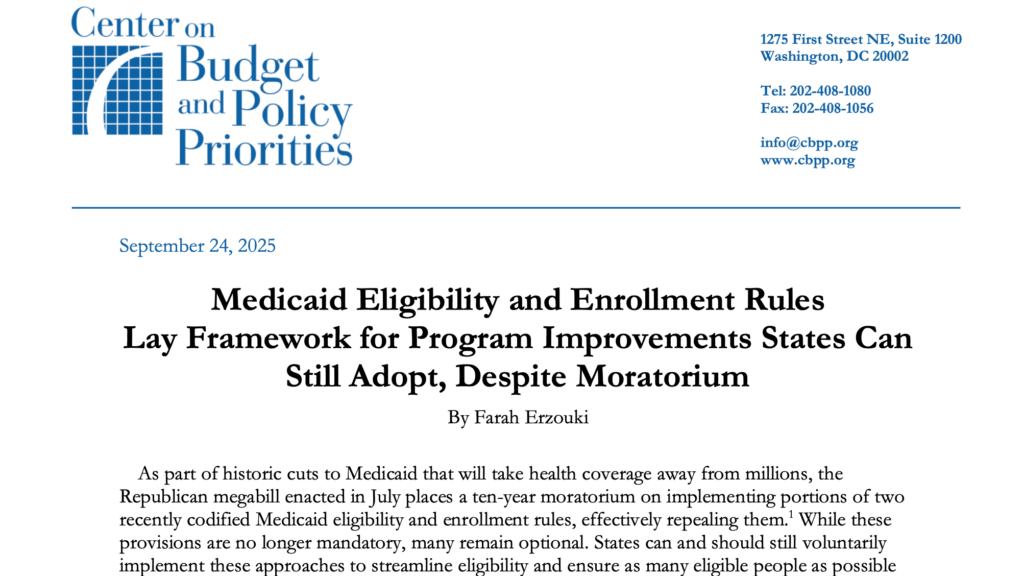
This report explains how states can continue to voluntarily implement key Medicaid and CHIP eligibility and enrollment improvements—originally required by two federal rules—despite a ten-year moratorium enacted in July 2025 that blocks their mandatory enforcement
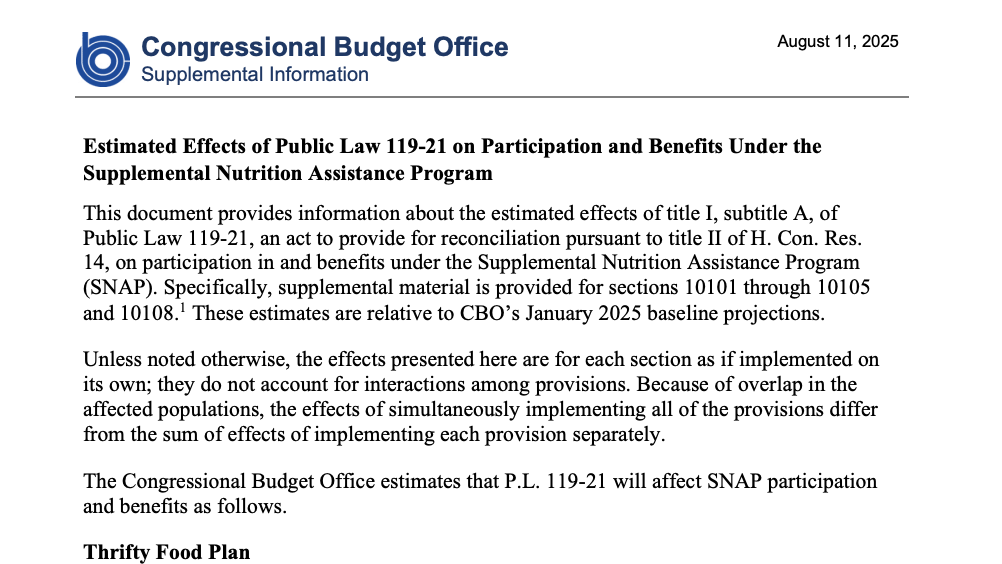
This report provides supplemental estimates on how Public Law 119-21—tied to H.R. 1—will affect SNAP participation, benefits, and state administrative costs over 2025–2034.
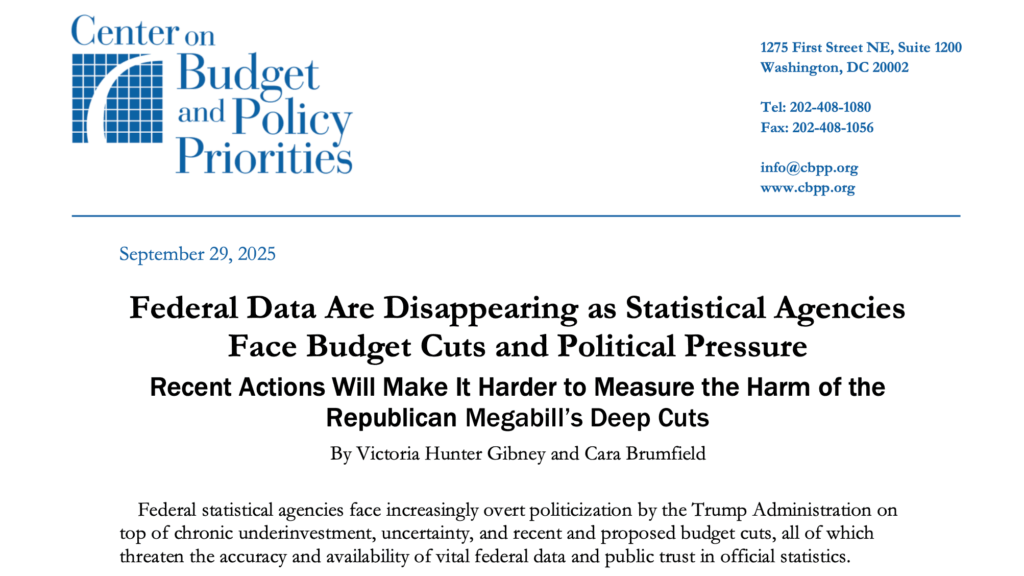
This report warns that federal data collection is being undermined by budget cuts, political interference, and leadership changes that threaten the reliability of core economic and social statistics.