This blog recaps a conversation with Richard Pope, author of Platformland, on how public sector digital services must evolve to reduce administrative burden, enable easier service creation, and foster transparency and democratic participation.
This roadmap outlines NYC’s strategy to achieve digital equity by expanding broadband access, improving digital literacy, and fostering cross-agency coordination.
This report analyzes how proposed state cost-sharing requirements for SNAP would impact benefit access and poverty during a recession, projecting significant risks to low-income households if states are unable to maintain SNAP funding.
This case study details the development of a document extraction prototype to streamline benefits application processing through automated data capture and classification.
This is a searchable tool that compiles and categorizes over 4,700 policy recommendations submitted in response to the U.S. government's 2025 Request for Information on artificial intelligence policy.
This provides a comprehensive look at child well-being across the U.S., ranking states and highlighting policy recommendations to improve outcomes for children.
An outline of the opportunities for modernizing SNAP to better meet participant needs by streamlining enrollment, improving digital access, and enhancing coordination with other safety net services.
A web-based platform that provides design principles, accessible UI components, and guidance to help teams across the UK government create consistent, user-centered digital services.
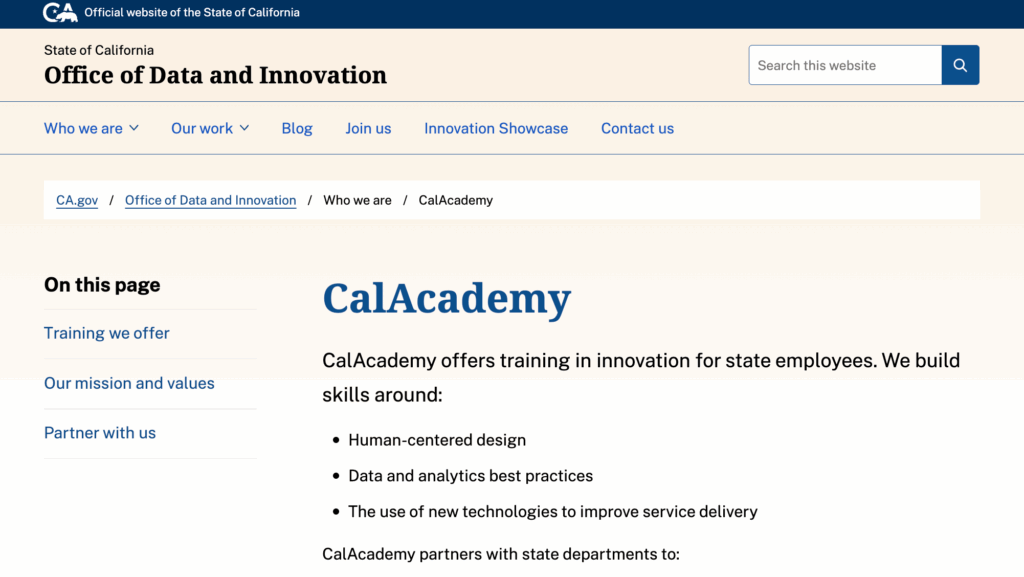
CalAcademy is California’s public sector innovation training program, equipping state employees with modern skills like human-centered design, data analytics, and a product mindset to enhance government services.
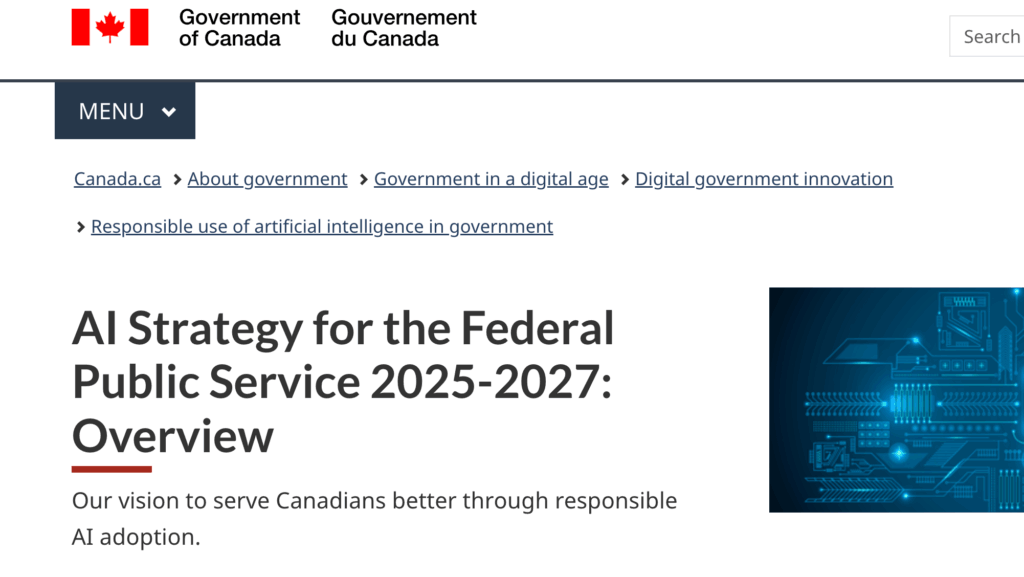
This strategy document establishes a governance framework and roadmap to ensure responsible, trustworthy, and effective AI use across Canadian federal institutions.
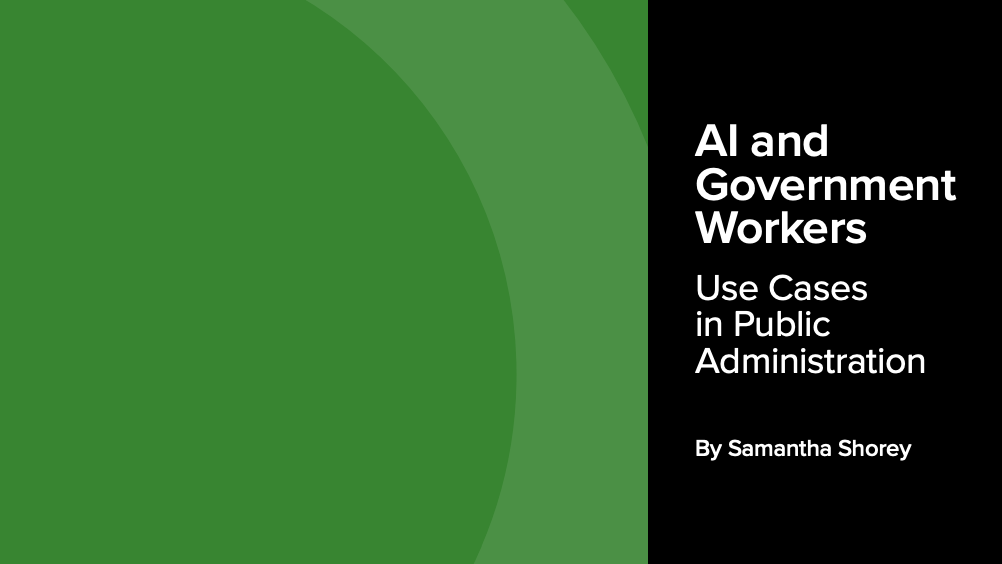
The report examines how AI deployment across state and local public administration such as chatbots, voice transcription, content summarization, and eligibility automation are reshaping government work.