This piece highlights promising design patterns for account creation and identity proofing in public benefits applications. The publication also identifies areas where additional evidence, resources, and coordinated federal guidance may help support equitable implementations of authentication and identity proofing, enabling agencies to balance access and security.
This study evaluates the use of RPA technology by three states to automate SNAP administration, focusing on repetitive tasks previously performed manually.
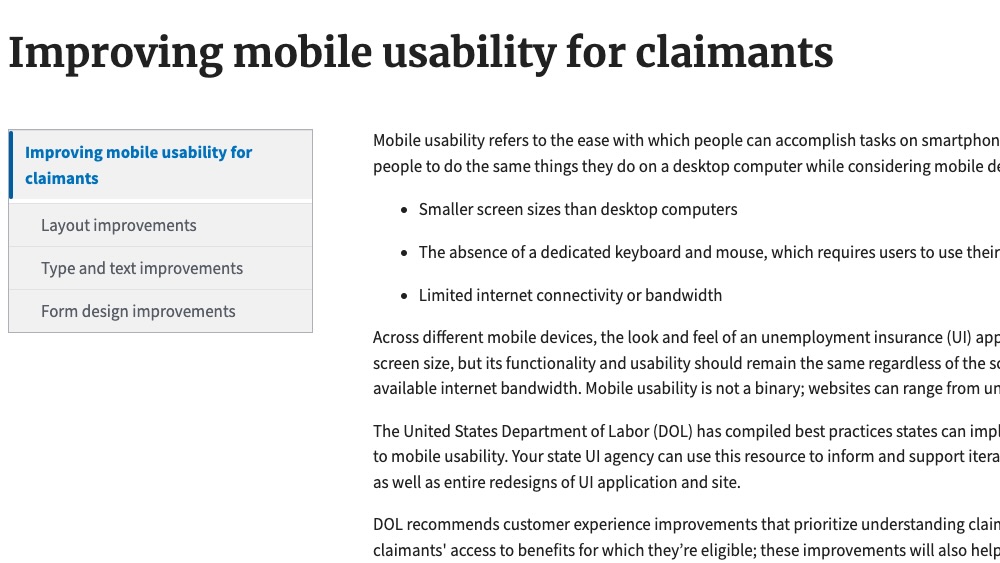
This webpage from the U.S. Department of Labor (DOL) provides guidance on improving mobile usability for Unemployment Insurance (UI) systems to enhance customer experience and accessibility.
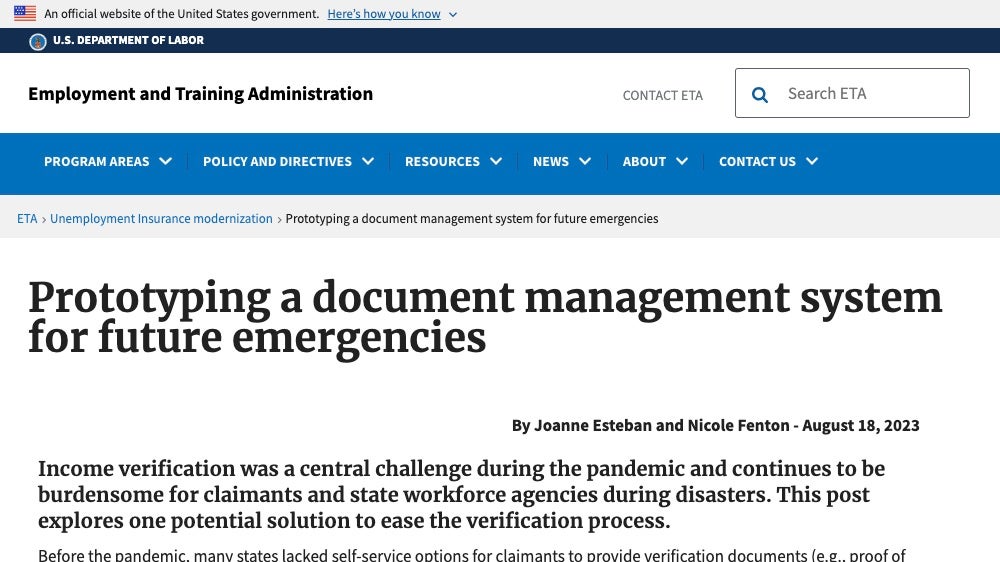
Research from the Department of Labor shows that document management systems reduce barriers for claimants and help states be more efficient. With additional improvements and investment, these systems can be even more effective in serving the public and reducing backlogs in times of crisis.
The Digital Service Network is publishing two essays to kick-start new (or super-charge existing) theories of change for government Digital Service teams.
In the article, researchers examines how administrative burdens in waitlist management for subsidized childcare in Massachusetts have led to significant reductions in the number of families awaiting assistance, potentially obscuring the true extent of unmet need.
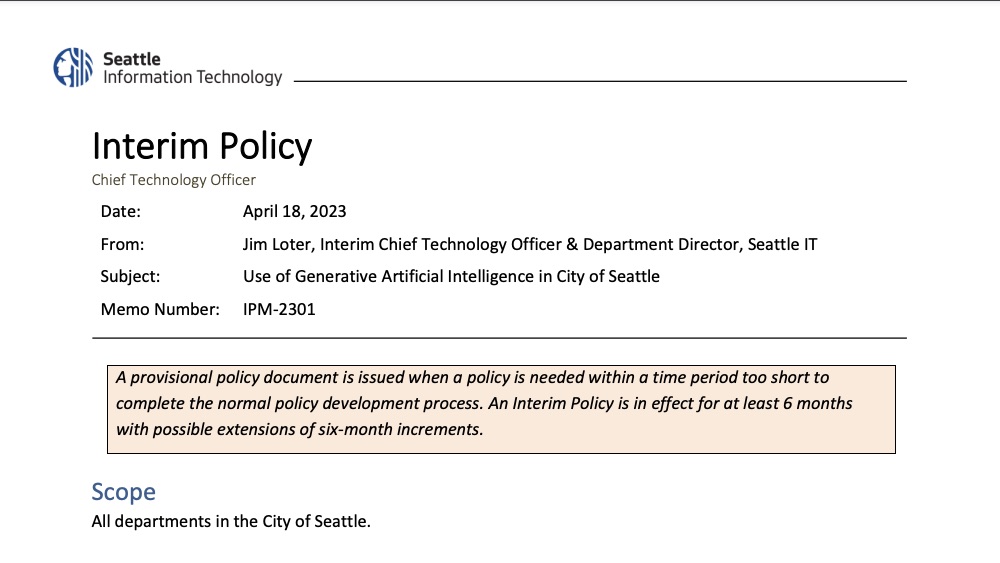
This report on the use of Generative AI in State government presents an initial analysis of the potential benefits to individuals, communities, government and State government workers, while also exploring potential risks.
This analysis explores the potential reduction in poverty rates across all U.S. states if every eligible individual received full benefits from seven key safety net programs, highlighting significant decreases in overall and child poverty.