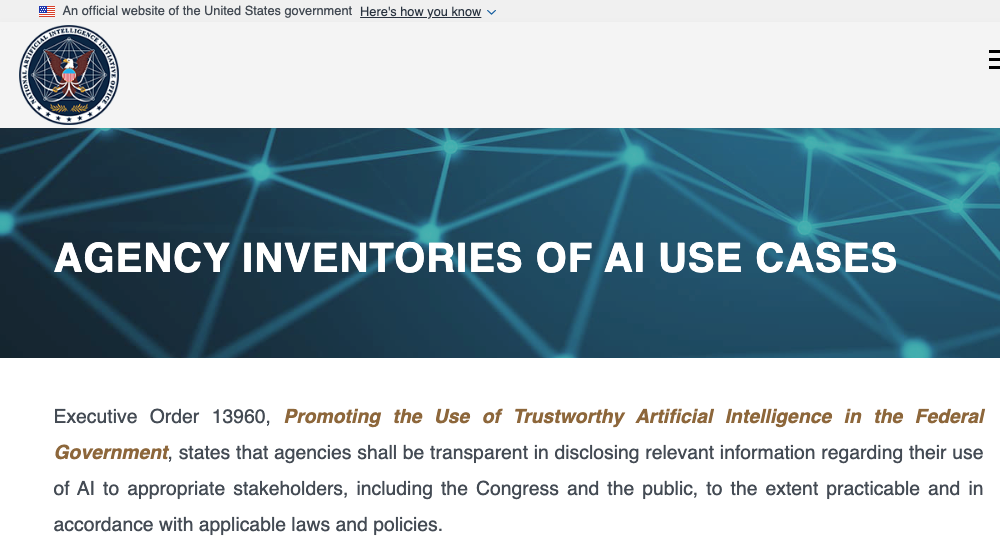
In accordance with Executive Order 13960, Promoting the Use of Trustworthy Artificial Intelligence in the Federal Government, Federal agencies began publishing their first annual inventories of artificial intelligence (AI) use cases in June 2022.
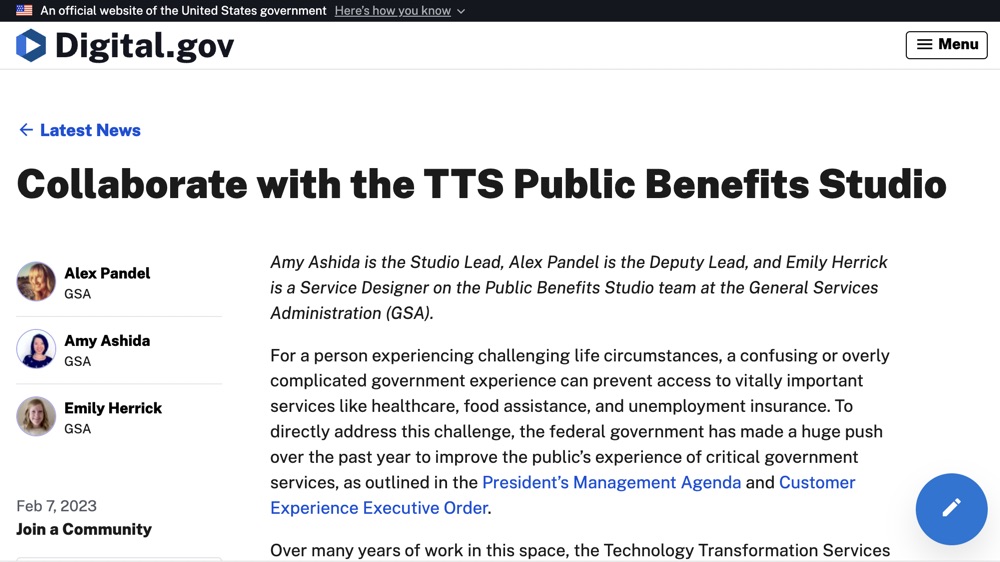
The Technology Transformation Service at GSA recently created a new Public Benefits Studio to focus on fostering a more cohesive, coordinated experience for the public, across programs.
This study examines how bureaucratic interactions differ among public assistance programs—WIC, SNAP, and Medicaid—highlighting variations in participant experiences and the psychological costs associated with each.
This analysis explores the dual nature of mobile state IDs, highlighting their potential to enhance digital identity verification while raising significant privacy and equity concerns.
The White House Office of Science and Technology Policy has identified five principles that should guide the design, use, and deployment of automated systems to protect the American public in the age of artificial intelligence. These principles help provide guidance whenever automated systems can meaningfully impact the public’s rights, opportunities, or access to critical needs.
This toolkit provides resources for training and technical assistance (T/TA) providers in the Child Care Technical Assistance Network (CCTAN) to help State, Territory, and Tribal CCDF Lead Agencies be prepared to conduct equity assessments.