This memorandum provides guidance to help agencies advance digital accessibility by maintaining an accessible Federal technology environment, promoting accessible digital experiences, and continuing the implementation of accessibility standards.
The Commonwealth of Pennsylvania's Executive Order 2023-19: Expanding and Governing the Use of Generative Artificial Intelligence Technologies Within the Commonwealth of Pennsylvania
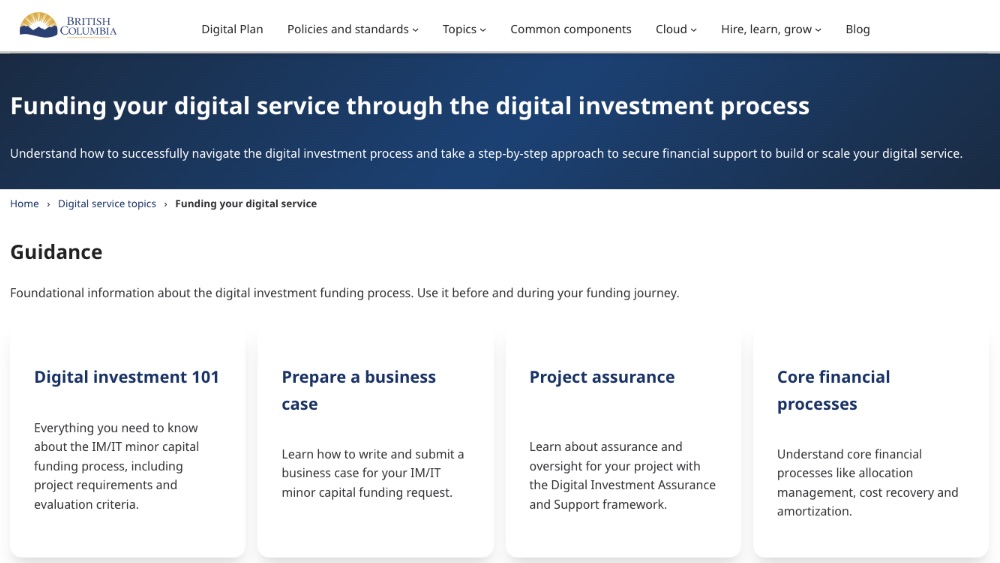
Summary website created by the British Columbia Digital Office about successfully navigating the digital investment process and take a step-by-step approach to secure financial support to build or scale your digital service.
This report examines how state governments organize and manage human services programs, analyzing various agency structures and their impact on service delivery and coordination with the health care sector.
This toolkit offers strategies and tools to help agencies build the culture and infrastructure needed to apply data analysis routinely, effectively, and accurately – referred to in this publication as “sustainable data use.”
This report explores the Maine Department of Labor’s (MDOL) remarkable response to this layoff through collaboration with the Peer Workforce Navigator project—a coalition of community-based organizations in partnership with the MDOL—which made a huge difference in the lives of these laid off workers. The report also examines aspects of the state’s unemployment insurance (UI) system that might be improved to account for similar situations in the future.