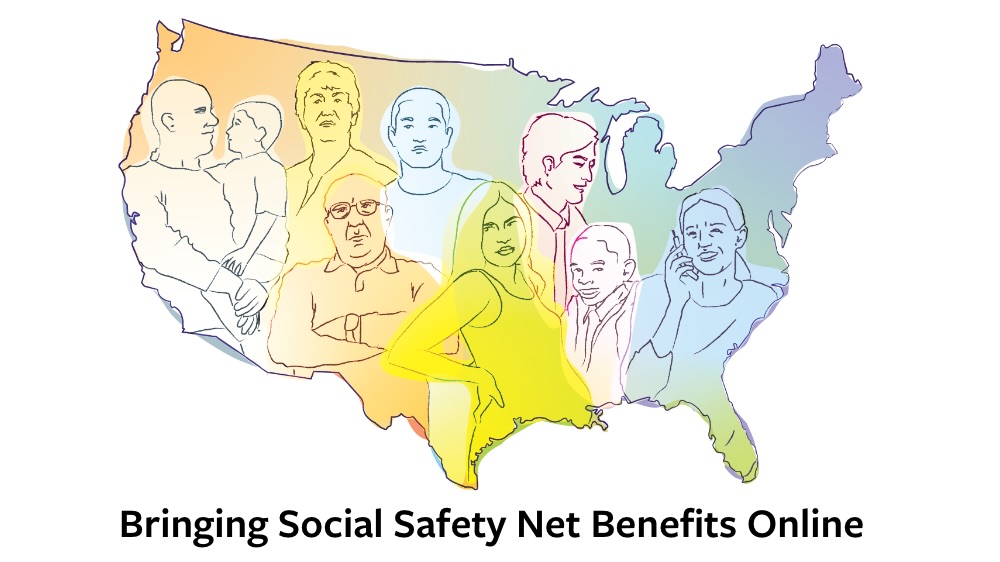
This article discusses Code for America’s research into the user experience of applying or Medicaid, SNAP, TANF, WIC, and LIHEAP in the United States. They found that user experience applying for benefits programs varies greatly by (and often within) each state.
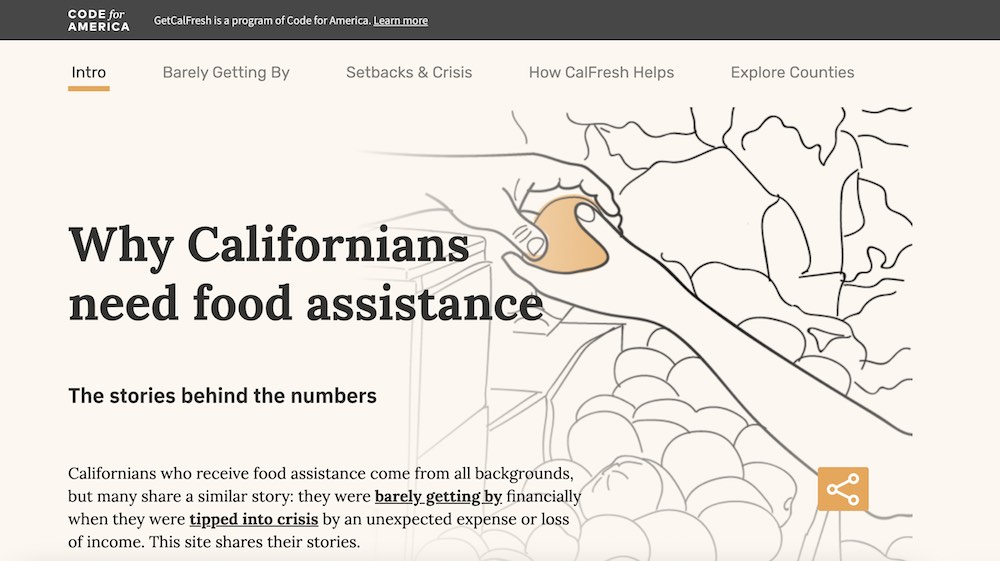
Californians who receive food assistance come from all backgrounds, but many share a similar story: they were barely getting by financially when they were tipped into crisis by an unexpected expense or loss of income. This site shares their stories.
Remote identify proofing is the process federal agencies and other entities use to verify that the individuals who apply online for benefits and services are who they claim to be. If the applicant responds correctly to personal questions, their identity is considered to be verified. However, data stolen in recent breaches could be used fraudulently to respond to knowledge-based verification questions. Alternative methods are available that provide stronger security, but these methods may have limitations in cost, convenience, technological maturity, and they may not be viable for all segments of the public.
This visualized report is a first first-of-its-kind view of the state of benefits applications across the nation from a client perspective, including information on application availability online, combined benefit applications, application completion times, as well as login and identity proofing requirements.
This report describes C-Stat 2.0, an updated version of the the Colorado Department of Human Services’ performance-based analysis strategy that allows them to better focus on and improve performance outcomes that enhance people’s lives.
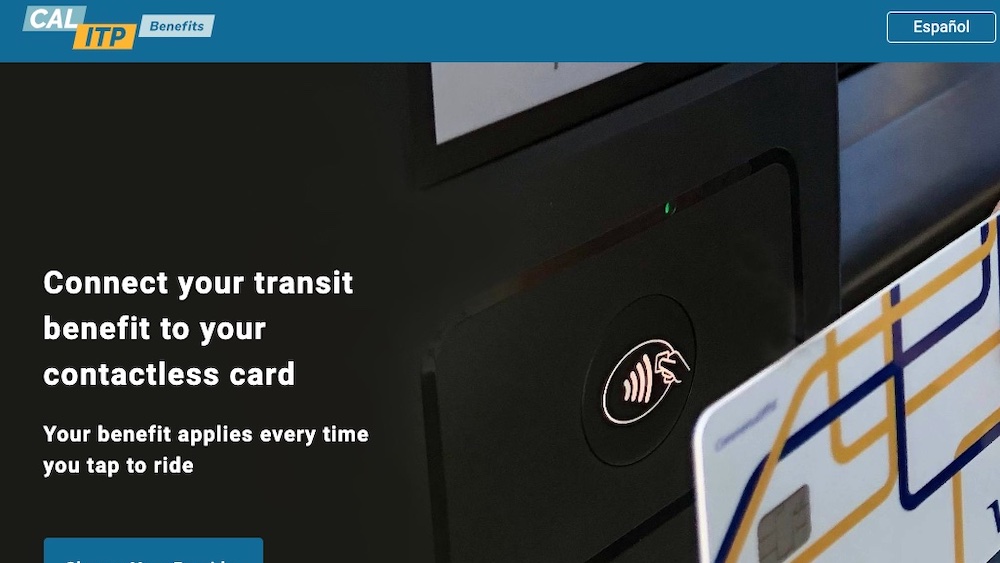
The California Integrated Travel Project (Cal-ITP) simplifies transit benefits eligibility by developing the Benefits App, which uses Login.gov to securely verify age-based discounts for public transit riders. The project aims to create a standardized, interoperable system for verifying transit benefits, improving accessibility for low-income and special groups while reducing administrative burdens for transit agencies.
Better Rules utilizes multidisciplinary teams that include people skilled in policy, legal, business rules, programming, and service design working together in an iterative fashion to develop rules. Several outputs are produced using this approach, each offering an opportunity that can be fed back into that iterative process and re-used to solve other issues.
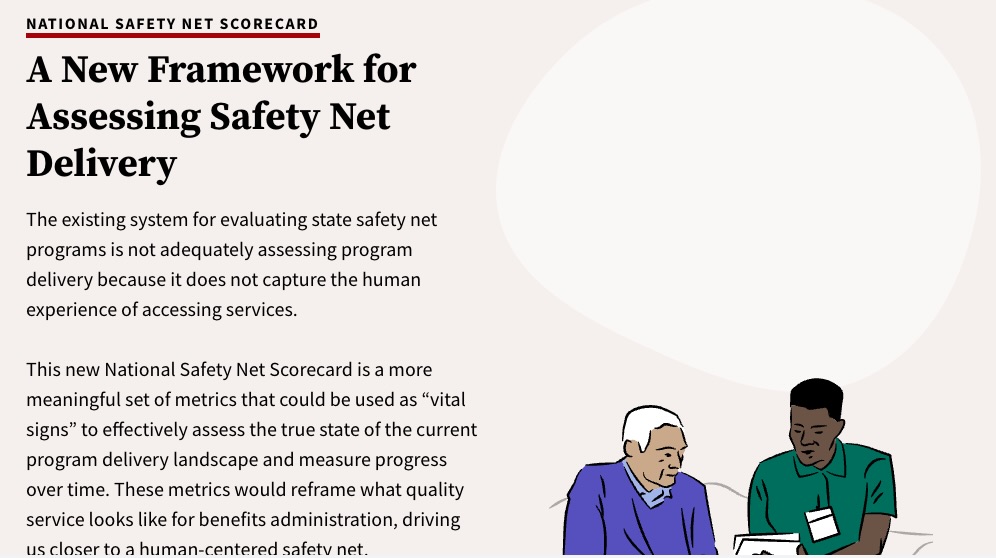
The existing system for evaluating state safety net programs does not adequately capture the human experience of accessing services. This new National Safety Net Scorecard is a more meaningful set of metrics that can effectively asses the true state of the current program delivery landscape and measure progress over time, creating a more human-centered safety net.
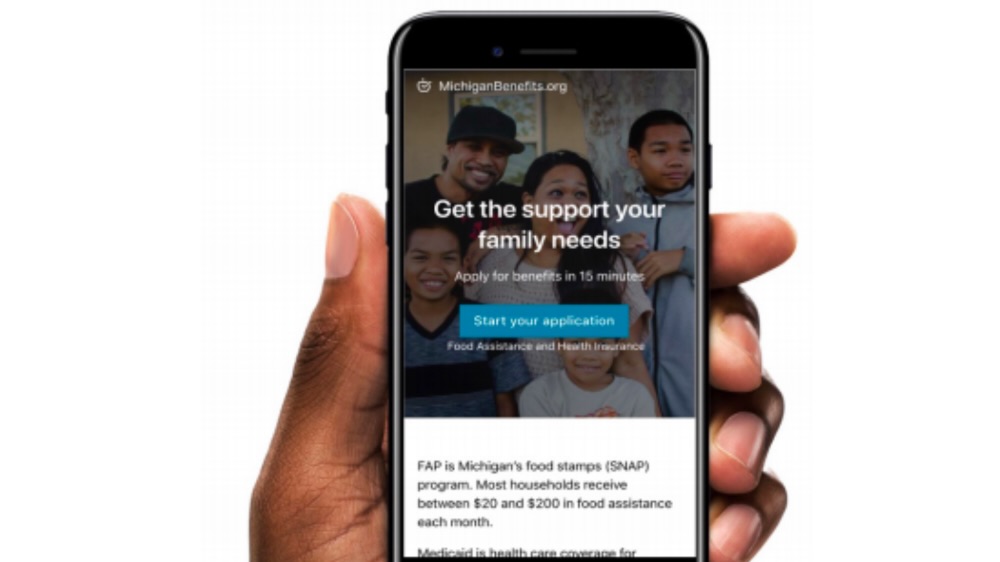
Code for America helped expand GetCalFresh (a service that guides Californians through the SNAP application process and helps government deliver food assistance to people in need) from a small pilot into a statewide service. They also recently concluded a similar pilot in Michigan along with Civilla and the Michigan Department of Health and Human Services.