This Issue Spotlight explores the challenges that recipients of public benefits programs offering cash assistance encounter in accessing funds through financial products or services, with a specific focus on assistance provided on prepaid cards.
Initially created to inform federal staff at the U.S. Department of Health and Human Services, this guide explores opportunities to advance equity in quantitative analysis, including by recognizing common biases (e.g., research and measurement bias).
Office of the Assistant Secretary for Planning and Evaluation (ASPE)
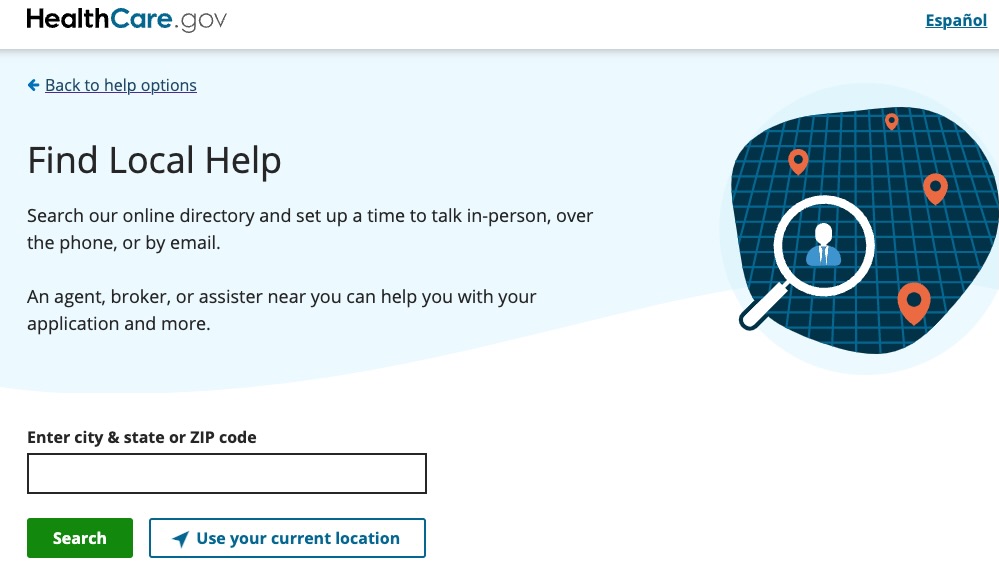
When people hit the moment in the HealthCare.gov sign-up process where they need in-person help, they’re likely frustrated and at risk of abandoning the process altogether. To help, Ad Hoc designers on the Centers for Medicare & Medicaid Services (CMS) Find Local Help team extensively researched user pain points and used human-centered design to create a tool that respects the stress users may experience and delivers the information they need as quickly and simply as possible.
This playbook shares best practices and innovations related to data and analytical approaches for improving grant outcomes. Equitable data practices improve the effectiveness and efficiency of federal program dollars through better resource allocation and more informed decision-making.
This session from FormFest 2024 focused on how to help people get the assistance they need from the U.S. Department of Health and Human Services’ work on the Low Income Home Energy Assistance Program (LIHEAP) and the Maryland Social Services Administration’s work to improve welfare support for kinship caregivers.
This section of the Building Resilience plan outlines strategies to help states modernize outdated unemployment insurance (UI) IT systems, making them more modular, secure, fraud-resistant, and user-centered.
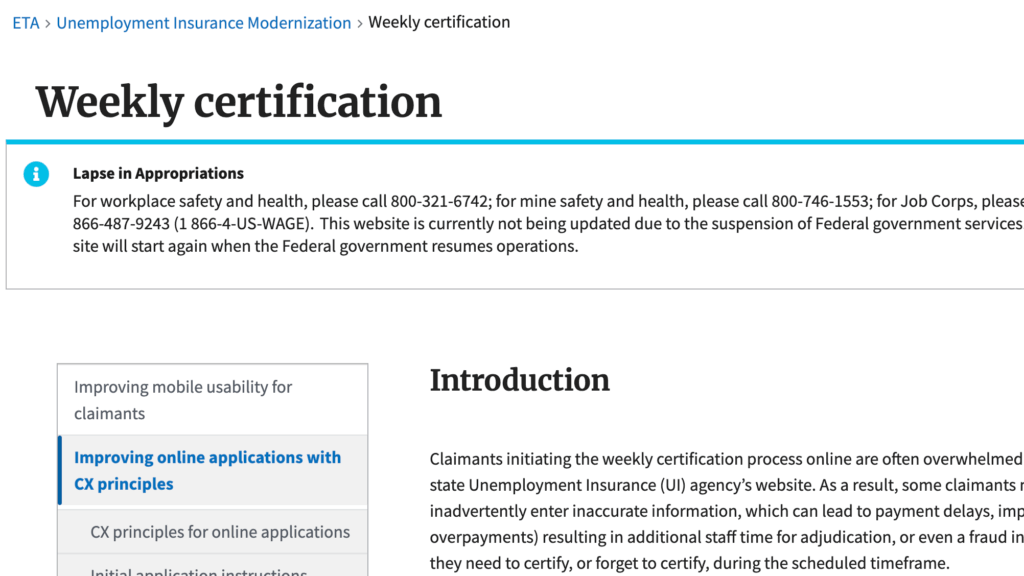
This resource provides guidance and best practices for the weekly or bi-weekly certification process that claimants must complete to maintain eligibility for unemployment insurance (UI) benefits.
The U.S. Department of Health and Human Services (HHS) announced it is rescinding prior blanket waivers that allowed discrimination based on religion, sexual orientation, and gender identity in taxpayer-funded programs.
U.S. Department of Health and Human Services (HHS)
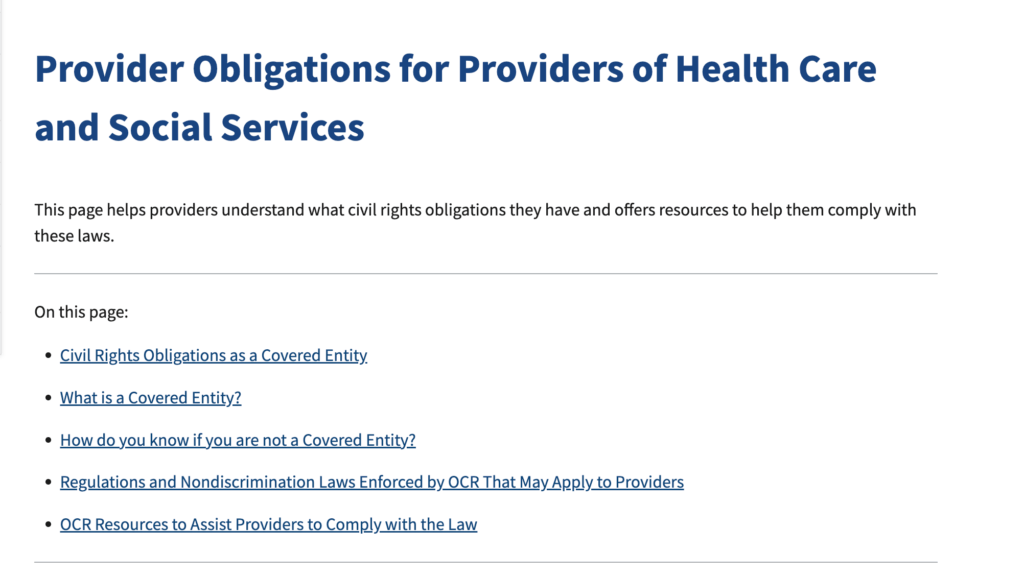
This web-page outlines the nondiscrimination and civil-rights obligations that health-care and social-services providers must meet if they receive HHS funding or act as covered entities.
U.S. Department of Health and Human Services (HHS)
This playbook provides government-wide guidance for planning, procuring, and managing digital, data, and technology (DDaT) projects with a focus on innovation, agile delivery, cybersecurity, sustainability, and commercial best practices.
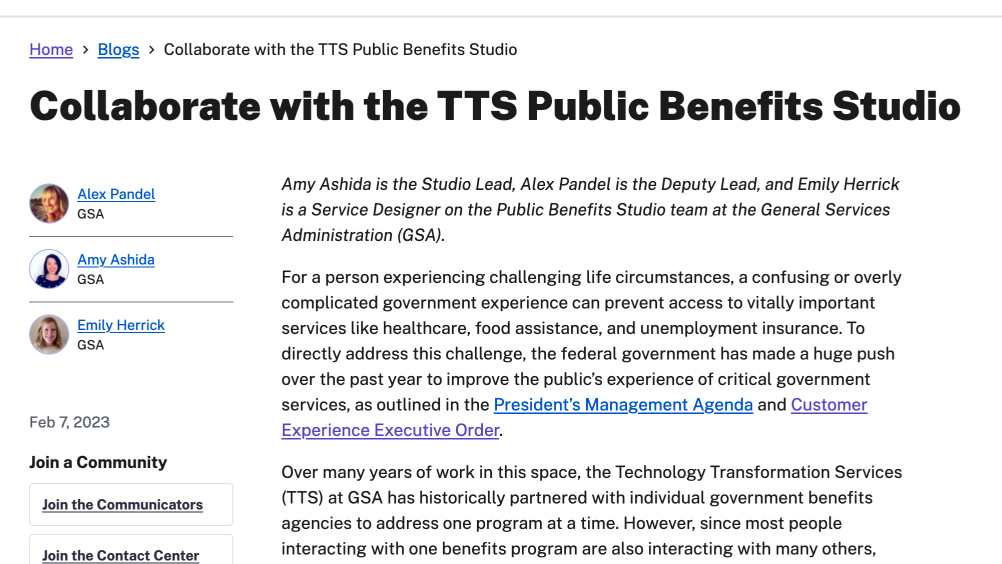
This blog introduces the GSA’s Public Benefits Studio, which partnered with agencies to build shared tools—starting with a multi-channel notifications service—to improve coordination and access across federal public benefits programs.
The portfolio page outlines federal projects focused on elevating how people interact with government services by prioritizing user needs, accessibility, equity, and consistency across agencies.