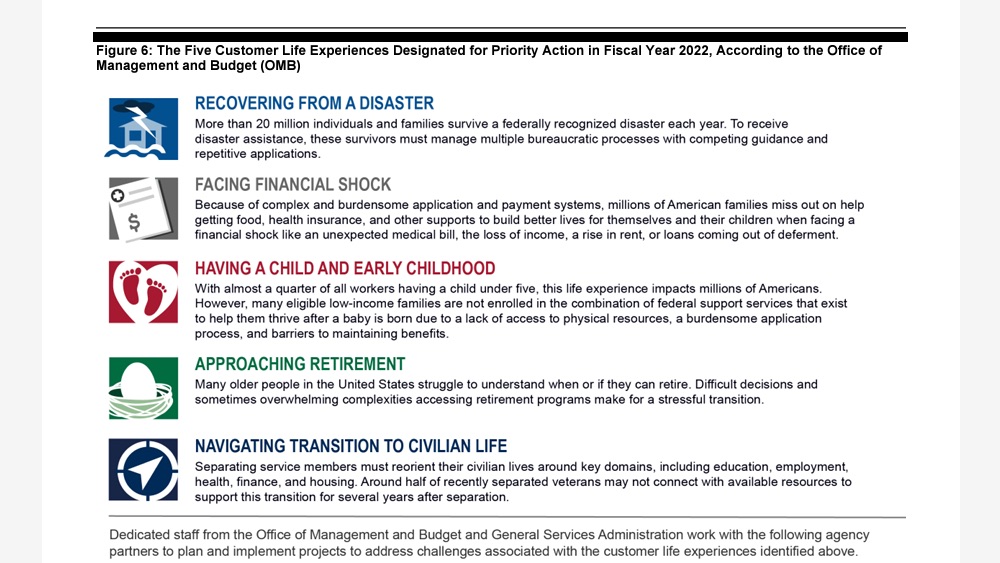
The 2021 President’s Management Agenda identified federal customer experience as a priority area for improvement. GAO was asked to review OMB and selected federal agencies’ efforts to improve federal customer experience.
This memorandum provides guidance to help agencies advance digital accessibility by maintaining an accessible Federal technology environment, promoting accessible digital experiences, and continuing the implementation of accessibility standards.
This section of the Building Resilience plan outlines comprehensive strategies to help states prevent, detect, and recover unemployment insurance (UI) fraud while protecting legitimate claimants.
This framework provides practical guidance, detailed reference designs, and example solutions to help organizations securely adopt and operationalize Zero Trust principles across diverse IT environments.
National Institute of Standards and Technology (NIST)
This toolkit provides guidance to protect participant confidentiality in human services research and evaluation, including legal frameworks, risk assessment strategies, and best practices.
U.S. Department of Health and Human Services (HHS)
The first half of Rules as Code Demo Day was wrapped up with Thomas Guillet who has contributed to Open Fisca France and beta.gouv. He demoed the code for Mes Aides—or My Benefits—which is France’s social benefit simulator that leverages open source rule models for over 600 benefits while keeping the displayed complexity to its minimum.
CMS has identified a number of immediate and longer-term strategies that states can implement to improve application processing timeframes and address application backlogs.
This update highlights progress in improving federal customer experience (CX) following Executive Order 14058, showcasing service enhancements across agencies.
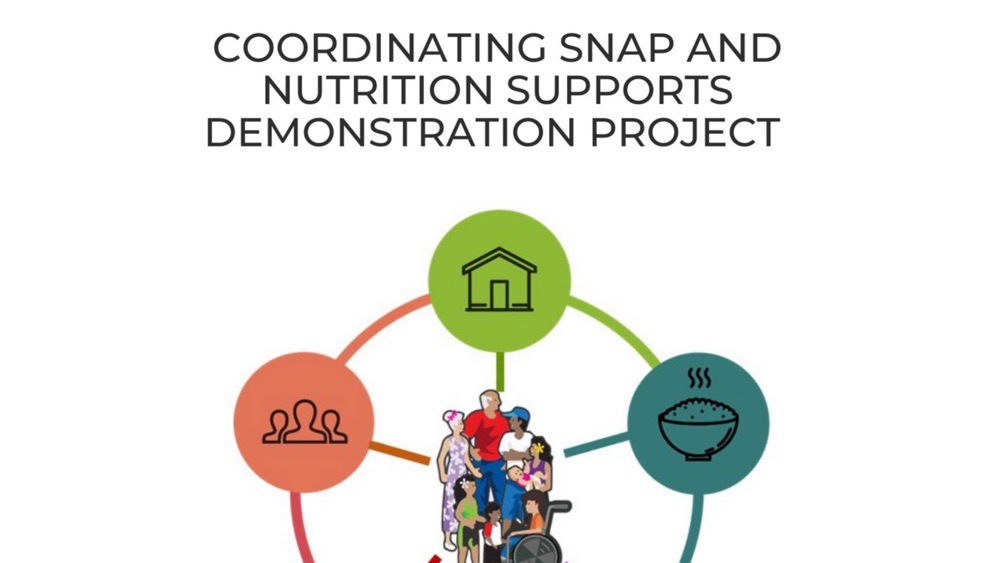
This white paper documents Hawai'i's journey and lessons learned from their 18-month Coordinating SNAP and Nutrition Supports project which laid the foundation for interagency data-sharing and built capacity to analyze administrative data across nutrition programs--specifically SNAP and WIC.