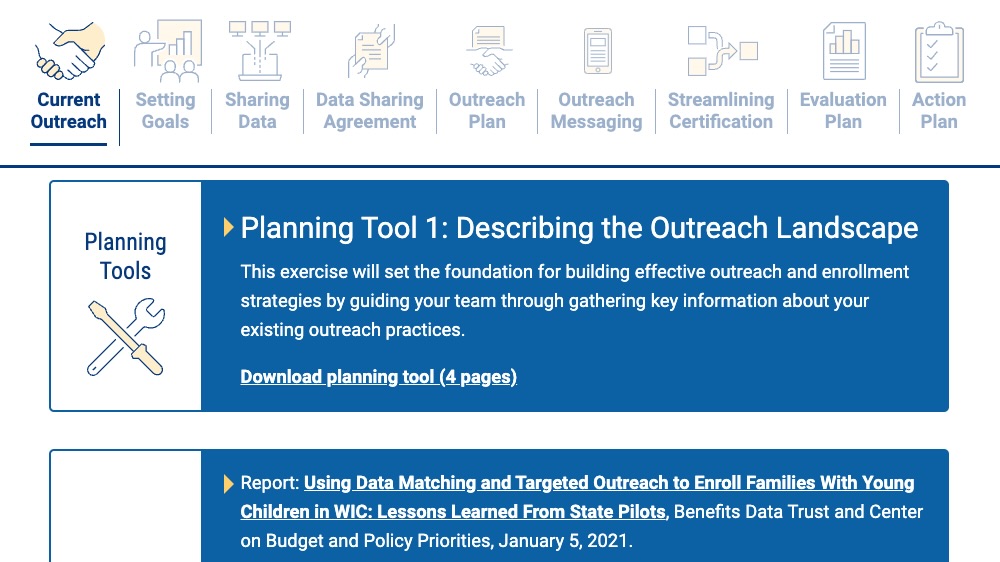
The toolkit provides strategies for state and local WIC agencies to enhance enrollment by utilizing data from Medicaid and SNAP for cross-program data matching and targeted outreach.
This framework is a logical structure for classifying, organizing, and communicating complex activities involved in making decisions about and taking action on enterprise data.
This report reviews global AI governance tools, highlighting their importance in ensuring trustworthy AI, while identifying gaps and risks in their effectiveness, and offering recommendations to improve their development, oversight, and integration into policy frameworks.
This guide introduces privacy-enhancing technologies (PETs) and provides practical guidance for government agencies on selecting and implementing them to securely use, share, and protect sensitive data.
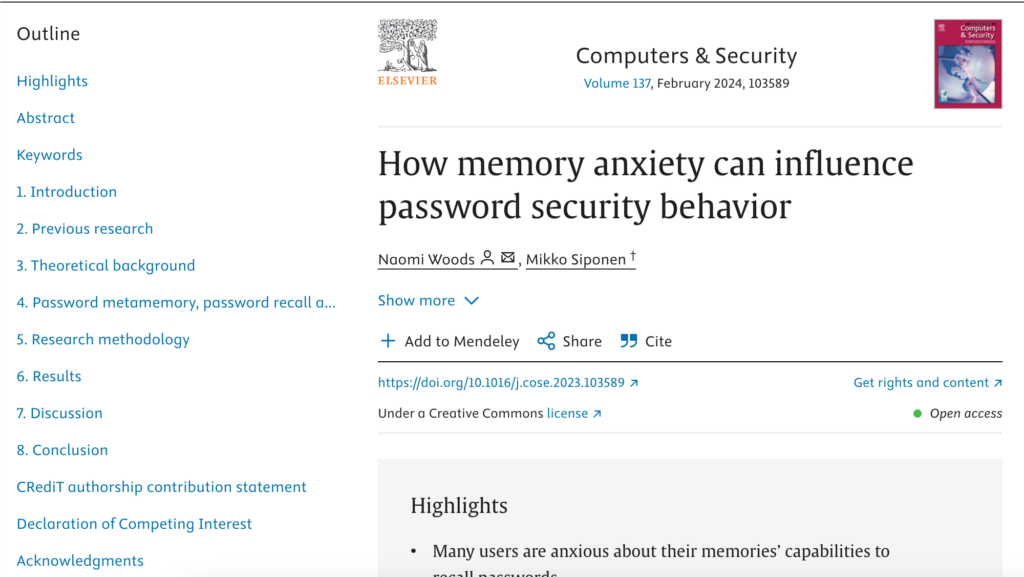
This article investigates how users' "metamemory"—specifically their anxiety regarding their own memory capabilities—drives insecure password behaviors.
This policy brief explores how federal privacy laws like the Privacy Act of 1974 limit demographic data collection, undermining government efforts to conduct equity assessments and address algorithmic bias.
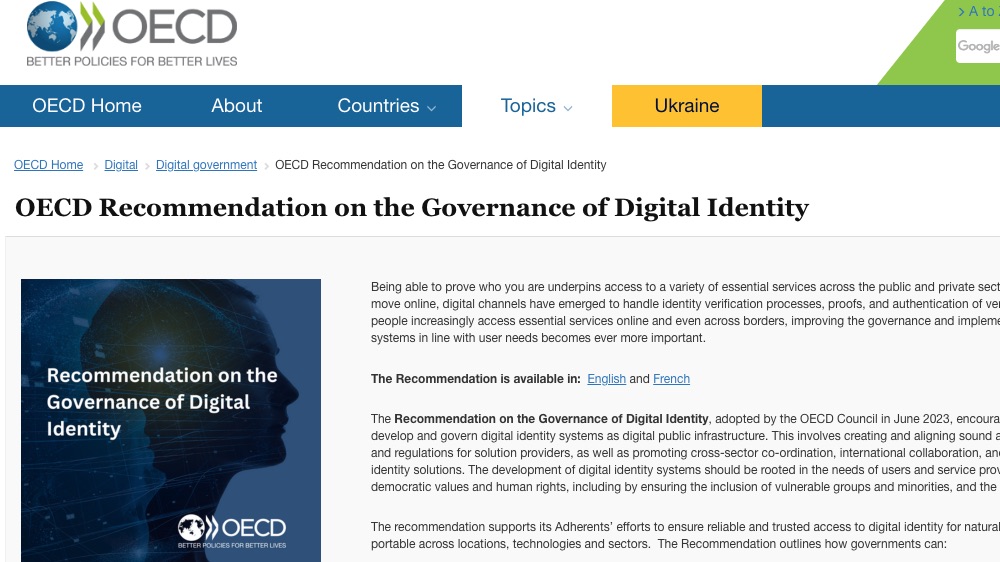
The OECD's Recommendation on the Governance of Digital Identity, adopted on 8 June 2023, provides guidelines for member countries to establish secure and user-centric digital identity systems that enhance trust and facilitate access to online services.
Organisation for Economic Co-operation and Development (OECD)
This report offers best practices for public agencies implementing digital identity verification, emphasizing privacy, equity, and security in the delivery of government services.
This report analyzes the rise of digital driver’s licenses (DDLs) and warns that, without strong safeguards, they could threaten privacy, civil liberties, and equitable access to identification.
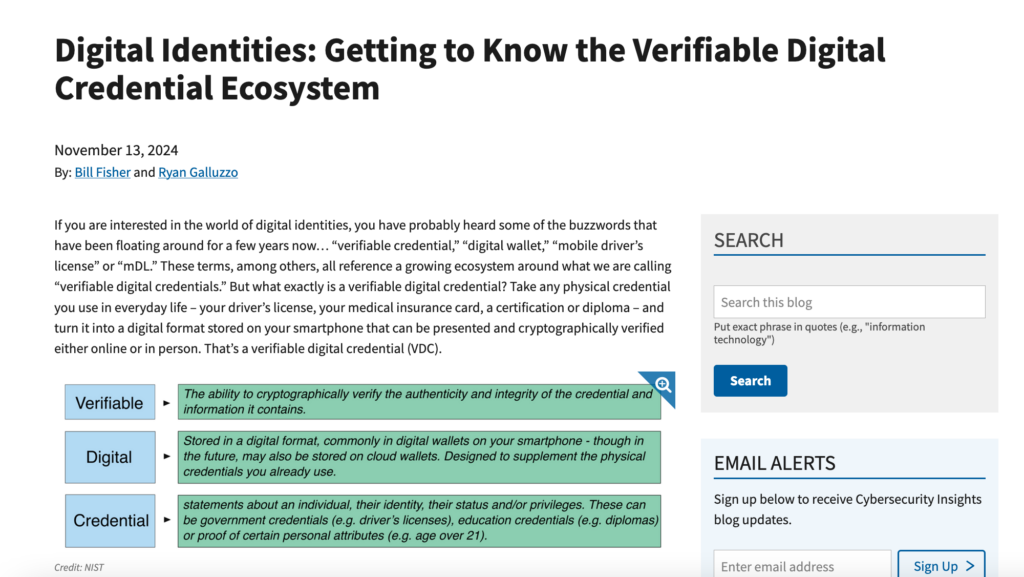
This blog explains that verifiable digital credentials (VDCs) are cryptographically secure digital versions of physical credentials (like driver’s licenses or diplomas) stored in digital wallets that can be presented and verified online or in person.
National Institute of Standards and Technology (NIST)