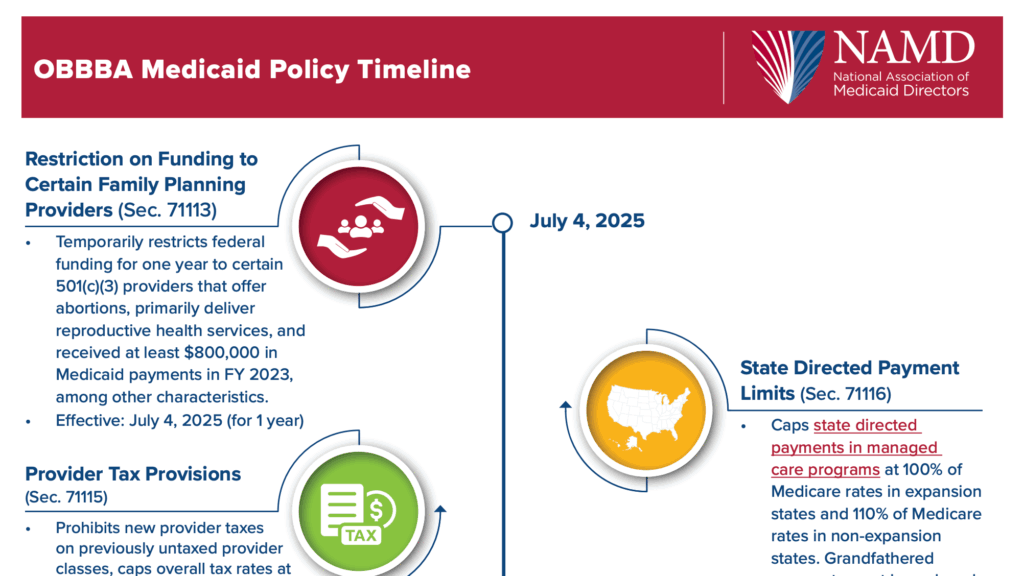
This timeline outlines key Medicaid policy changes introduced by the One Big Beautiful Bill (OBBBA / H.R. 1) with the greatest operational impact on state and territory agencies and highlights upcoming implementation deadlines.
This brief examines how direct cash transfers (DCTs) can improve maternal and infant health outcomes, particularly among low-income and racially marginalized populations, by reducing poverty during pregnancy and early parenthood
This webinar addressed the near completion of the Medicaid continuous coverage unwinding, highlighting a net decrease of almost 10.6 million enrollees, including over 4 million children, and discussed next steps for state compliance, best practices, and outreach strategies to reconnect eligible individuals who lost coverage.
This section of the Building Resilience plan outlines strategies to improve the long-term solvency and sustainability of state unemployment insurance (UI) trust funds through better funding practices and legislative reform.
The article presents the True Cost of Economic Security (TCES) measure, showing that over half of U.S. families struggle to meet the comprehensive costs required to thrive, highlighting significant disparities based on family type, location, and race.
This report focuses on the impact of adopting a national PFML program modeled on existing state programs, known as the Family and Medical Insurance Leave (FAMILY) Act.
The Improving Service Delivery in EITC for New Yorkers initiative explores ways to enhance access to the Earned Income Tax Credit (EITC) through improved outreach, application processes, and service delivery.
This policy brief outlines how extending postpartum Medicaid and CHIP coverage can improve maternal health outcomes, reduce disparities, and strengthen continuity of care during the critical first year after childbirth.
This resource examines the role of Medicaid in West Virginia and documents how the post-pandemic Medicaid “unwinding” process affected residents, highlighting participant experiences and the program’s importance for health and economic stability.