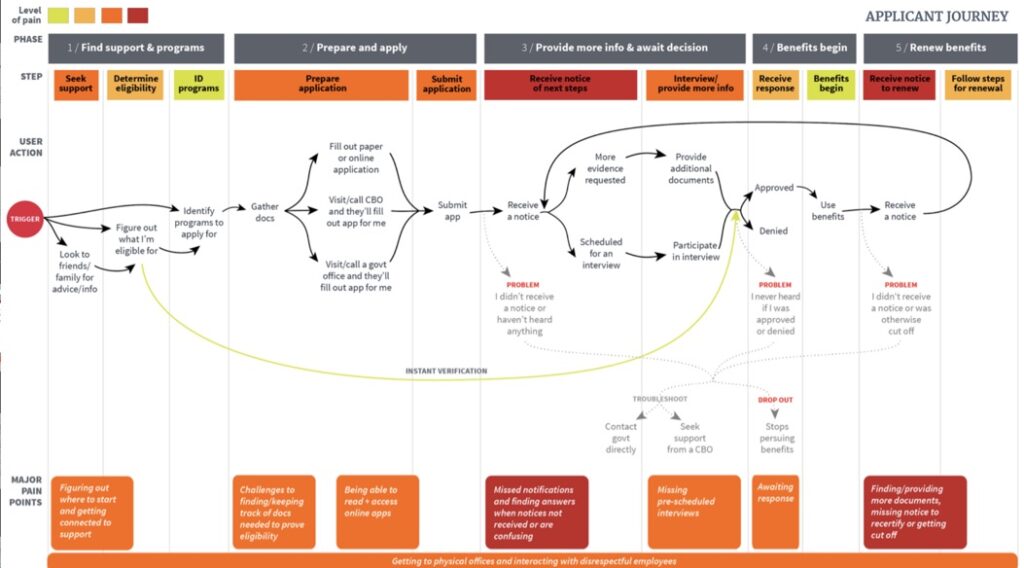
Applicants to federal aid programs face numerous barriers in accessing benefits they are eligible for. The Centers for Medicaid and Medicare conducted an extensive qualitative user research study to better understand applicant experience in enrolling in public assistance programs. Based on the results, the study emphasizes the need for simplified, streamlined and less burdensome application processes.
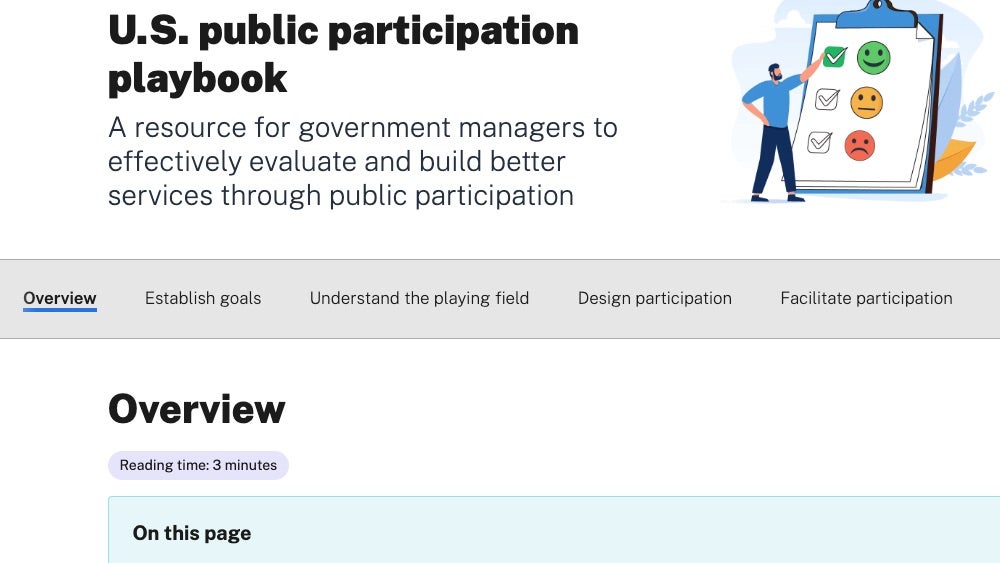
Guidance for City of Long Beach, CA staff on how to uplift community voices through user research to create services that are accessible to all City residents.
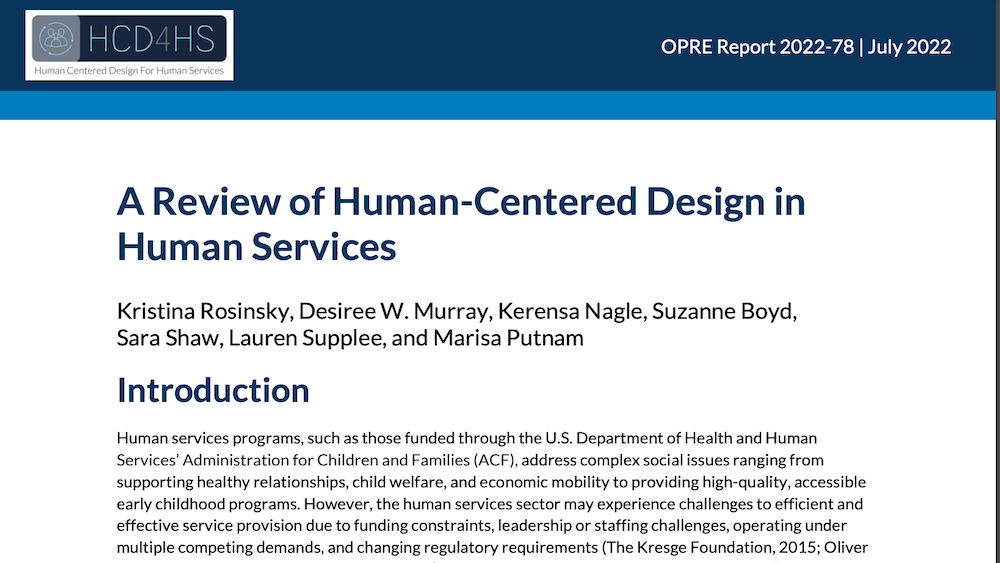
In this brief, they present a definition of HCD that is applicable to the context of human services delivery, differentiate HCD from similar design and problem-solving approaches, and describe how HCD is being used in human services.
U.S. Department of Health and Human Services (HHS)
This study describes the potential of human-centered design principles to identify burdens, reducing the effects of what we label as administrative checkpoints.
A case study on how North Carolina leveraged human-centered design, interagency collaboration, and data-sharing strategies to improve cross-enrollment in SNAP, WIC, and Medicaid, aiming to reduce administrative burden and better serve families.
American Public Human Services Association (APHSA)
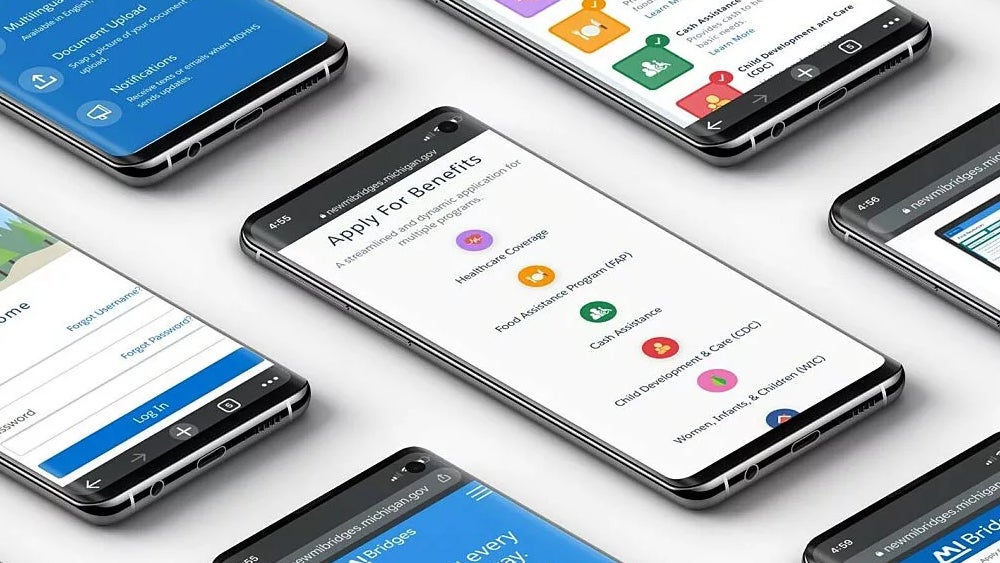
This case study documents how Civilla partnered with the Michigan Department of Health and Human Services (MDHHS) to redesign and modernize online enrollment for the state’s largest benefit programs.
This research paper explores how government design systems function as the “translation layer” of digital public infrastructure, transforming technical systems into accessible, trustworthy citizen experiences.
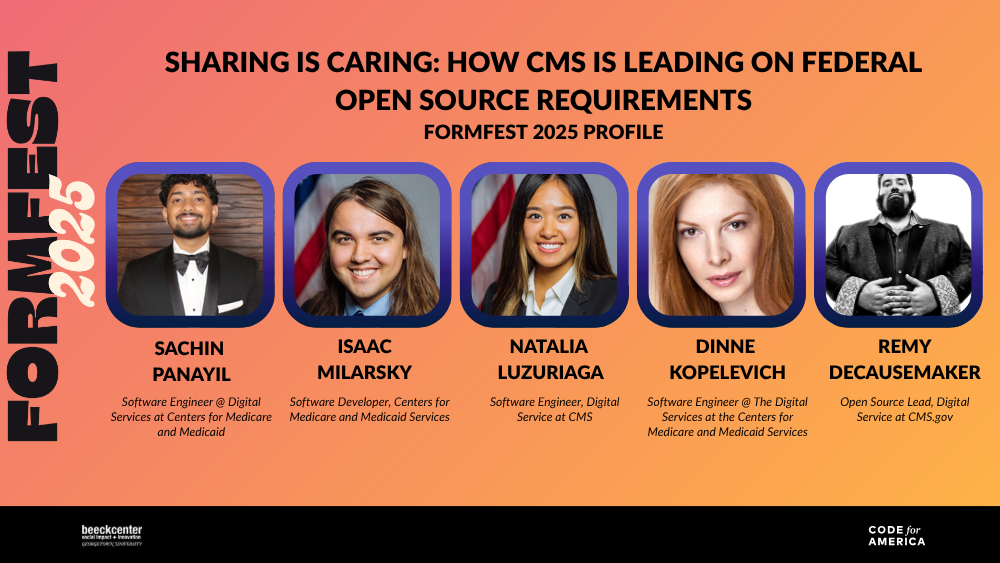
This profile on the Centers for Medicare and Medicaid Services’ (CMS) Open Source Program Office, the first of its kind in the federal government, showcasing how it advances transparency, collaboration, and innovation across agencies through open source software.