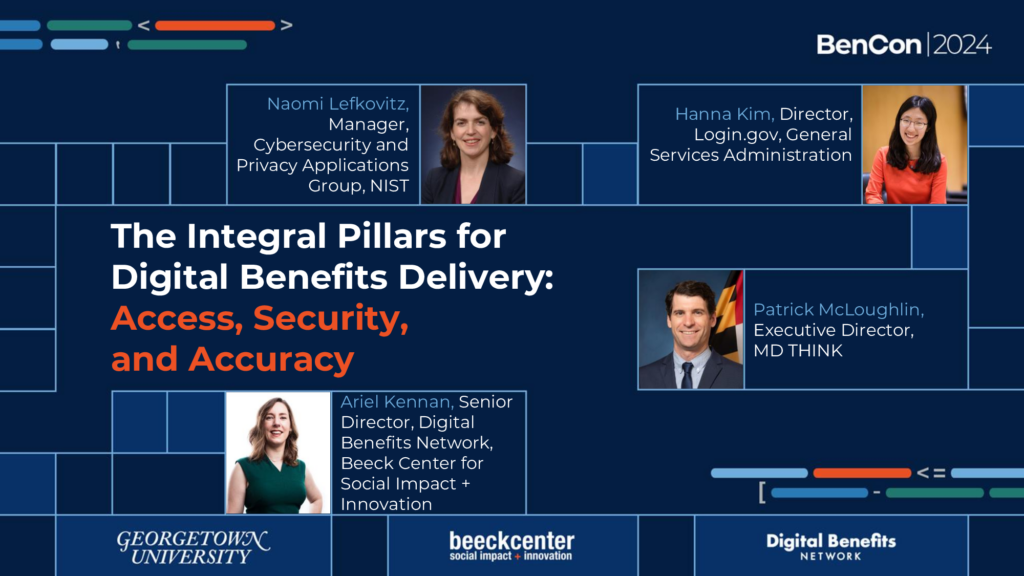
A recap of the two-day conference focused on charting the course to excellence in digital benefits delivery hosted at Georgetown University and online.
Government leaders discuss how to ensure seamless access to public benefits through breaking down silos, user-friendly digital identities, and privacy-focused security measures.
Do you have good communication and customer service skills? The Governor's Office of Administration is seeking a quality engineer, code PA to join our growing and innovative Commonwealth Office of Digital Experience PA team! This position is responsible for ensuring that products meet or exceed customer expectations for quality and reliability. We want to hear from you! Apply today!
This article advises government agencies to prioritize cybersecurity methods over AI-driven approaches when combating identity fraud in benefits programs, highlighting potential risks that automated systems pose to legitimate applicants.
This page describes how the GSA’s 10x team supported digital trust and security across federal services by building shared tools, automating compliance, and exploring privacy-preserving techniques.
This report details the development and deployment of My File, an open-source digital document management tool designed to help individuals securely store and share documents needed to access public services.
A case study documenting how a modular API layer was built to support a state-level paid family and medical leave program, improving interoperability, scalability, and user experience.
This primer introduces two foundational software types that can support organizations that are committed to accessible benefits information: content management systems (CMS) and application program interfaces (APIs).