This guidance provides detail on activities to be conducted by designated High-Impact Service Providers (HISPs) under the Executive Order on Customer Experience.
This update highlights progress in improving federal customer experience (CX) following Executive Order 14058, showcasing service enhancements across agencies.
A comprehensive survey-based analysis of Boston residents’ access to internet, devices, and digital skills, with a focus on equity across priority populations including low-income households, seniors, immigrants, and formerly incarcerated individuals.
This webinar session discusses the importance of using CX metrics to guide agency-level decisions and how to gather, analyze, and apply customer feedback to optimize products and services.
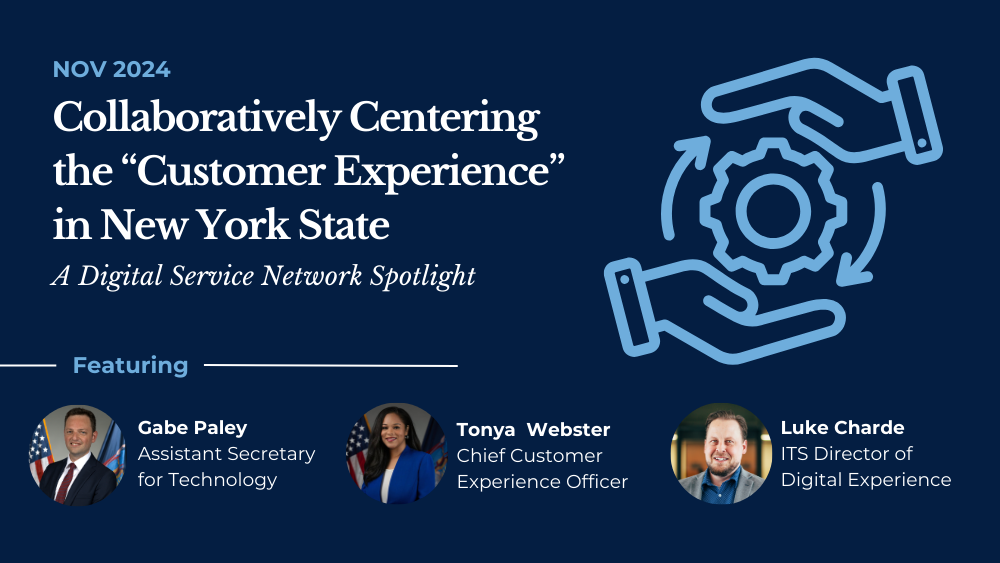
The Digital Service Network (DSN) spoke with three staff members from the New York State Executive Chamber—Gabe Paley, Tonya Webster, and, Luke Charde to learn more about the state's efforts to improve residents’ experiences accessing government programs.
A web-based platform that provides design principles, accessible UI components, and guidance to help teams across the UK government create consistent, user-centered digital services.
This report details the use of the historic investment of $1 billion in funding from the American Rescue Plan Act (ARPA) to the Department of Labor and state unemployment (UI) agencies to modernize state UI programs.
The Performance.gov team hosted a webinar featuring federal customer experience (CX) changemakers from across government and focused on the nine CX projects that aim to address pain points learned about through human-centered design research.
Applicants to federal aid programs face numerous barriers in accessing benefits they are eligible for. The Centers for Medicaid and Medicare conducted an extensive qualitative user research study to better understand applicant experience in enrolling in public assistance programs. Based on the results, the study emphasizes the need for simplified, streamlined and less burdensome application processes.