Public procurement in state governments can be slow and inefficient, but artificial intelligence (AI) offers a solution by automating tasks, improving decision-making, and addressing workforce gaps, as highlighted in a joint brief by NASCIO and NASPO.
National Association of State Chief Information Officers (NASCIO)
This resource page provides comprehensive information on the state's initiatives, policies, training, and governance related to the adoption and implementation of generative AI technologies in government operations.
This news release highlights Pennsylvania’s first-in-the-nation Generative AI pilot under Governor Shapiro, showcasing its positive impact on state employees and commitment to responsible, ethical AI use.
This framework provides practical guidance, detailed reference designs, and example solutions to help organizations securely adopt and operationalize Zero Trust principles across diverse IT environments.
National Institute of Standards and Technology (NIST)
This toolkit provides guidance to protect participant confidentiality in human services research and evaluation, including legal frameworks, risk assessment strategies, and best practices.
U.S. Department of Health and Human Services (HHS)
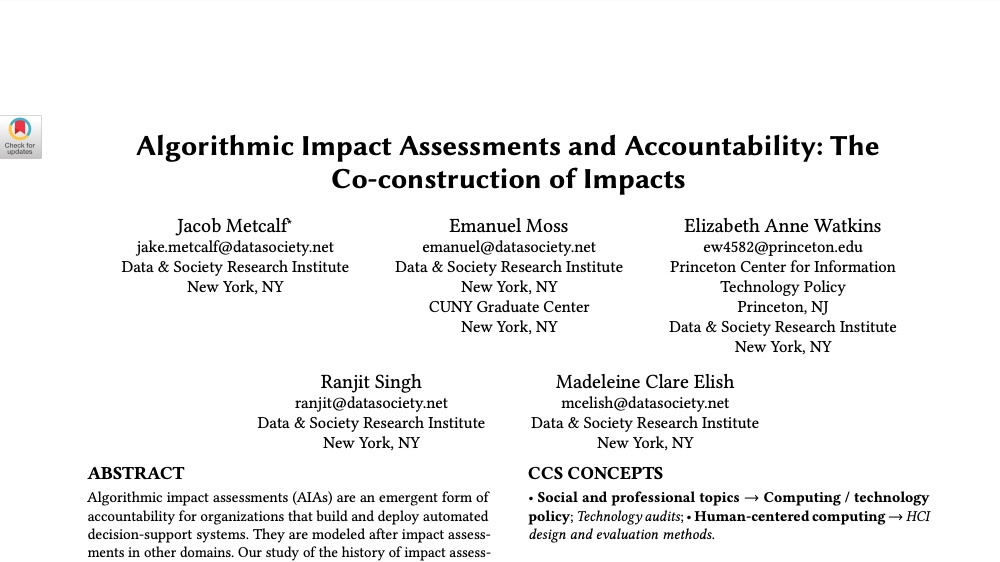
Algorithmic impact assessments (AIAs) are an emergent form of accountability for organizations that build and deploy automated decision-support systems. This academic paper explores how to co-construct impacts that closely reflects harms, and emphasizes the need for input of various types of expertise and affected communities.
ACM Conference on Fairness, Accountability, and Transparency (ACM FAccT)
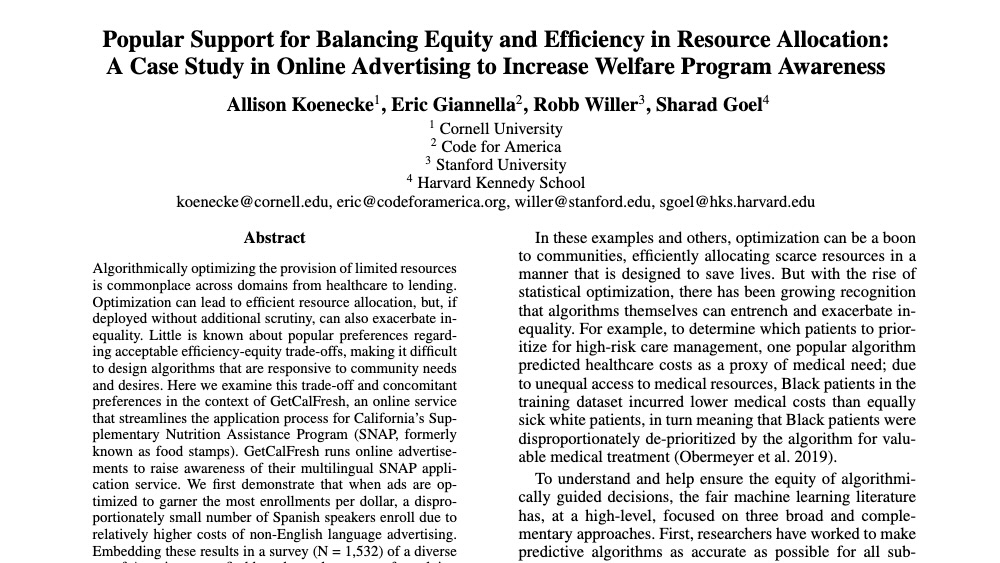
This study examines public attitudes toward balancing equity and efficiency in algorithmic resource allocation, using online advertising for SNAP enrollment as a case study.
This policy establishes a framework for ensuring the quality, accuracy, and reliability of government data to support effective decision-making, analytics, and artificial intelligence initiatives.
This report presents evidence on the use of algorithmic accountability policies in different contexts from the perspective of those implementing these tools, and explores the limits of legal and policy mechanisms in ensuring safe and accountable algorithmic systems.
This report provides an overview of artificial intelligence (AI), key policy considerations, and federal government activities related to AI development and regulation.
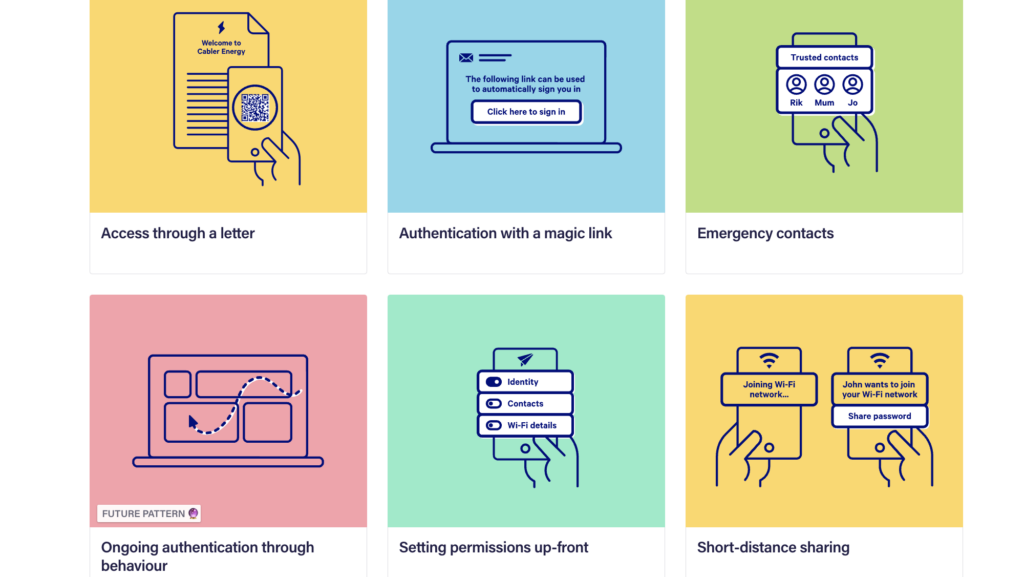
A catalogue to help teams design trustworthy services that work for people. Categories including informing decisions, signing into services, giving and removing consent, and doing security checks.