A comprehensive guide to help government agencies establish, implement, and oversee responsible artificial intelligence (AI) governance policies and review processes.
A report that defines what effective “human oversight” of AI looks like in public benefits delivery and offers practical guidance for ensuring accountability, equity, and trust in algorithmic systems.
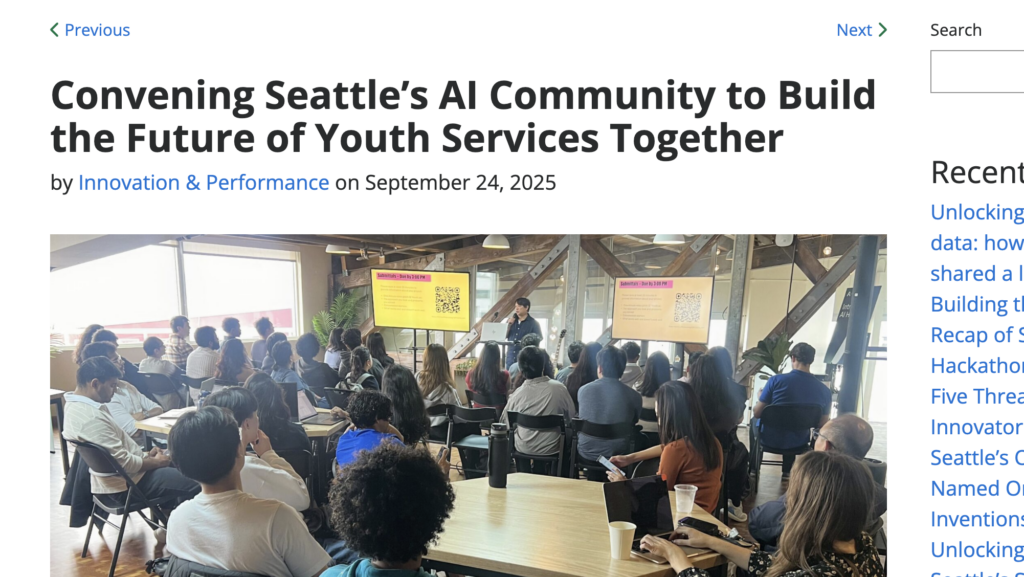
A recap of a community innovation hackathon in Seattle where technologists and students used AI to prototype solutions that help youth discover and access local programs and services.
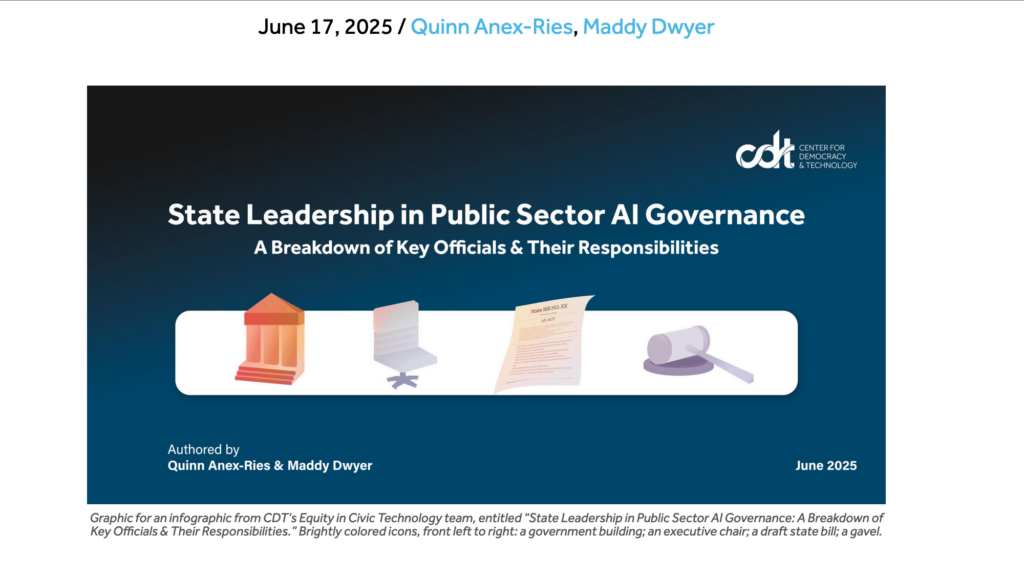
An infographic-style brief that maps the roles and responsibilities of key state leaders involved in governing the development, acquisition, use, and oversight of artificial intelligence in public-sector programs.
A practical, step-by-step guide for government agencies to design, implement, and evaluate community engagement efforts around the use of artificial intelligence.
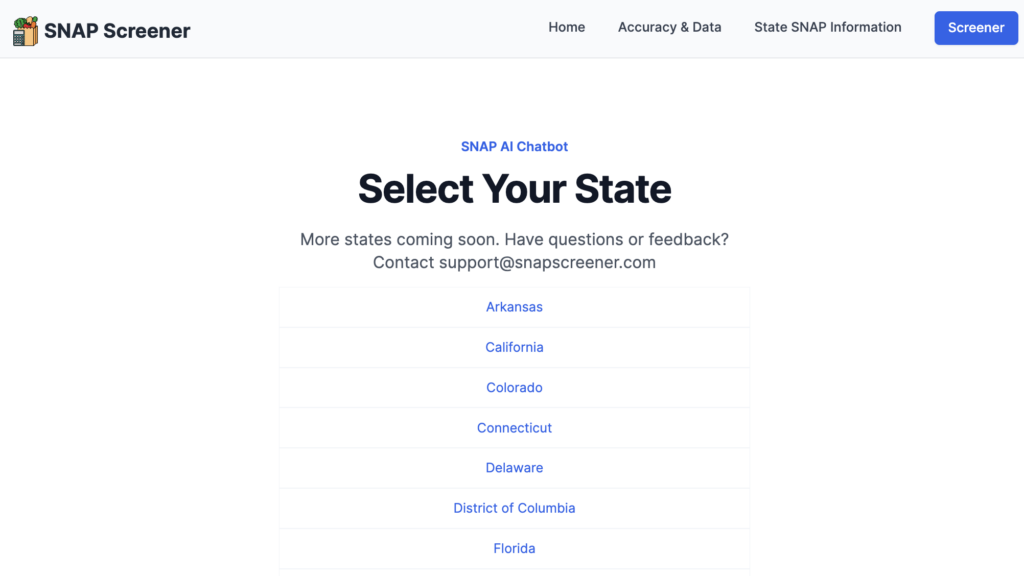
An interactive chatbot that helps SNAP participants and the public ask questions and receive guidance about SNAP work and community engagement requirements in conversational form.
A virtual event showcasing how one city applied technology, including artificial intelligence, to streamline municipal code administration and reduce bureaucratic friction.
A case study describing how a 90-day generative AI (GenAI) pilot using Google’s Gemini tool was conducted across state agencies to assess productivity, creativity, and responsible use in government work.
Colorado Governor's Office of Information Technology (OIT)
An academic research paper introducing SHADES, a multilingual benchmark designed to evaluate how large language models (LLMs) generate and reinforce stereotypes across different languages and cultural contexts.
This product validation summary deck explores federal opportunities to automate cross-program enrollment proofs and reduce manual verification burdens.