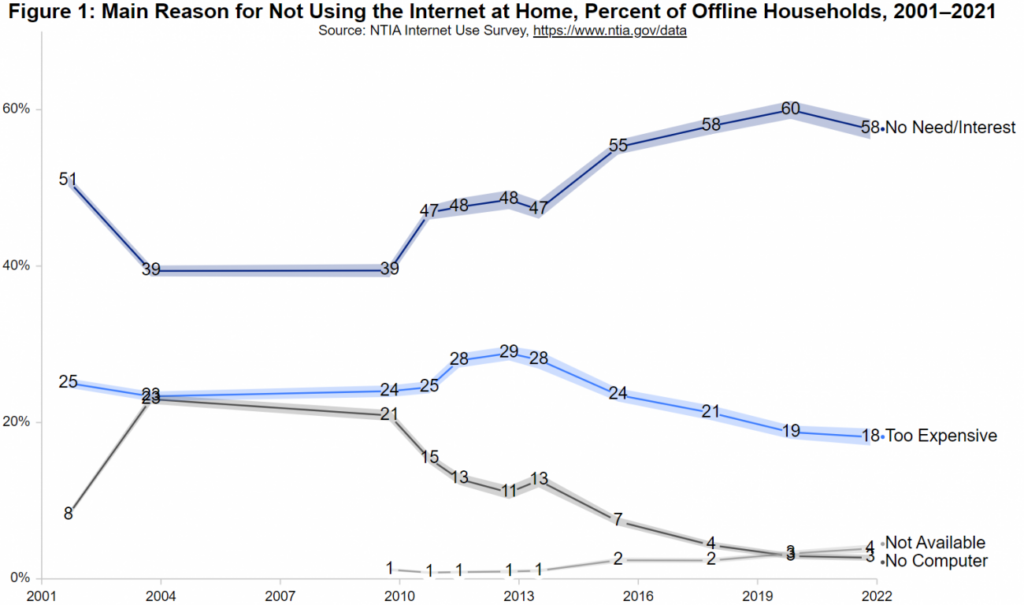
About one in five U.S. households lack home Internet access because many say they don’t need or want it and others—especially lower-income families—can’t afford service or the devices and skills to use it, highlighting persistent digital divide barriers.
National Telecommunications and Information Administration
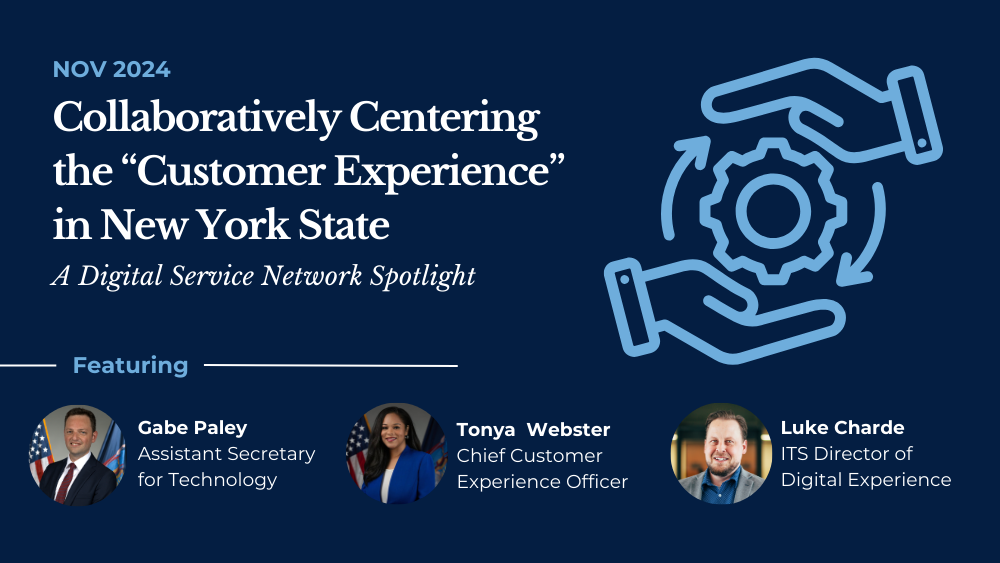
The Digital Service Network (DSN) spoke with three staff members from the New York State Executive Chamber—Gabe Paley, Tonya Webster, and, Luke Charde to learn more about the state's efforts to improve residents’ experiences accessing government programs.
This memorandum provides guidance to help agencies advance digital accessibility by maintaining an accessible Federal technology environment, promoting accessible digital experiences, and continuing the implementation of accessibility standards.
The Digital Service Network (DSN) spoke with staff from ODX — Megan Evans Seeds, chief digital officer, and Lisa Yang, digital accessibility coordinator — to discuss their efforts to help center digital accessibility across Hennepin County government.
The Digital Benefits Network at the Beeck Center for Social Impact + Innovation at Georgetown University and Public Policy Lab co-hosted a webinar presenting breaking research on beneficiary experiences with digital identity processes in public benefits.
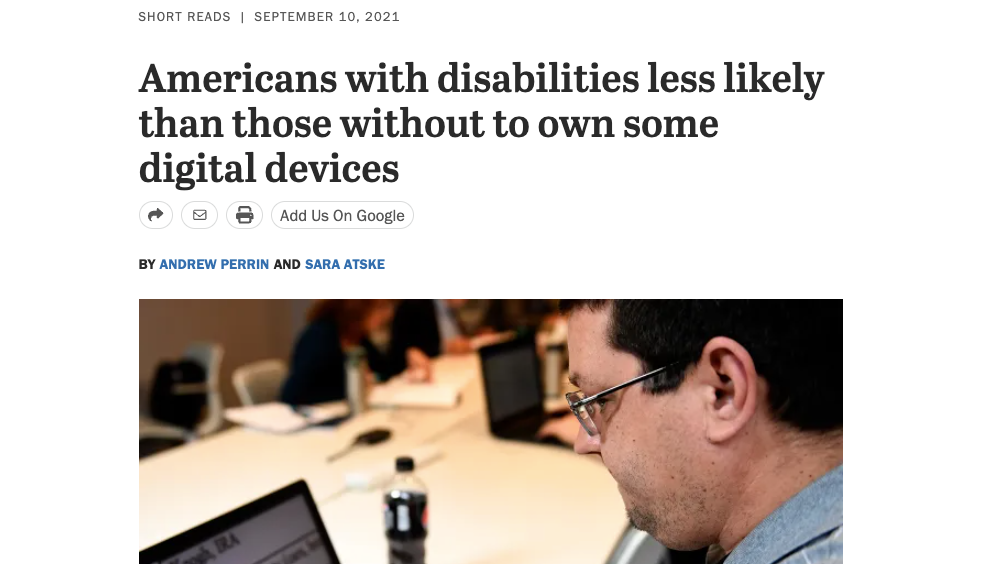
Adults in the United States who have a disability are statistically less likely than those without a disability to own certain digital devices like laptops and smartphones, and are also more likely to never go online, despite similar rates of home broadband and tablet ownership.
Making your service more inclusive means designing government services so that everyone who needs to use them can do so with as few barriers as possible, by understanding legal duties, identifying and removing exclusion points, and considering a wide range of user needs throughout the design process.
This article investigates how users' "metamemory"—specifically their anxiety regarding their own memory capabilities—drives insecure password behaviors.