Through the interviews, ULP sought to capture details of claimant experience, see how and why system failures occurred, and make recommendations for reform now—before another financial or public health crisis suddenly causes state unemployment rates to spike.
This report explores key questions that a focus on disability raises for the project of understanding the social implications of AI, and for ensuring that AI technologies don’t reproduce and extend histories of marginalization.
Drawing on interviews and convenings with experts and practitioners from the field of public interest technology, this report contains recommendations across five core priority action areas for cross-sector innovation and collaboration to improve state benefits systems through procurement practices.
Through the ACCESS project, key collaborators have shared insights into current and future opportunities for alignment within their agencies, including potential enablers for and barriers to alignment activities.
American Public Human Services Association (APHSA)
This resource outlines strategies for cross-enrollment outreach, which can break down silos between programs and reach applicants who may be eligible for under-enrolled benefits programs.
The report beings by briefly describing the challenge that disabled workers face in accessing UI and the benefits of reforming the system to better serve these workers. The report then presents a list of considerations for UI reform in the areas of administrative process and technology improvements as well as considerations for policy change.
In this report, the Strike Team outlines its recommendations and suggested next steps for the EDD to address the backlog and improve on future processing of unemployment claims.
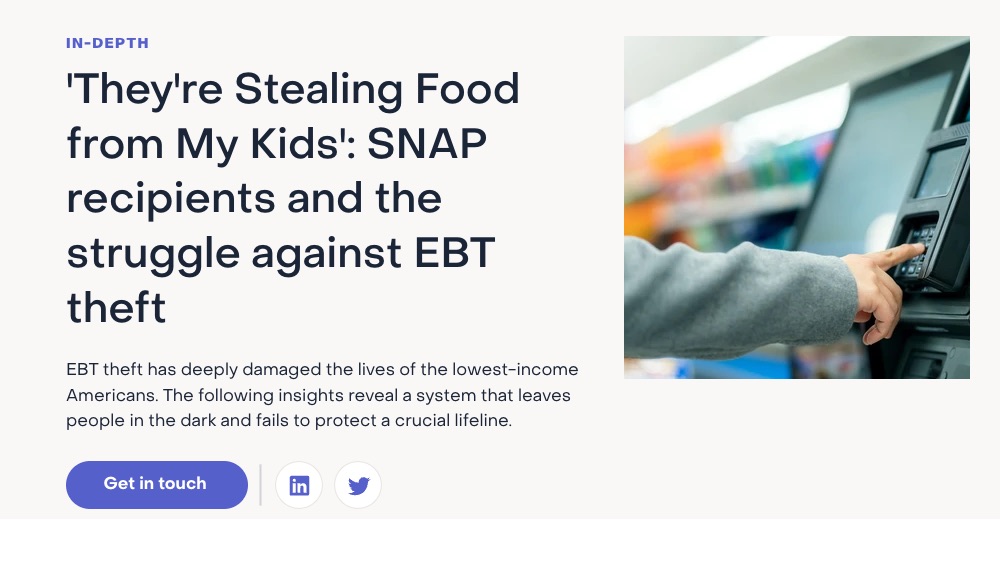
EBT theft has deeply damaged the lives of the lowest-income Americans. The following insights reveal a system that leaves people in the dark and fails to protect a crucial lifeline.
mRelief recently completed a research study to investigate whether there are specific parts of the Supplemental Nutrition Assistance Program (SNAP; also known as food stamps) benefits application process that make it difficult to complete. We conducted interviews with mRelief users and SNAP outreach workers (individuals whose job responsibilities include providing SNAP application assistance in person or over the phone) in Illinois. We also conducted group interviews with SNAP outreach workers to collaborate with them to uncover findings and develop recommendations.