“You Didn’t Understand What They Meant”: The Hidden Barrier of Cognitive Accessibility
The first edition of this storytelling series explores the critical role of cognitive accessibility in digital government services through the personal experiences of a scholar and a mother navigating a complex bureaucracy.
“You Didn’t Understand What They Meant”: The Hidden Barrier of Cognitive Accessibility
For people with learning disabilities, digital government content can mean the difference between staying housed and starting over.
Public Means All
This is the first story in a series about how digital government accessibility — or the lack thereof— shows up in everyday life, viewed through the lens of the Department of Justice’s Title II accessibility ruling.
What is ADA digital compliance?
To comply with the DOJ’s interpretation of the Americans with Disabilities Act (ADA), digital content must be usable for people with disabilities. To accomplish this, the best practice is to follow the success criteria of the Web Content Accessibility Guidelines (WCAG) Version 2.1 Level AA for state and local government’s web content and mobile apps.
In Lafayette, Indiana — a town Rua M. Williams likens to the bureaucracy-laden fictional Pawnee of Parks and Recreation — the exchange began in the mundane generosity of a Buy Nothing Facebook group.
A mother needed help.
Williams, a parent of three, was giving away a baby bouncy seat.
Maria*, a mother of three children, replied. She had just entered a housing program, and was fighting to hold together her family after a period of incarceration had already cost her the custody of her first child.
Trapped in the precarity of poverty, Maria lived in a state of constant, cortisol-fueled hypervigilance. Every day was a desperate attempt to stay stable, anchored by the paralyzing fear that a single misstep might trigger a cascade of interventions — and the removal of her remaining children.
“That fear actually made it difficult, too, for her to interact with the [government] services,” Williams said.
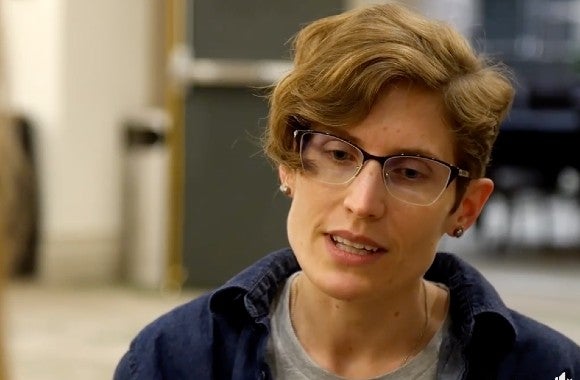
Williams, an assistant professor in the School of Applied and Creative Computing at Purdue University whose research explores the intersection of disability, technology, and politics, recognized Maria’s learning disability instantly. As an autistic person who had spent a lifetime being read as wrong in a rigid, neurotypical world, Williams described themselves as having a “gaydar” for disability. When Maria later confirmed her history being in special education, it was not a surprise to Williams, but a recognition of a shared, subterranean language.
“I had so much familiarity with being confused and lost when everybody else seemed to understand,” Williams said, reflecting how they immediately saw Maria’s exhaustion after years of being told they were the problem. “Any time I witness that experience, I recognize it as real.”
Williams stepped in to help. Maria’s stability hinged on completing an endless gauntlet of digital and analog government forms for food assistance, housing support, and medical insurance renewals. Every form threatened to undo her life.
“If you give me a form, I will absolutely mess it up,” Williams said.
These forms ask for absolute precision: reading closely, interpreting legalese, tracking multiple instruction steps at once, and maintaining focus under extreme duress. For people with cognitive conditions like dyslexia, dyscalculia, or dysgraphia, that’s not a small ask, particularly when the penalty for failure is family separation.
“You miss one checkbox, and they won’t give you anything,” Williams said. “It’s like, you just didn’t understand what they meant.”
For several months a few years ago, Williams helped Maria fill out public benefit forms, raised money, and watched Maria’s children during medical emergencies. But Williams soon realized that individual intervention was a temporary Band-Aid on a systemic wound.
“You’re so overwhelmed, you know that if you do it wrong, they’re gonna take everything from you,” Williams said. “It’s designed for people to fall through the cracks.”
That’s the gap the new Department of Justice Title II rule is aiming to close. It requires state and local digital content like websites, mobile apps, social media content, and online forms to comply with standards like the Web Content Accessibility Guidelines, known as WCAG 2.1 Level AA.
Williams is cautiously optimistic about the changes. They worry about a “pageant of compliance,” where developers check boxes for color contrast and screen readers while the underlying layers of bureaucracy remain “inscrutable” to those with cognitive challenges.
Williams knows there are dedicated people in government doing the heavy lifting every day. To them, true accessibility requires reimagining the roles of public servants — not as gatekeepers, but as allies who shape digital systems that meet the needs of the communities they serve.
This involves a common commitment to this accessibility: “It shouldn’t be about ‘done,'” Williams said, “it should be about ‘being'”.
Meanwhile, Maria is still trying.
After transitioning out of a housing program in Lafayette without local support, her stability remained elusive. She was evicted and began a precarious journey through homeless shelters in five different cities across Indiana and Michigan.
She is still filling out forms, still cycling in and out of the system, and still being asked the same, perennial question:
Do you understand?
*To protect their privacy, some individuals in this story are identified by a pseudonym.
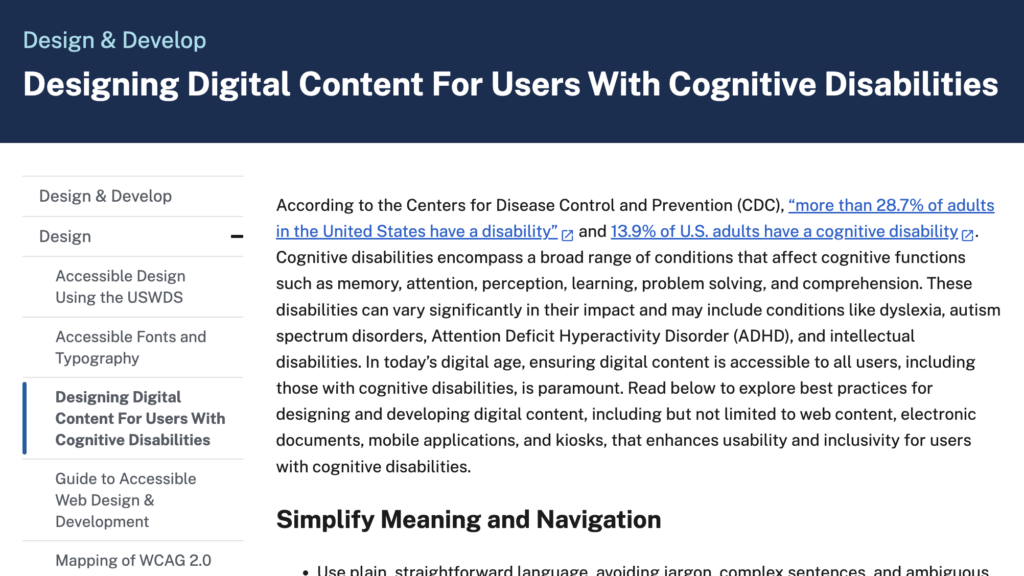
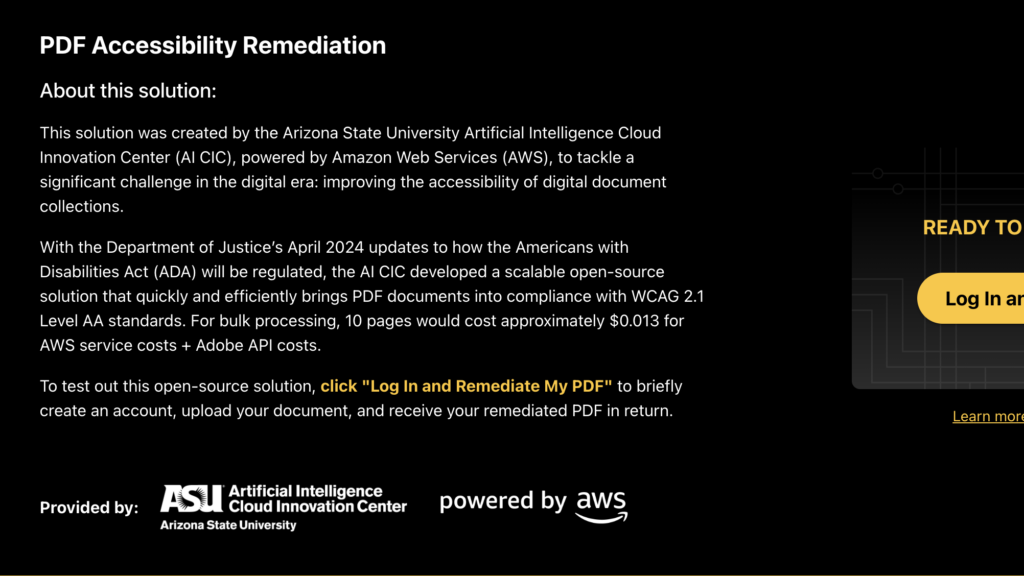
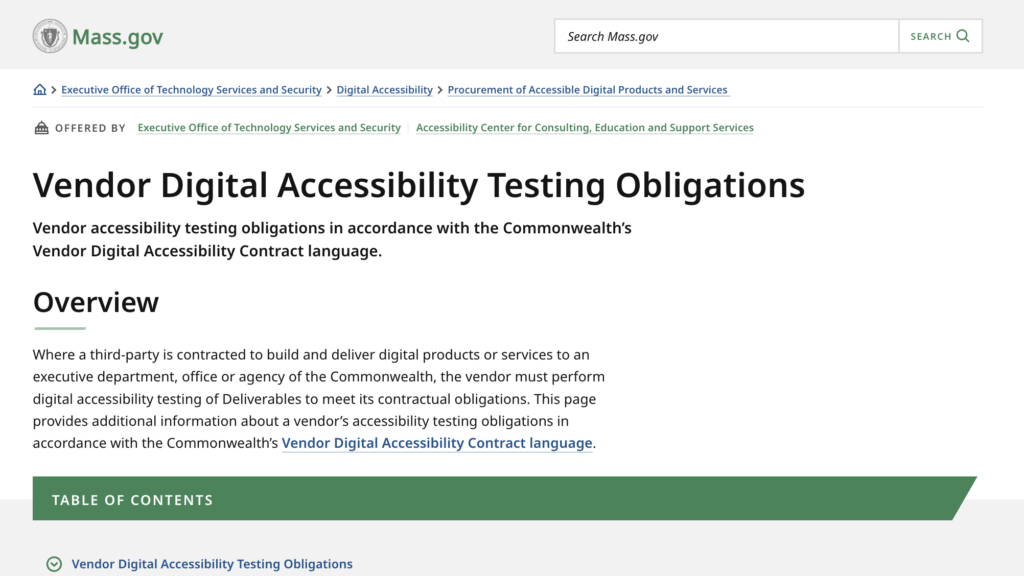
Explore digital accessibility resources
Accessibility
From Principle to Practice Accessibility is a critical practice in the process of designing government products and services as they are intended to be used by the general public. There are a number of potential accessibility components that need to be evaluated in this process to ensure that everyone can meaningfully access the digital experiences. […]
What the DOJ Accessibility Deadline Really Means for Your Agency
The A11y Jam opening session that introduces the April 2026 DOJ digital accessibility requirements and provides practical, plain-language guidance for government teams preparing for compliance.