Beeck’s Accessibility Jam Draws 700+ Government Leaders
With a federal accessibility deadline approaching, the Beeck Center convened government leaders to turn compliance pressure into lasting digital inclusion.
More than 700 attendees nationwide convened at a first-of-its-kind virtual Accessibility Jam—referred to as A11yJam—on April 15. Convened by the Digital Government Network at the Beeck Center for Social Impact + Innovation at Georgetown University, the daylong event brought together local and state government practitioners, technologists, and advocates to prepare for an approaching federal mandate to make digital products accessible.
The convening comes before a major U.S. Department of Justice (DOJ) deadline requires state and local governments to make websites, mobile applications, and social media content comply with accessibility standards under the Title II of the Americans with Disabilities Act. For many agencies, the deadline has turned what was once a best practice into an urgent operational priority.
“The deadline is a forcing function, but it’s also an opportunity,” said Lynn Overmann, executive director at the Beeck Center, during opening remarks. “If we do this right, we won’t just meet a requirement, we’ll deliver better government for more people.”
The compliance deadline was originally April 24, but an update from the DOJ last week indicated a potential one-year extension to the deadline. While additional time may provide welcome flexibility—especially for smaller and resource-constrained governments—the core expectation has not changed. People need accessible digital services now.
Rather than focusing on high-level policy discussions, A11yJam sessions emphasized implementation, including best practices when auditing an existing system, developing a roadmap for digital accessibility compliance, and navigating misconceptions about the upcoming deadline.
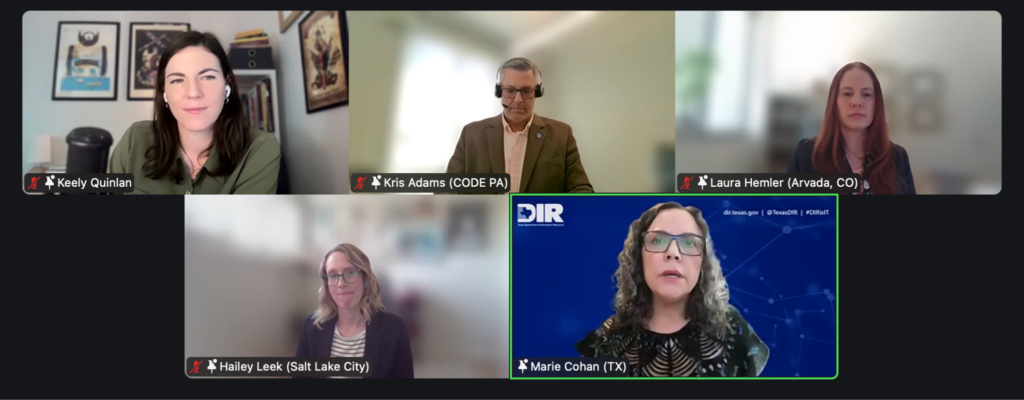
Speakers from organizations including the City of Arvada, Colorado; Minnesota’s Hennepin County Attorney’s Office; and the Texas Department of Information Resources shared approaches for improving accessibility in digital content. This included mapping user journeys to determine high-traffic areas and transitioning assets like dense PDF content into webpages and paper-based applications into user-friendly forms.
“We have to shift away from treating accessibility as a one-time project to making it an ongoing practice for our future users,” said Hailey Leek, innovation team lead at the
Salt Lake City Corporation, during an introductory panel.
Kristopher Adams, the chief accessibility officer for the Commonwealth Office of Digital Experience (CODE PA), agreed: “If you don’t change how you design, the problem will simply repeat itself over and over again.”
Several themes emerged across speakers’ remarks. With the DOJ deadline approaching, panelists at both the state and local level acknowledged many organizations can feel overwhelmed, and stressed the importance of prioritizing high-risk content.
“Accessibility is manageable when it is structured,” Adams said. “Start with governance, not panic.”
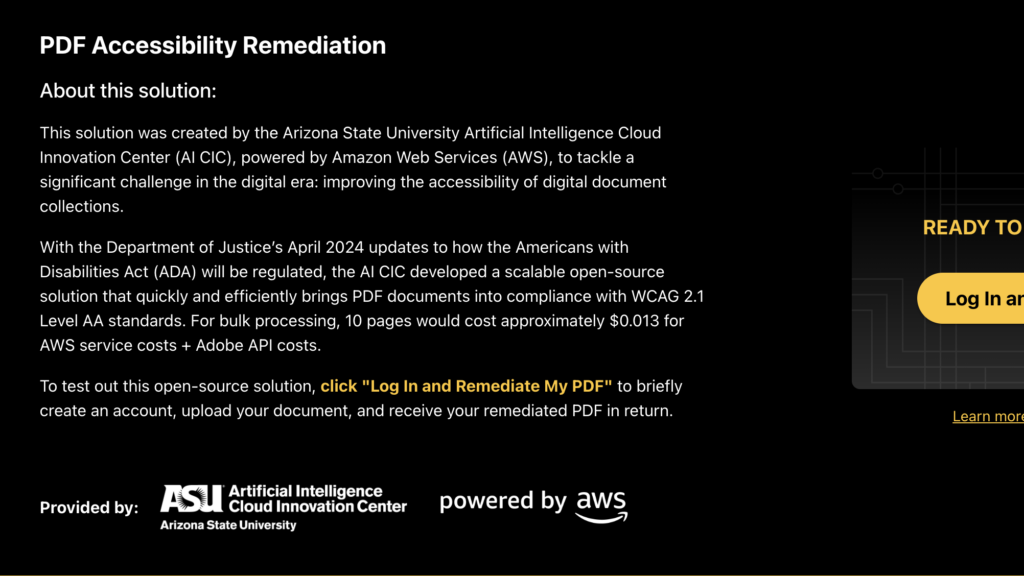
Governments can make high-impact changes efficiently by taking inventory of existing systems and products and identifying frequently used, noncompliant assets while removing outdated documents instead of remediating or replacing them.
“You think you know what all of your assets are, and you do your inventory, and you realize there’s a whole lot of stuff in there,” said Laura Hemler, the deputy city attorney for the City of Arvada.
Another theme was the importance of small changes. Updating color contrast, writing proper headings, and using plain language are effective at improving base accessibility through relatively simple changes, according to Jennifer Waters, the assistant county attorney for Hennepin County.
“There are some accessibility guidelines that are more difficult, but if you start with the ones that are simple to understand, that can help build some momentum,” she added.
By focusing on small, high-impact changes that can be built into every employee’s standard processes, accessibility moves from one-time updates to an institutional framework.
“Digital accessibility is the responsibility of every employee,” said Michal Perlstein, senior manager of digital engagement for the City of Seattle.
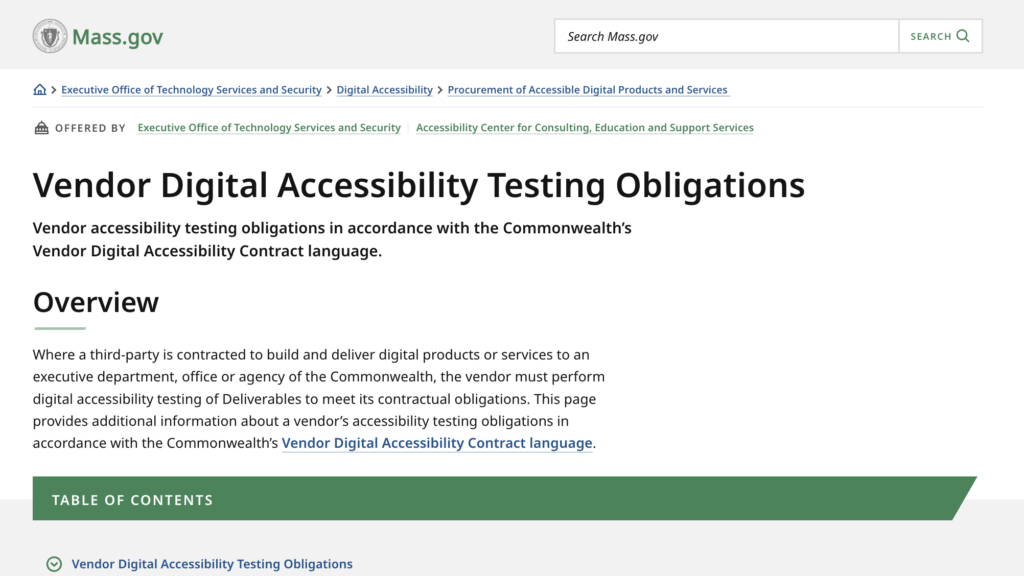
The event also highlighted a growing ecosystem of tools and peer support networks available to government teams. Open-source resources, accessibility testing tools, shared design systems, and best practices for vendors were shared throughout the day. The Beeck Center’s Digital Government Hub Accessibility topic page shows these tools, resources, and examples across inventory, assessment, remediation, design, procurement, and governance, making it a comprehensive library for governments.
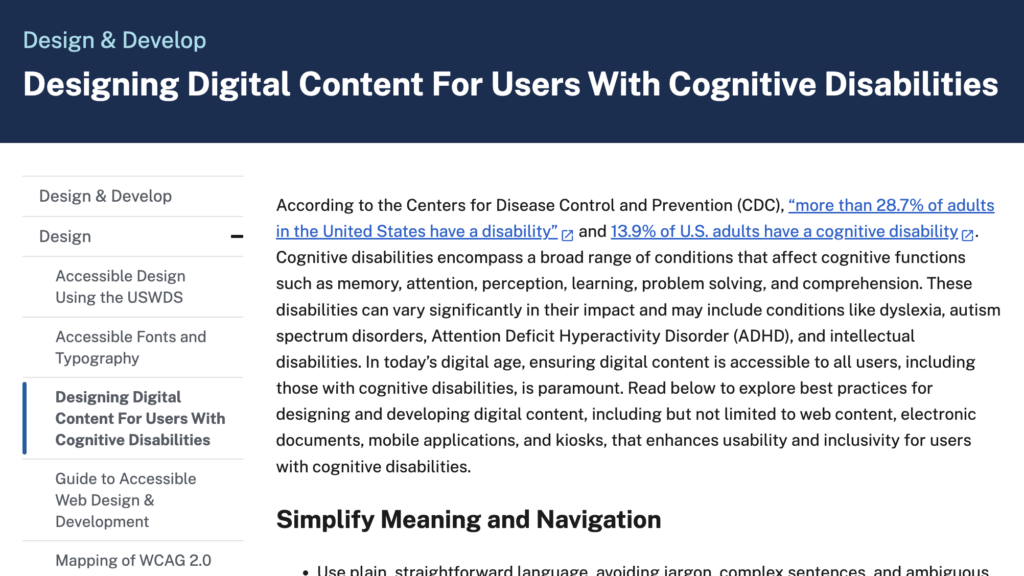
Beyond compliance, speakers emphasized the broader stakes. One in four adults in the United States lives with a disability, meaning digital accessibility affects how millions of people interact with government systems. From applying for food benefits to accessing court information or public health vaccination resources, inaccessible systems can create significant barriers to essential services.
For participants at A11yJam, this means the tools shared by panelists move beyond meeting the DOJ deadline.
“Now, there are no excuses. Everything from [the deadline] onward should be completed using full accessibility,” Perlstein said.
As agencies race to meet federal requirements, organizers said the goal of A11yJam was to equip teams with the knowledge and momentum to act, and the connections across governments to learn from one another.
Explore more accessibility resources
To see the session recordings and corresponding resources, explore the following in the Hub:
What’s Happening in Local Governments Across the U.S.
A11y Jam session focused on how local governments are advancing DOJ accessibility compliance using practical, resource-conscious strategies across high-impact digital services.
What’s Happening in State Governments Across the U.S.
An A11y Jam session on how state agencies prioritize and manage digital accessibility compliance across complex systems using data-driven strategies and cross-agency coordination.
What the DOJ Accessibility Deadline Really Means for Your Agency
The A11y Jam opening session that introduces the April 2026 DOJ digital accessibility requirements and provides practical, plain-language guidance for government teams preparing for compliance.
Chartability for Accessible Data Visualizations and Interfaces
A practical accessibility framework that provides testable heuristics to help designers and developers evaluate and improve the inclusivity of data visualizations and data-driven interfaces.
New Jersey’s Engineering Accessibility Training
This codebase is a web-based accessibility training project designed to support engineering-focused learning and practice around accessible development.
City of Arvada’s Accessible PDF Guidance
This guidance document outlines how to create and review accessible PDFs to help ensure compliance with WCAG 2.1 AA and other digital accessibility standards.