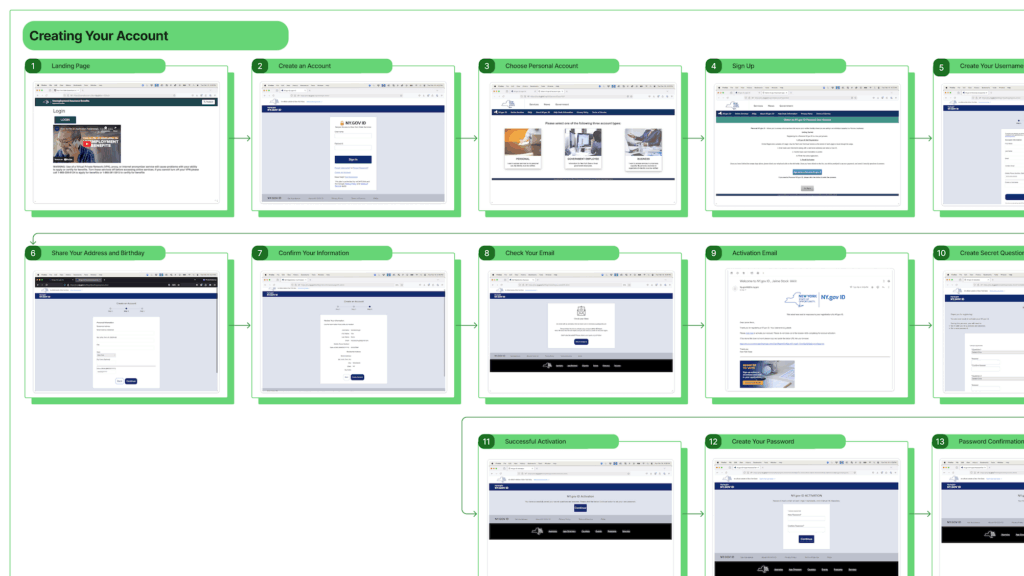
Created for use in the Digital Doorways research project, this design stimuli shows the steps of submitting an application, sharing personal information, and verifying identity for New York's online application for Unemployment Insurance.
This report warns that federal data collection is being undermined by budget cuts, political interference, and leadership changes that threaten the reliability of core economic and social statistics.
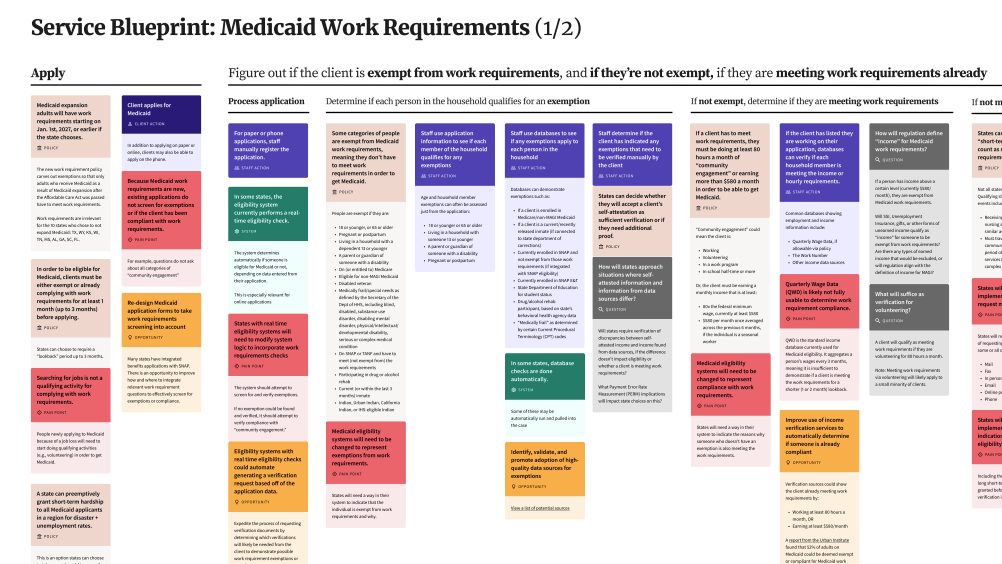
This 11x17 service blueprint visualizes every step, system, and policy decision involved in implementing Medicaid work requirements under H.R. 1—from application to renewal—identifying pain points, questions, and opportunities for states to streamline and humanize the process
A practical guide for advocates that explains how automated benefit notices are generated, where common notice failures originate, and how to push for effective fixes.
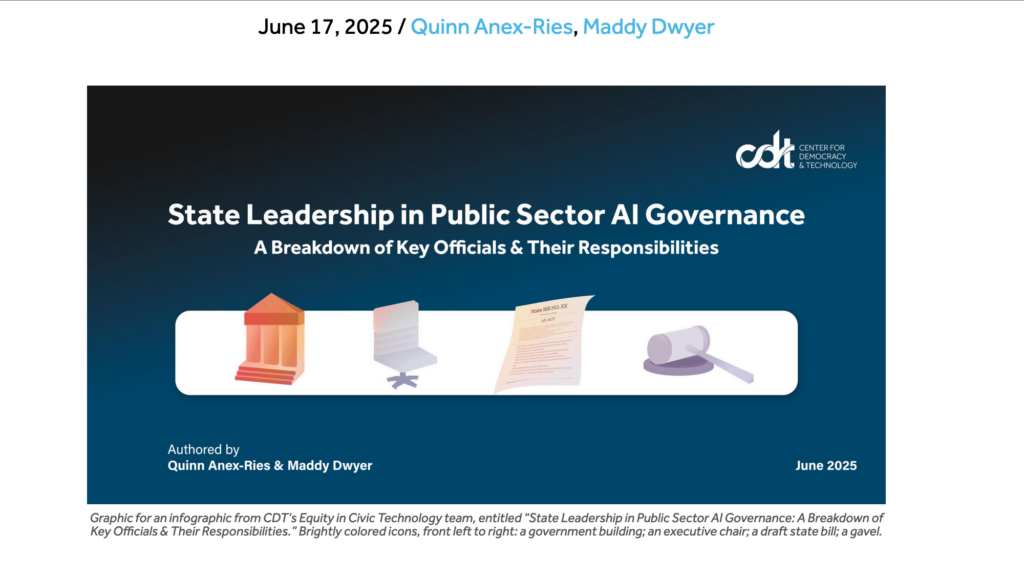
An infographic-style brief that maps the roles and responsibilities of key state leaders involved in governing the development, acquisition, use, and oversight of artificial intelligence in public-sector programs.
A virtual event showcasing how one city applied technology, including artificial intelligence, to streamline municipal code administration and reduce bureaucratic friction.
A case study that reflects on the design, implementation, and early outcomes of a local child care wage boost pilot aimed at improving job quality and retention in the child care workforce.
The A11y Jam opening session that introduces the April 2026 DOJ digital accessibility requirements and provides practical, plain-language guidance for government teams preparing for compliance.
This webinar presentation outlines the essential communication requirements and outreach standards for states preparing for Medicaid work reporting mandates starting in 2027.
Design systems are a foundational component of good government digital service delivery. This publication explores why design systems matter and includes a tracker of centralized design systems across U.S. states.