These guidelines provide technical requirements for federal agencies implementing digital identity services and are not intended to constrain the development or use of standards outside of this purpose. This guideline focuses on the enrollment and verification of an identity for use in digital authentication.
National Institute of Standards and Technology (NIST)
This report summarizes 19 SNAP policy options (in effect as of Oct. 1, 2023) and waivers (implemented as of July 1, 2023) chosen by SNAP state agencies (50 states, the District of Columbia, Guam, and Virgin Islands) in federal fiscal year (FY) 2023.
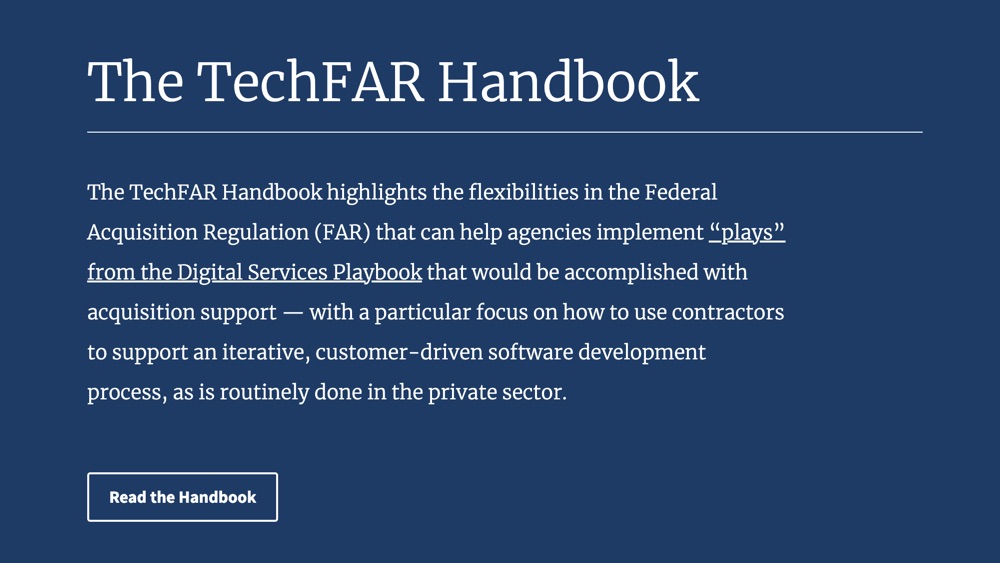
This handbook highlights the flexibilities in the Federal Acquisition Regulation (FAR) that can help agencies implement “plays” from the Digital Services Playbook, with a particular focus on how to use contractors to support an iterative, customer-driven software development process.
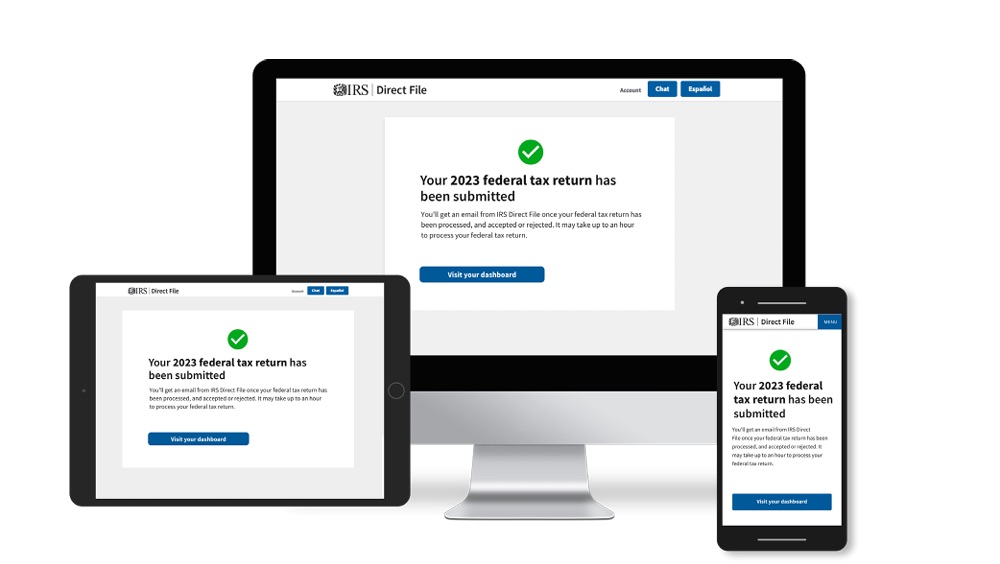
The IRS Direct File Pilot Program After Action Report evaluates the 2024 pilot of a free, government-run tax filing system, assessing taxpayer participation, user experience, and potential for future expansion.
This study evaluates the use of RPA technology by three states to automate SNAP administration, focusing on repetitive tasks previously performed manually.
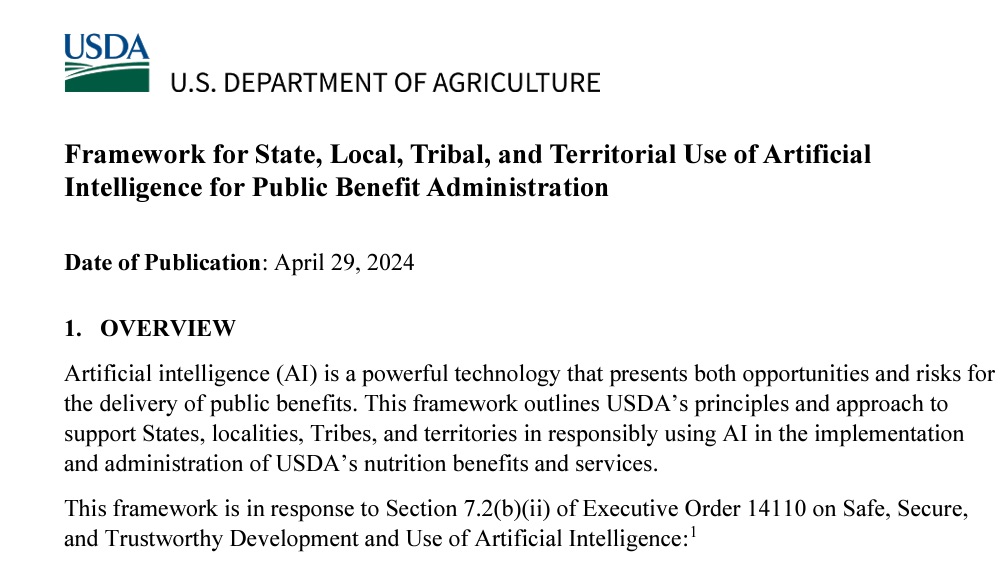
This framework outlines USDA’s principles and approach to support States, localities, Tribes, and territories in responsibly using AI in the implementation and administration of USDA’s nutrition benefits and services. This framework is in response to Section 7.2(b)(ii) of Executive Order 14110 on Safe, Secure, and Trustworthy Development and Use of Artificial Intelligence.
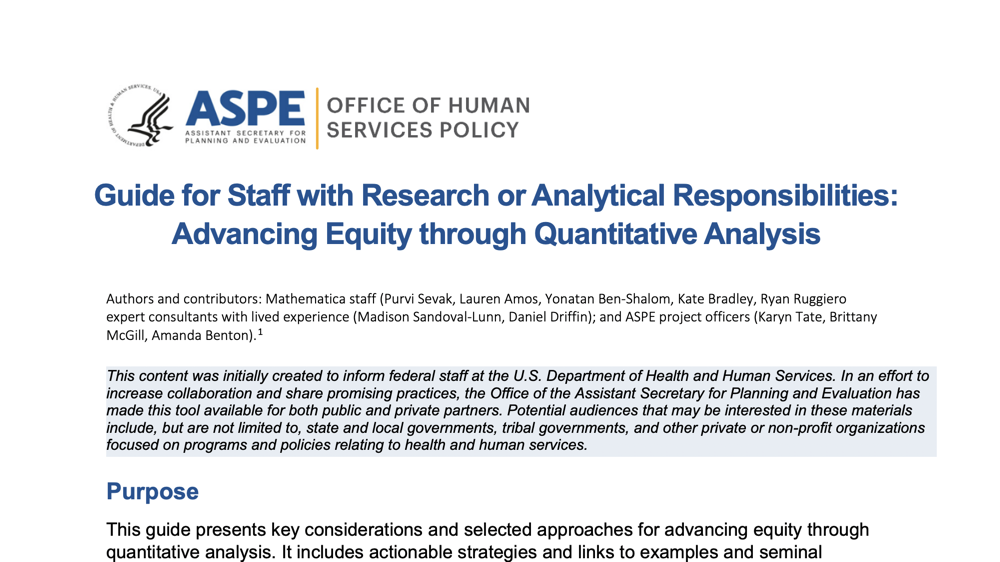
Initially created to inform federal staff at the U.S. Department of Health and Human Services, this guide explores opportunities to advance equity in quantitative analysis, including by recognizing common biases (e.g., research and measurement bias).
Office of the Assistant Secretary for Planning and Evaluation (ASPE)
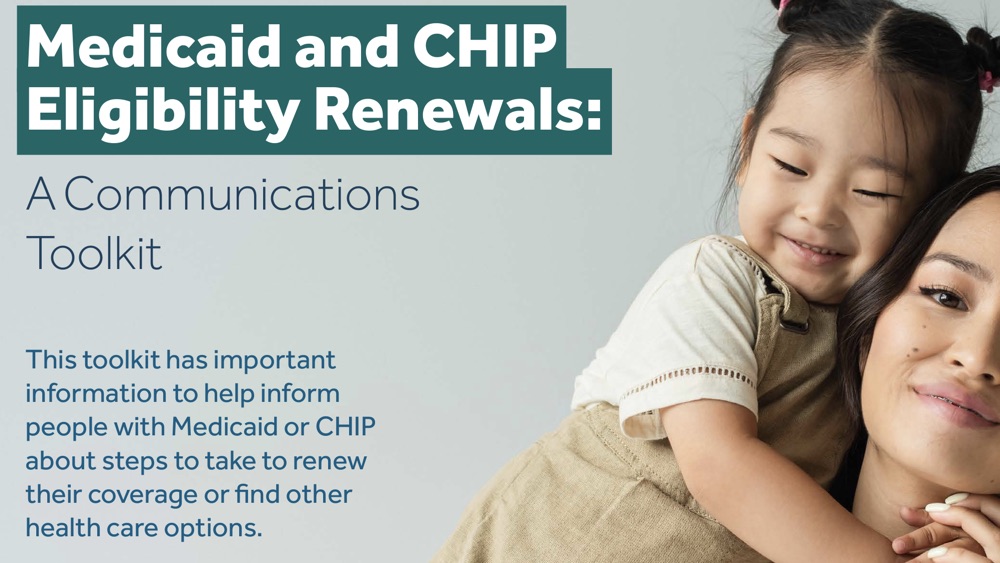
This resource is a communications toolkit designed to help states and stakeholders inform Medicaid and CHIP recipients about the eligibility renewal process, ensuring they take necessary steps to maintain or transition to alternative health coverage.
Better Rules utilizes multidisciplinary teams that include people skilled in policy, legal, business rules, programming, and service design working together in an iterative fashion to develop rules. Several outputs are produced using this approach, each offering an opportunity that can be fed back into that iterative process and re-used to solve other issues.