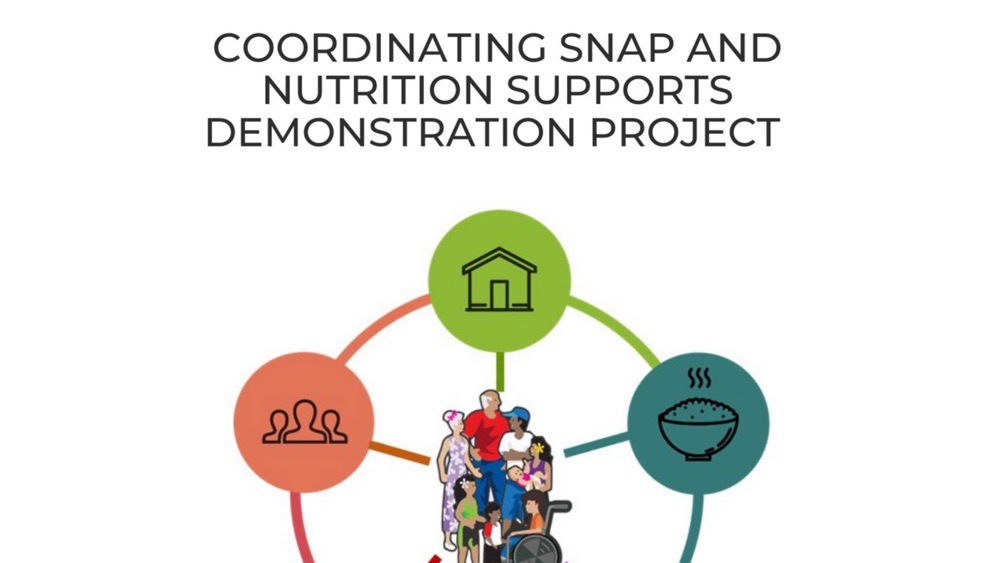
This white paper documents Hawai'i's journey and lessons learned from their 18-month Coordinating SNAP and Nutrition Supports project which laid the foundation for interagency data-sharing and built capacity to analyze administrative data across nutrition programs--specifically SNAP and WIC.
This blog discusses a resource developed by the Digital Service at the Centers for Medicare & Medicaid Services (CMS) to assist individuals in navigating mental health, drug, or alcohol issues and connecting with appropriate support services.
U.S. Department of Health and Human Services (HHS)
For the past year, modernization teams at the Department of Labor (DOL) have been helping states identify opportunities to automate rote, non-discretionary, manual tasks, with the goal of helping them speed up the time that it takes to process claims. This post provides more context on Robotic Process Automation (RPA) and potential use cases in unemployment insurance.
This expansive toolkit provides guidance, real world examples, and resources to help TANF and child support programs engage the families they serve in improving service delivery, policy, and program operations.
This report from the Joint Financial Management Improvement Program outlines efforts to use identity verification to reduce improper payments in government programs, while mitigating bias and disparate impacts.
The Joint Financial Management Improvement Program (JFMIP)
It is frequently assumed that when rules are implemented as code, a rules engine is necessary. However, it is possible for policy people and engineers to effectively work together to code logic that drives technological system without needing a mediating rules engine at all.
CMS has identified a number of immediate and longer-term strategies that states can implement to improve application processing timeframes and address application backlogs.
This session from FormFest 2024 features the South Carolina Early Childhood Advisory Council’s work developing a single portal to integrate applications for publicly funded programs and services, and the office of Federal Student Aid’s work on the FAFSA form.
This section of the Building Resilience plan outlines strategies to help states modernize outdated unemployment insurance (UI) IT systems, making them more modular, secure, fraud-resistant, and user-centered.
This blog discusses the importance of phased rollouts for government software products, emphasizing the benefits of starting small, gathering real-world user feedback, and resolving issues before a full public release.
These principles and best practices for AI developers and employers to center the well-being of workers in the development and deployment of AI in the workplace and to value workers as the essential resources they are.