This article emphasizes the need for local leaders to prioritize disability equity in advancing upward mobility, addressing systemic barriers that hinder disabled individuals' escape from poverty.
This guide outlines how states can use TANF funds to provide direct cash assistance to families, particularly through flexible mechanisms like nonrecurrent short-term benefits (NRSTs).
This article emphasizes the need for local leaders to prioritize disability equity in advancing upward mobility, addressing systemic barriers that hinder disabled individuals' escape from poverty.
The Pandemic Electronic Benefits Transfer (P-EBT) program was launched as an effort to address the loss of access to free and reduced-price school meals due to widespread school closures at the onset of the COVID-19 pandemic. As schools reopened in a shifting mix of fully virtual, hybrid, and inperson formats and families lacked consistent access to school meals, these benefits were extended through the 2020–21 school year and were highly valuable to families in buffering the full extent of food insecurity they may have faced during this uncertain time. However, the complexity of administering this program was a fundamental barrier in providing timely support to families, who ultimately went without benefits for at least half of the school year. In this report, we dive into the challenges state administrators faced in launching this new program during the 2020–21 school year and reflect on considerations for the future.
This brief estimates of benefits, costs, interactions with other means tested programs, and impact on poverty for the paid family and medical leave program.
This report analyzes how proposed state cost-sharing requirements for SNAP would impact benefit access and poverty during a recession, projecting significant risks to low-income households if states are unable to maintain SNAP funding.
This policy brief outlines how extending postpartum Medicaid and CHIP coverage can improve maternal health outcomes, reduce disparities, and strengthen continuity of care during the critical first year after childbirth.
An analysis showing that a proposed plan to shift some cost of SNAP benefits to states could push nearly 900,000 additional people into poverty during a recession.
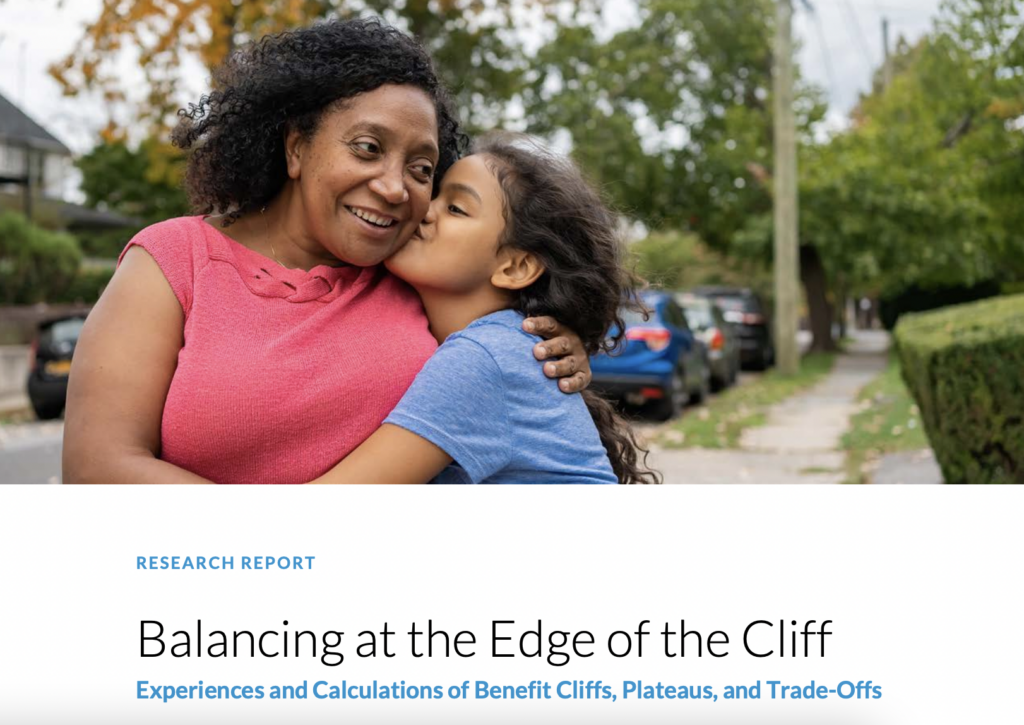
This Urban Institute report explores the impact of benefit cliffs, plateaus, and trade-offs on families receiving public assistance, examining how changes in earnings affect access to essential benefits like SNAP, Medicaid, and housing subsidies.
This report examines how state governments organize and manage human services programs, analyzing various agency structures and their impact on service delivery and coordination with the health care sector.
This analysis explores the potential reduction in poverty rates across all U.S. states if every eligible individual received full benefits from seven key safety net programs, highlighting significant decreases in overall and child poverty.