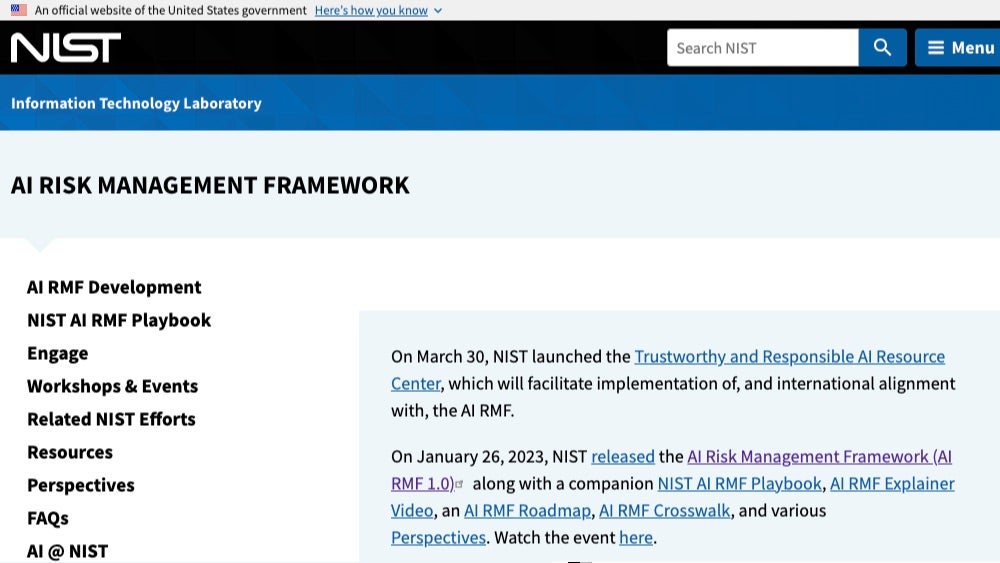
NIST has created a voluntary AI risk management framework, in partnership with public and private sectors, to promote trustworthy AI development and usage.
National Institute of Standards and Technology (NIST)
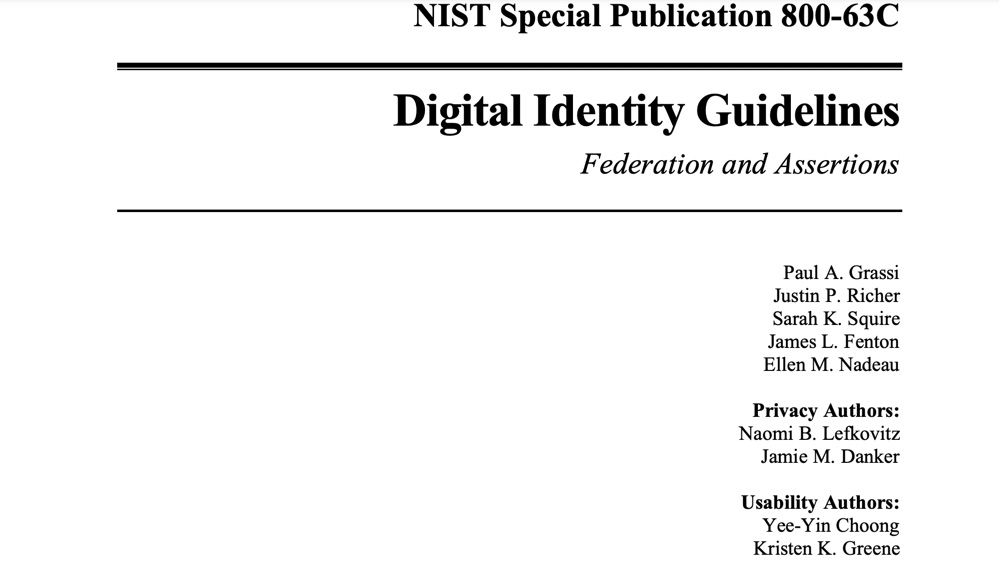
These guidelines provide technical requirements for federal agencies implementing digital identity services and are not intended to constrain the development or use of standards outside of this purpose. This guideline focuses on the use of federated identity and the use of assertions to implement identity federations. Federation allows a given credential service provider to provide authentication and (optionally) subscriber attributes to a number of separately-administered relying parties.
National Institute of Standards and Technology (NIST)
This framework provides voluntary guidance to help employers use AI hiring technology in ways that are inclusive of people with disabilities, while aligning with federal risk management standards.
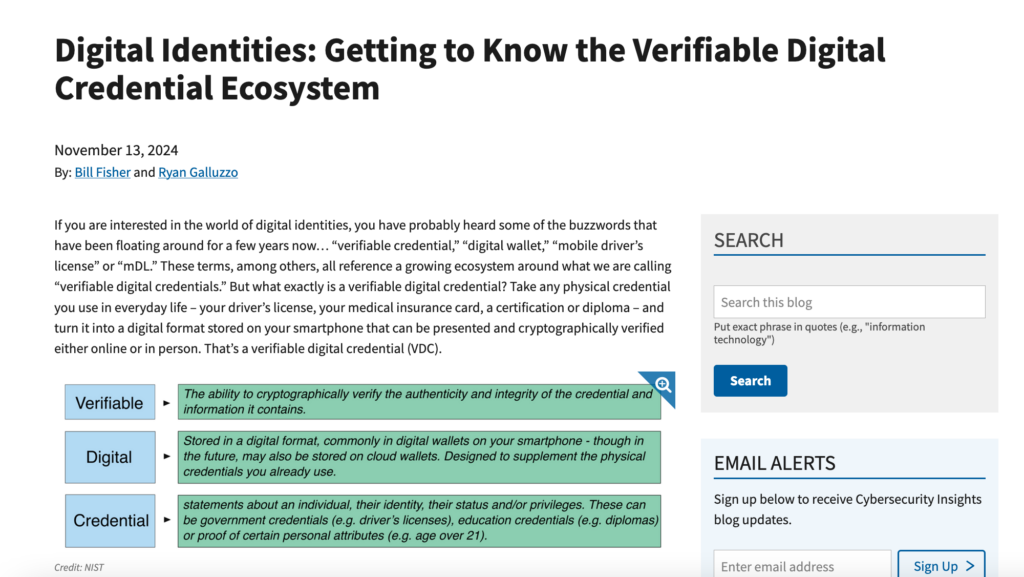
This blog explains that verifiable digital credentials (VDCs) are cryptographically secure digital versions of physical credentials (like driver’s licenses or diplomas) stored in digital wallets that can be presented and verified online or in person.
National Institute of Standards and Technology (NIST)
The NIST Risk Management Framework (RMF) Introductory Courses offer free, self-paced online training on managing cybersecurity and privacy risks using NIST’s RMF methodology and related publications.
National Institute of Standards and Technology (NIST)