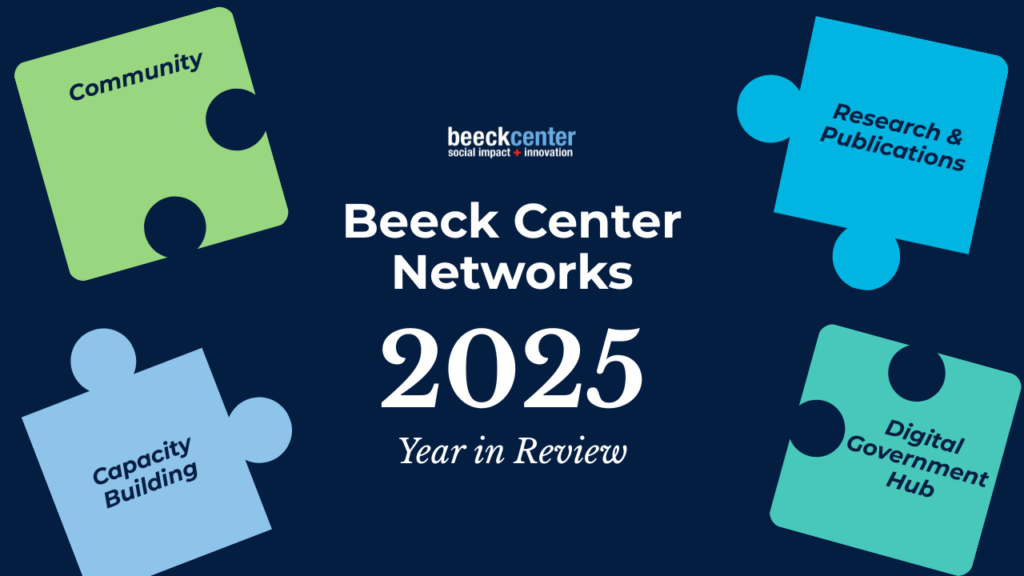
Recapping the work and achievements of the Digital Benefits Network (DBN), Digital Service Network (DSN), and the State Chief Data Officers Network (CDO) in 2025.
This publication summarizes a body of research about how state benefits administering agencies build and maintain integrated eligibility and enrollment (IEE) systems. It is an easy to reference guide for state administrators, legislators, advocates, and delivery partners.
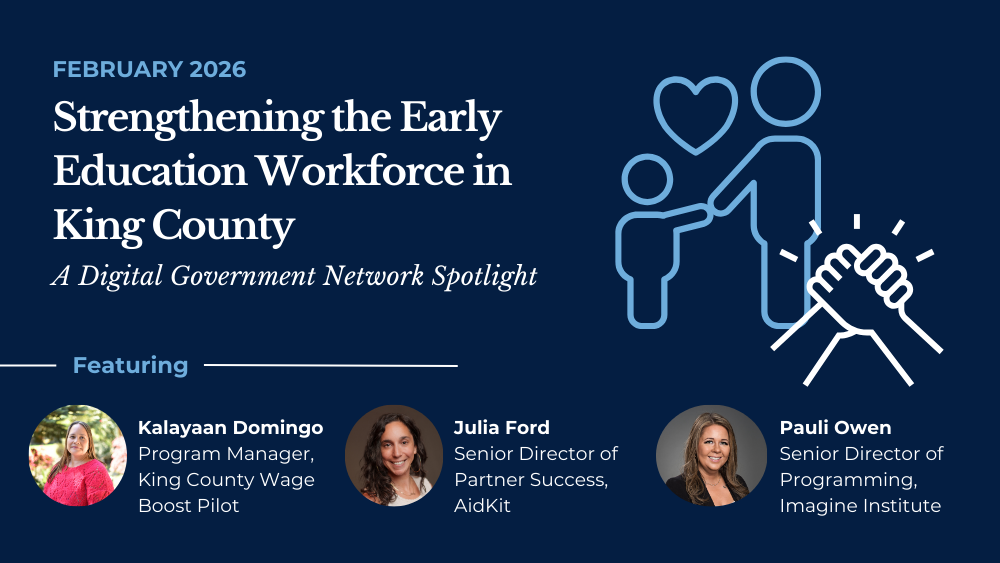
DGN Spotlights are short-form project profiles that feature exciting work happening across our network of digital government practitioners. Spotlights celebrate our members’ stories, lift up actionable takeaways for other practitioners, and put the resources + examples we host in the Digital Government Hub in context.
This blog summarizes an event exploring how the City of Boston and Washington State are designing and implementing Single Sign-On (SSO) systems to simplify access to government services.
A TLDR of the State CDO Archetypes report—covering how state CDO offices operate and the six archetypes that define them. Written for event attendees and government staff: governor's office, IT and budget leadership, legal and data officials, and legislators who oversee CDO funding and establishment.
This guide is a practical introduction to Digital Service Teams (DSTs) for state and local governments. It is designed to help leaders interested in standing up new government DSTs understand what they are, why they exist, and how they are structured, staffed, funded, and more.
The first edition of this storytelling series explores the critical role of cognitive accessibility in digital government services through the personal experiences of a scholar and a mother navigating a complex bureaucracy.
An event recap from one of FormFest 2025’s breakout sessions featuring speakers from Code for America and Arizona’s Department of Economic Security (DES).