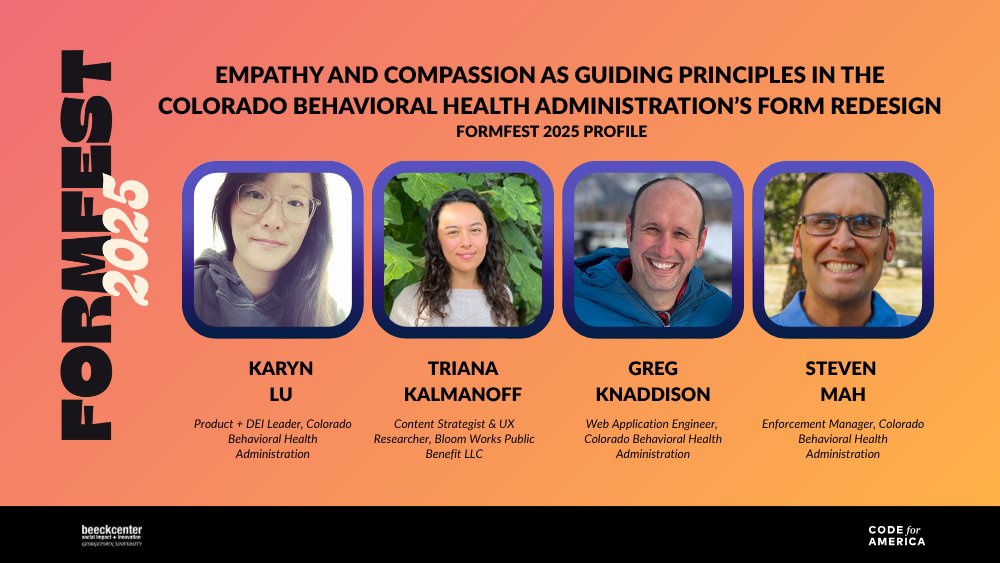
This FormFest profile highlights how the Colorado Behavioral Health Administration redesigned its complaint submission form using empathy, human-centered design, and trauma-informed research methods to make the process more accessible, compassionate, and secure for all users.
Code for America’s Integrated Benefits Initiative has been working in partnership with the State of Colorado to demonstrate how user-centered approaches lead to measurably better delivery of safety net programs. This article describes their work with the state of Colorado in simplifying how clients report common life changes that can affect their eligibility.
This report calculates the cumulative impact of major benefit programs on two types of families and how their benefits change as they move into the labor market and climb the ladder of upward mobility.
A presentation outlining Colorado’s implementation of mobile driver’s licenses (mDLs), explaining the technology standards, privacy protections, adoption landscape, and verification tools for businesses and agencies.
This report examines the phenomenon of "churn" in public benefit programs, where eligible participants temporarily lose benefits due to administrative processes, analyzing its impact on both recipients and state agencies, and suggesting strategies to reduce its occurrence.
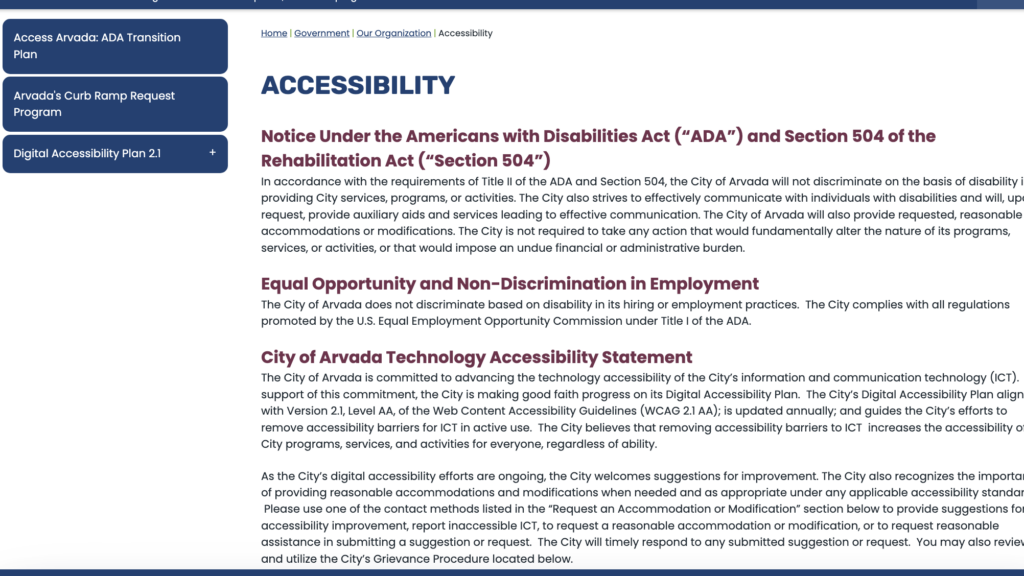
This accessibility webpage outlines the City of Arvada’s commitment to making its digital services, programs, and information accessible to people with disabilities.
WIC enrollment has declined over the last decade, preventing millions of eligible low-income individuals from accessing its benefits. This report examines state WIC outreach pilots and discusses the effectiveness of text message outreach and key considerations when developing and launching targeted text outreach campaigns.
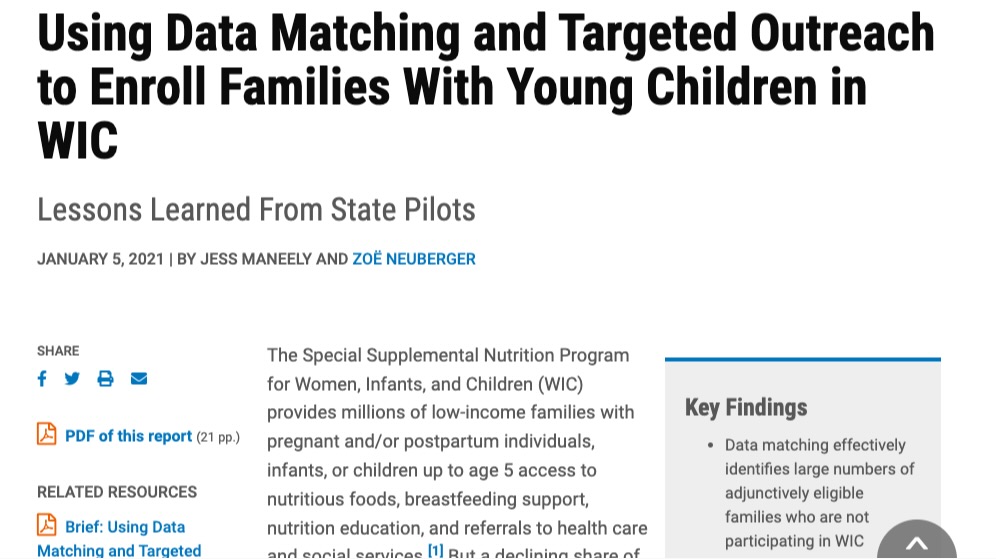
The report examines pilot projects in multiple states that utilized data matching and targeted outreach to enroll eligible families with young children in the WIC program, demonstrating the effectiveness of this approach in increasing participation rates.
A framework that helps policy and digital service teams interpret legislation by identifying user needs, intent, and implementation challenges to support more effective, human-centered government service delivery.
This Urban Institute report explores the impact of benefit cliffs, plateaus, and trade-offs on families receiving public assistance, examining how changes in earnings affect access to essential benefits like SNAP, Medicaid, and housing subsidies.
This resource outlines strategies for cross-enrollment outreach, which can break down silos between programs and reach applicants who may be eligible for under-enrolled benefits programs.