The US Digital response partnered with dozens of states, counties, and cities to support them in using and tracking CARES Act grants. This article presents six lessons learned from their work to help governments better assist residents, particularly small businesses and low-income communities.
This section of the Building Resilience plan outlines strategies to expand access to unemployment insurance (UI) for underserved populations and improve benefit adequacy through system reform, outreach, and data-driven equity efforts.
This section of the Department of Labor’s Building Resilience plan focuses on improving customer experience across unemployment insurance (UI) systems by promoting timely, accessible, and equitable service delivery for all claimants.
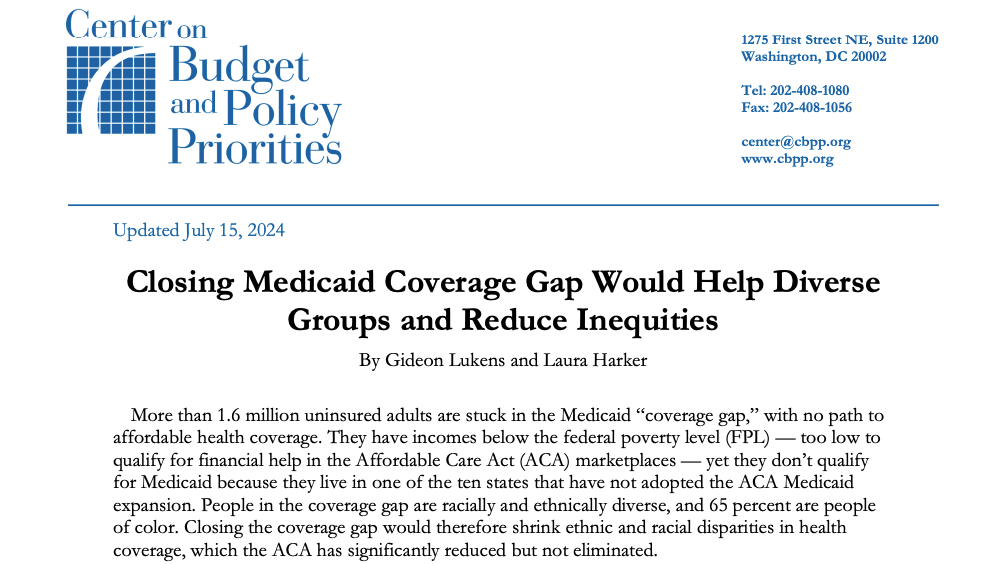
Closing the Medicaid coverage gap could significantly reduce healthcare disparities as 65% of those affected are people of color, specifically impacting low-wage workers and caregivers who often experience economic and health vulnerabilities.
There is a key disconnect between policymakers’ intent and implementation of policies. A user-centric, iterative, and data-driven approach can result result in digital technology that provides much needed data and insights at a substantially lower cost.
This section of the Building Resilience plan outlines comprehensive strategies to help states prevent, detect, and recover unemployment insurance (UI) fraud while protecting legitimate claimants.
In the article, researchers examines how administrative burdens in waitlist management for subsidized childcare in Massachusetts have led to significant reductions in the number of families awaiting assistance, potentially obscuring the true extent of unmet need.
This research summary presents findings from a randomized controlled trial demonstrating how mRelief’s simplified SNAP application significantly increases application rates among eligible individuals.
This article explores how integrating behavioral science into public administration can improve government effectiveness, equity, and trust by redesigning public services with human behavior in mind.
Government agencies at all levels collect administrative data in the course of their day-to-day operations. While such information has been used to determine effectiveness through program evaluations for many years, program administrators view it increasingly as a valuable resource that can also be used to improve program performance. For example, administrative data from employment and public benefits programs such as Temporary Assistance for Needy Families (TANF) can offer insights into families’ unmet needs and ways to improve services.
The exclusion of agricultural and domestic workers—predominantly African Americans—from the 1935 Social Security Act's unemployment insurance program is analyzed as a result of international policy diffusion rather than solely domestic racial politics.