Through our research understanding the government digital service field and what workers in this field need, we want to help strengthen those existing roles and establish more pathways for promotion and career support, as well as help other teams recognize the value of these skills and create new roles.
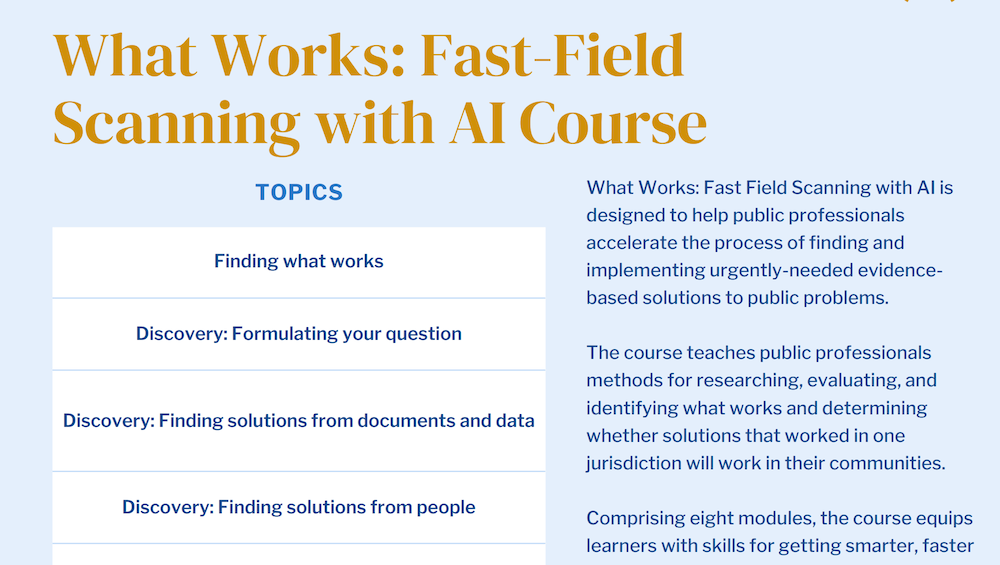
This course is designed to help public professionals accelerate the process of finding and implementing urgently-needed evidence-based solutions to public problems.
The study investigates how state agencies administering SNAP comply with Title VI of the Civil Rights Act by providing language access for individuals with limited English proficiency (LEP).
NYC's My File NYC and New Jersey's unemployment insurance system improvements demonstrate how successful digital innovations can be scaled across various programs, leveraging trust-building, open-source technology, and strategic partnerships.
This handbook provides local governments with practical guidelines, best practices, and ethical considerations for adopting and using AI tools, emphasizing transparency, human oversight, and risk management.
Through deeply reported case studies and insights from focus groups, this report provides an in-depth look at the impact of pandemic-era government spending on families.
This panel discussion from the Academy's 2025 Policy Summit explores the intersection of artificial intelligence (AI) and public benefits, examining how technological advancements are influencing policy decisions and the delivery of social services.
This publication explains the fundamentals of state IEE systems—including the technology, opportunities, risks, and stakeholders involved. It is a resource for state officials, advocates, funders, and tech partners working to implement these systems.
A central hub of guidance, standards, and supporting documentation explaining how UK public sector bodies should record and publish information about algorithmic systems to ensure transparency and accountability.