Led by the Digital Benefits Network in partnership with Public Policy Lab, the Digital Doorways research project amplifies the lived experiences of beneficiaries to provides new insights into people’s experiences with digital identity processes and technology in public benefits. This executive summary gives an overview of the project’s findings.
Led by the Digital Benefits Network in partnership with Public Policy Lab, the Digital Doorways research project amplifies the lived experiences of beneficiaries to provide new insights into people’s experiences with digital identity processes and technology in public benefits. This report details the project’s findings, directly highlighting the voices of beneficiaries through videos and photos.
Canada’s Digital Standards are a set of principles that guide how public servants design, build, and run government digital services so they’re user-centered, accessible, secure, open, and trustworthy.
This document is the Spanish-language version of the Model WIC Online Application. It provides a full set of translated application questions and instructions for applying to the Special Supplemental Nutrition Program for Women, Infants, and Children (WIC).
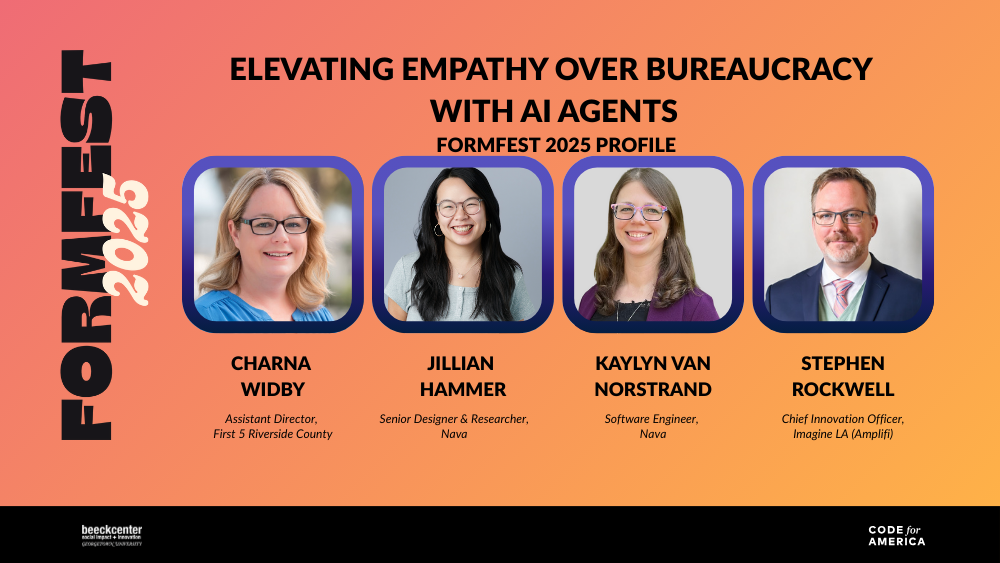
This FormFest profile highlights Riverside County’s pilot of AI-powered interviews that streamline benefit applications, reducing bureaucratic burden on families in crisis while freeing caseworkers to focus on human connection.
This framework provides a structured approach for ensuring responsible and transparent use of AI systems across government, emphasizing governance, data integrity, performance evaluation, and continuous monitoring.
This report outlines best practices for developing transparent, accessible, and standardized public sector AI use case inventories across federal, state, and local governments
This report examines how governments use AI systems to allocate public resources and provides recommendations to ensure these tools promote equity, transparency, and fairness.
A virtual event showcasing how one city applied technology, including artificial intelligence, to streamline municipal code administration and reduce bureaucratic friction.
A central hub of guidance, standards, and supporting documentation explaining how UK public sector bodies should record and publish information about algorithmic systems to ensure transparency and accountability.