A guiding framework for designing, building, buying, and maintaining digital government services in Nova Scotia that emphasizes trust, inclusivity, sustainability, and public value.
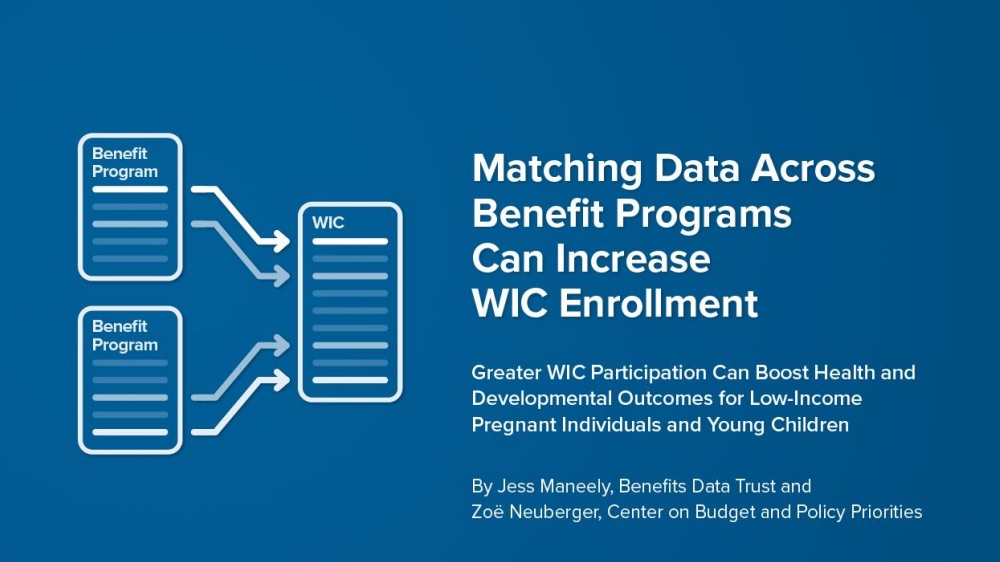
This case study highlights how states used data sharing and targeted outreach to boost WIC enrollment among Medicaid and SNAP participants, improving program reach and reducing disparities.
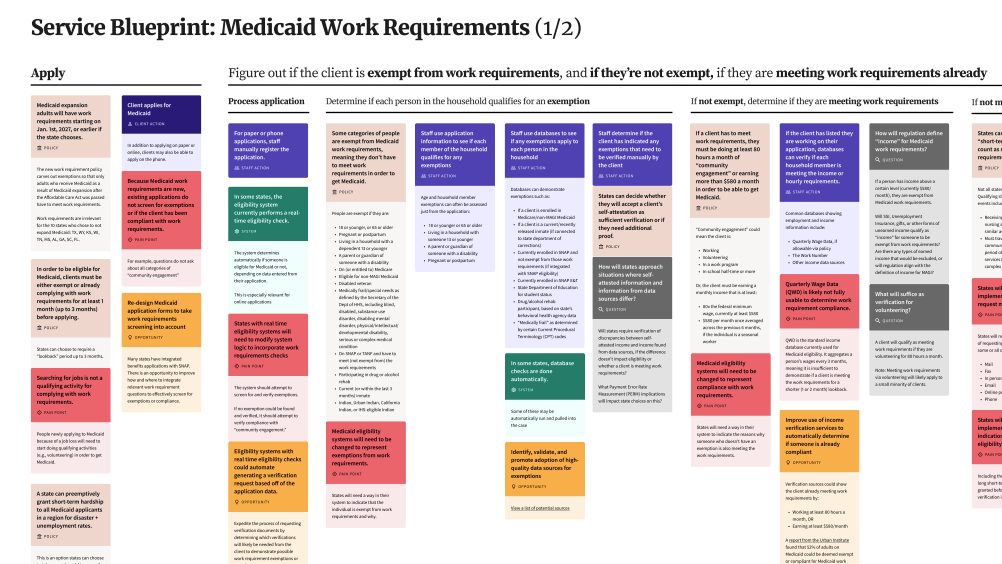
This 11x17 service blueprint visualizes every step, system, and policy decision involved in implementing Medicaid work requirements under H.R. 1—from application to renewal—identifying pain points, questions, and opportunities for states to streamline and humanize the process
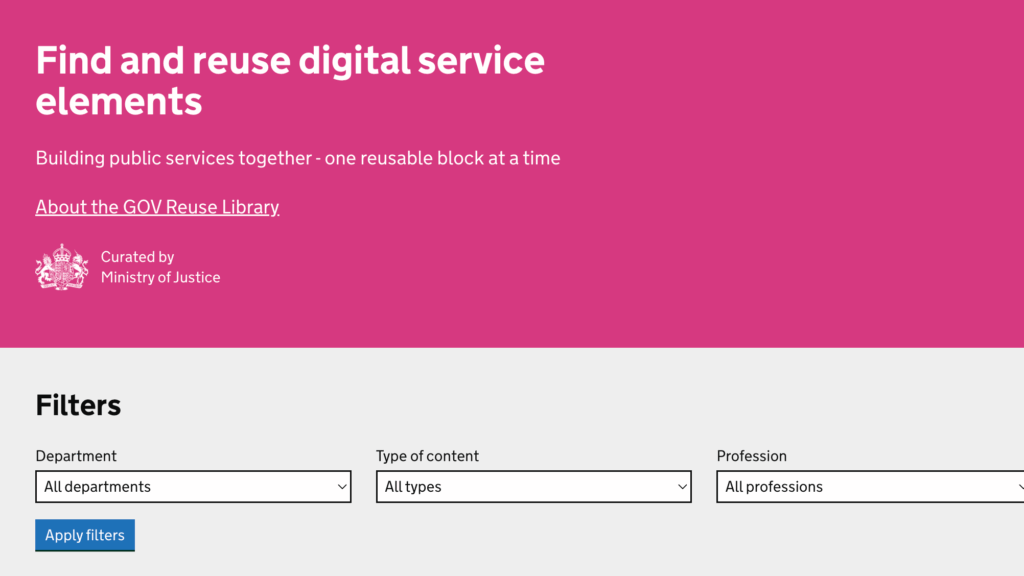
This is a government catalog of reusable digital service components, templates, and patterns designed to help public sector teams build services more efficiently and consistently.
A report that reviews what has been learned from guaranteed income pilot projects in Massachusetts and situates those findings within the broader national evidence base.
An event recap from one of FormFest 2024's breakout sessions featuring speakers from the Canadian Digital Service and the National Head Start Association.
The article examines the participation of adults aged 50 and older in the Supplemental Nutrition Assistance Program (SNAP) in 2022, highlighting the program's role in reducing food insecurity and poverty among older adults, especially those with disabilities.