This article examines how the decentralization of safety net programs after welfare reform has led to growing inequality in benefit generosity and access across U.S. states.
A guide to navigating New York City’s public services. It was made with and for families of students living in temporary housing or experiencing homelessness and the NYC Department of Education’s Office of Students in Temporary Housing (STH).
The COVID Response Project was funded by the W.K. Kellogg Foundation to document the real-time impacts of the COVID-19 pandemic on state human services agencies and capture state perspectives on lessons learned to guide future federal policymaking and state implementation. The project was completed by the American Public Human Services Association (APHSA) in partnership with the U.S. Department of Health and Human Services, Administration for Children and Families (ACF), Office of Regional Operations. Insights from the report reflect information obtained through APHSA’s on-going support of state human services agencies’ COVID-19 response efforts as well as a series of in-depth interviews with executive leadership of the 14 state health and human services agencies in ACF’s Region 1 (New England) and Region 4 (Southeast) areas.
American Public Human Services Association (APHSA)
The New Mexico Human Services Department and Department of Health, as part of the Coordinating SNAP & Nutrition Supports program, leveraged data sharing to align SNAP, Medicaid, TANF, and WIC.
American Public Human Services Association (APHSA)
This report explores how public benefit systems can better support young adults by addressing the barriers they face in accessing and maintaining vital services like SNAP, Medicaid, and WIC.
This brief examines how state Temporary Assistance for Needy Families (TANF) programs adapted policies during the early stages of the COVID-19 pandemic to address emerging challenges.
This report examines how the U.S. federal government can enhance the efficiency and equity of benefit delivery by simplifying eligibility rules and using a Rules as Code approach for digital systems.
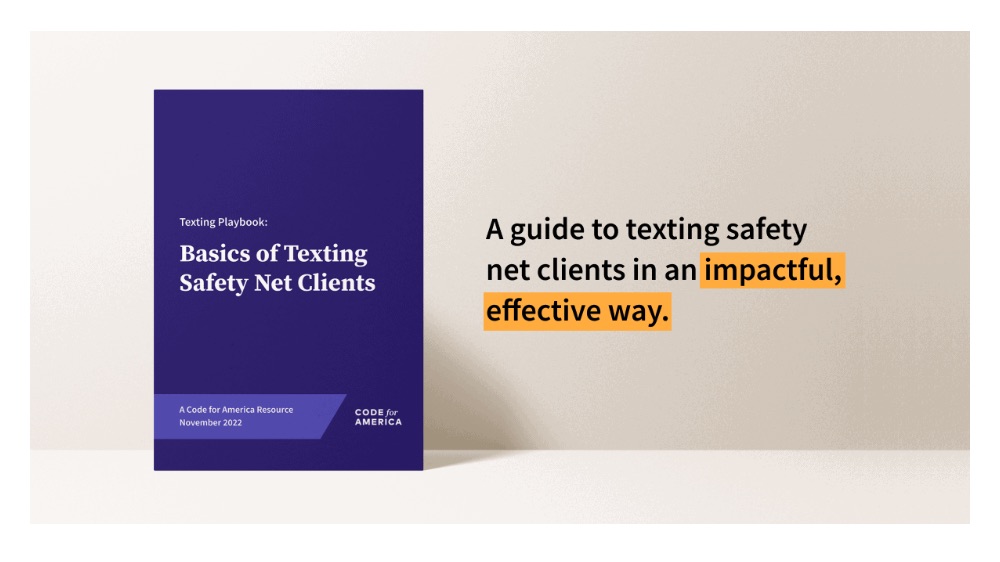
The Texting Playbook provides guidance and well-researched strategies to help state agencies implement texting in support of Medicaid, SNAP, WIC, and other benefits programs. It provides an overview of how to start texting clients; the types of messages to send, including real examples; Federal Communications Commision (FCC) policy guidance; how to encourage opt-ins and collect consent; how to avoid coming across as spam; and a cost analysis of texting.
The Temporary Assistance for Needy Families (TANF) Data Collaborative Pilot Initiative is a component of the TANF Data Innovation project. The 30-month pilot offered technical assistance and training to support cross-disciplinary teams of staff at eight state and county TANF programs in the routine use of TANF and other administrative data to inform policy and practice.
The Temporary Assistance for Needy Families (TANF) Data Collaborative Pilot Initiative is a component of the TANF Data Innovation project. The 30-month pilot offered technical assistance and training to support cross-disciplinary teams of staff at eight state and county TANF programs in the routine use of TANF and other administrative data to inform policy and practice.
This guide outlines how states can use TANF funds to provide direct cash assistance to families, particularly through flexible mechanisms like nonrecurrent short-term benefits (NRSTs).