This guide highlights best practices in benefits access, showcasing how Michigan, New York City, and San José improve accessibility through plain language, multilingual translation, resident co-creation, and technology tools.
This resource highlights strategies for integrating benefits renewals and correspondence, potentially reducing administrative burdens for both clients and caseworkers.
Article describing the “time tax,” the costs to people applying or benefits in terms of spending substantial amounts of time navigating user-unfriendly interfaces. The article describes the necessity of simplifying safety-net programs and cross-coordinating across various social service programs.
This resource provides guidance on streamlining enrollment across public benefit programs to improve efficiency, reduce administrative burdens, and enhance access for eligible individuals and families.
The Urban Institute's report outlines actionable approaches for state governments and organizations to enhance the accessibility and retention of public benefit programs, focusing on service delivery, policy reforms, and technological advancements.
This guide provides practical insights for benefits administrators on redesigning benefits systems using human-centered design to ensure all eligible residents can access crucial social safety net resources.
This charter defines the goals, scope and organization of the “Integrated Service Delivery (ISD) Product Office” charged with planning, implementing, governing, and managing all business transformation, change, and systems modernization efforts related to integrated service delivery, focused initially on integrated eligibility and enrollment.
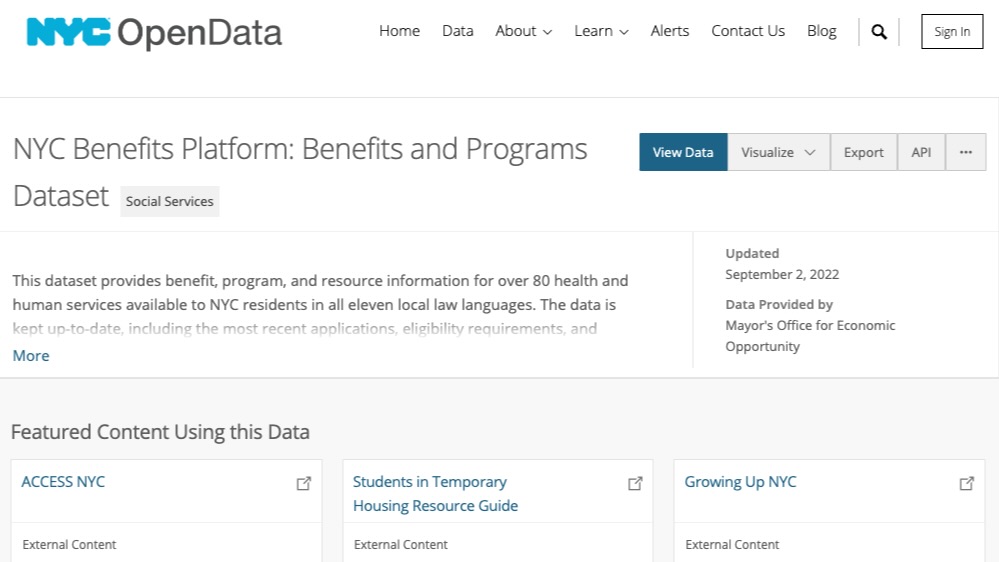
Data provided by the NYC Mayor’s Office for Economic Opportunity regarding benefit, program, and resource information for over 80 health and human services available to NYC residents in all eleven local law languages.
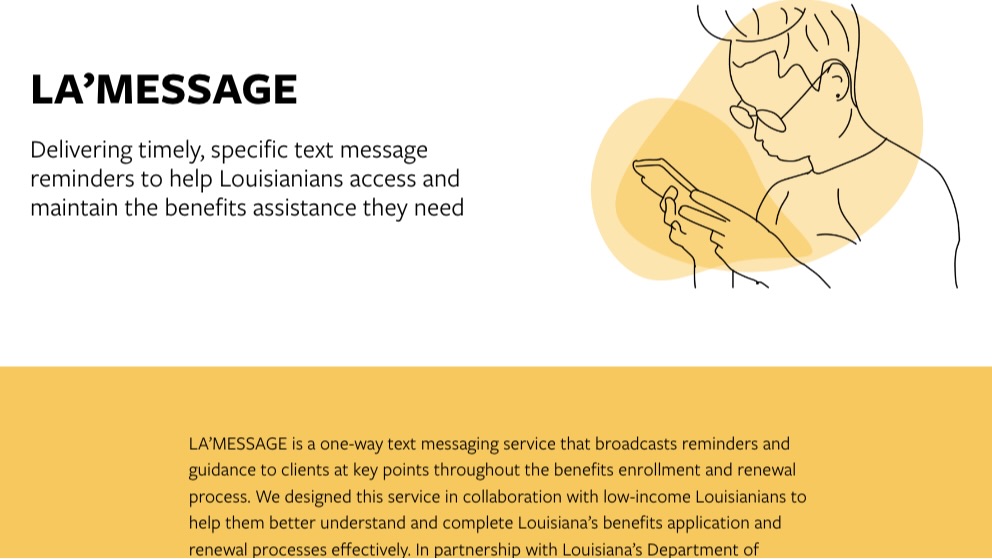
LA’MESSAGE is a one-way text messaging service developed by Code for America in partnership with Louisiana to broadcast reminders and guidance to residents enrolled in and eligible for SNAP, Medicaid, TANF, and WIC at key points throughout the benefits enrollment and renewal process.
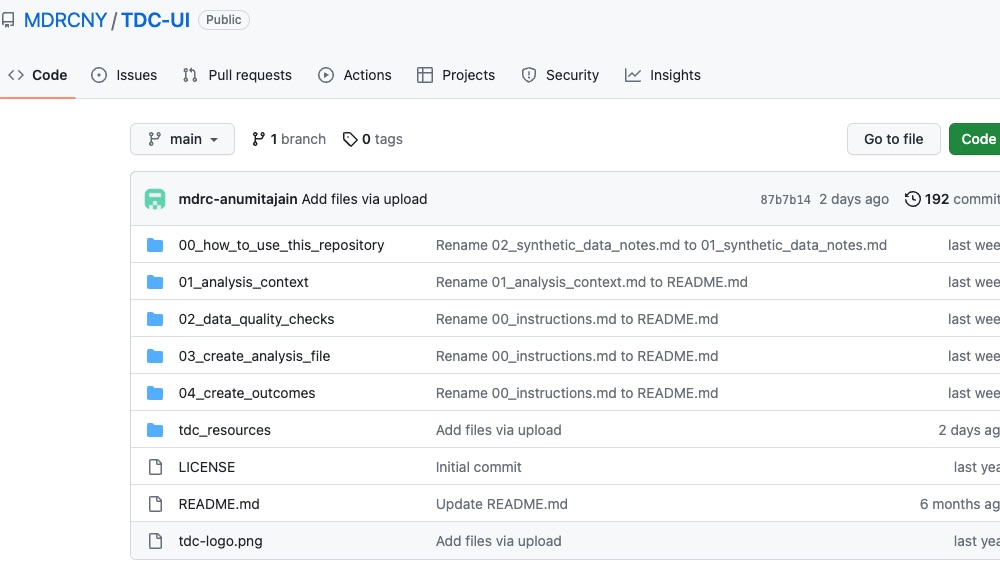
This GitHub repository includes resources that users of the UI wage data toolkit may find helpful. It covers a variety of topics, including equity, data security, programming, and data QC tips. It also serves as a place for our team to continue to post information that the TANF Data Collaborative (TDC) pilot sites found useful during our partnerships with them.
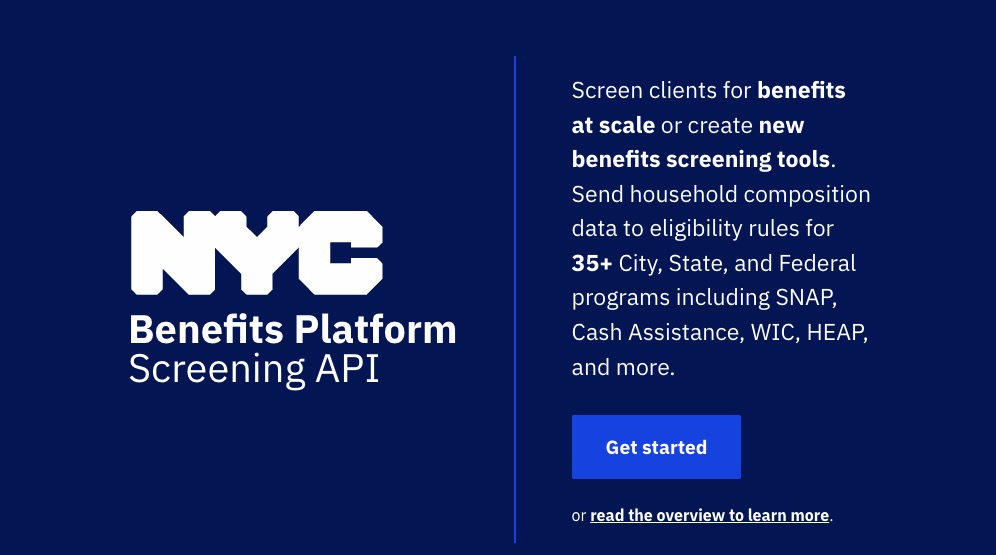
The NYC Benefits Screening API provides machine-readable calculations and criteria for benefits screening that power the ACCESS NYC screening questionnaire.