Implementing client-centered communication strategies, such as clear language and digital reminders, can significantly reduce churn in public benefit programs, ensuring eligible individuals maintain continuous access to essential services.
This webinar addressed the near completion of the Medicaid continuous coverage unwinding, highlighting a net decrease of almost 10.6 million enrollees, including over 4 million children, and discussed next steps for state compliance, best practices, and outreach strategies to reconnect eligible individuals who lost coverage.
In response to exploding demand for social services during COVID-19, the Louisiana Department of children and Family services implemented text-message alerts and reminders for the state’s entire SNAP caseload, launched a text-based public campaign to help people understand and apply for SNAP benefits, and hired SNAP recipients to provide client feedback on communications and policy decisions.
Ruling from the FCC granting the U.S. Department of Health and Human Services (HHS) to confirm that federal and state governmental agencies working in conjunction with local governments, governmental contractors, and managed care entities acting under contract with state governments may, under certain circumstances, make autodialed and prerecorded or artificial voice calls or send autodialed text messages to raise awareness of the eligibility and enrollment requirements for these governmental health care programs without violating the Telephone Consumer Protection Act (TCPA).
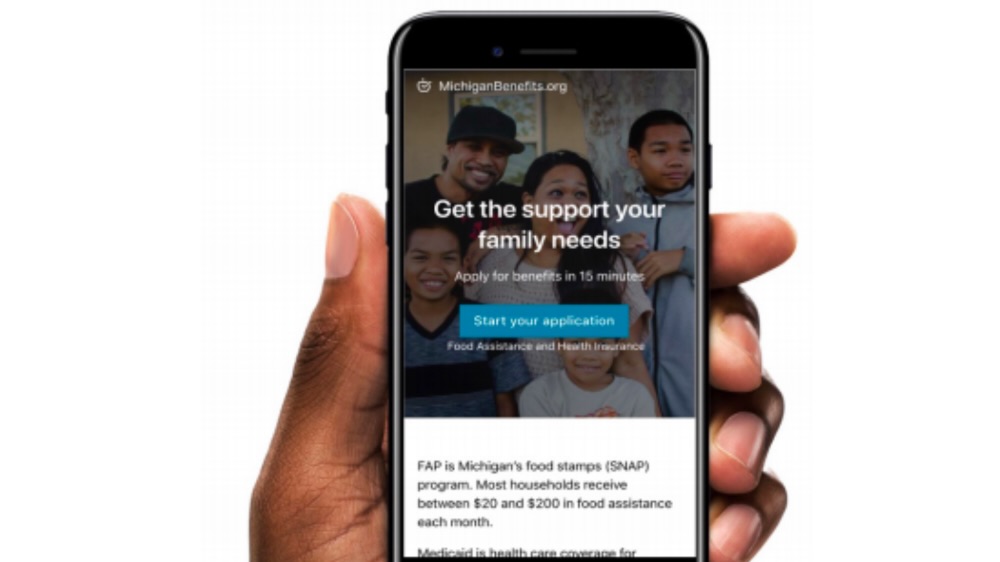
Code for America helped expand GetCalFresh (a service that guides Californians through the SNAP application process and helps government deliver food assistance to people in need) from a small pilot into a statewide service. They also recently concluded a similar pilot in Michigan along with Civilla and the Michigan Department of Health and Human Services.
Technology that automates different processes can save time for caseworkers and constituents, but it can also significantly reduce the transparency of government operations. This paper describes how Pennsylvania advocates addressed the low rate of automated Medicaid renewals.
There were over 25 million Medicaid disenrollments in 2023, but national enrollment remained significantly above pre-pandemic levels at over 56 million, with notable state-level variations and near-recovery of child enrollment.
This report provides an early 2025 snapshot of state Medicaid and CHIP policies as they return to normal operations post‑pandemic, focusing on eligibility, enrollment, and renewal processes.
This report analyzes how administrative burdens in SNAP caused one in eight working-age adults to lose benefits in 2024, with future federal policy changes expected to worsen disruptions
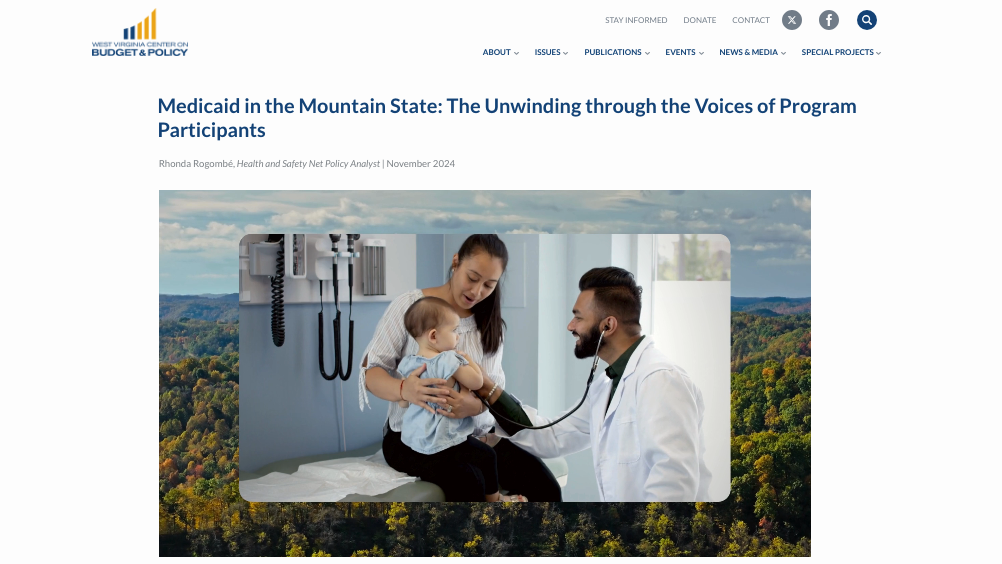
This resource examines the role of Medicaid in West Virginia and documents how the post-pandemic Medicaid “unwinding” process affected residents, highlighting participant experiences and the program’s importance for health and economic stability.
Code for America’s Integrated Benefits Initiative has been working in partnership with the State of Colorado to demonstrate how user-centered approaches lead to measurably better delivery of safety net programs. This article describes their work with the state of Colorado in simplifying how clients report common life changes that can affect their eligibility.