This report explores how state and local agencies can enhance customer service in health and human services by implementing technologies such as web-based tools, mobile applications, and call center innovations, aiming to streamline processes and improve client interactions.
This webinar addressed the near completion of the Medicaid continuous coverage unwinding, highlighting a net decrease of almost 10.6 million enrollees, including over 4 million children, and discussed next steps for state compliance, best practices, and outreach strategies to reconnect eligible individuals who lost coverage.
The report discusses how state Medicaid agencies can enhance efficiency and maintain coverage for eligible individuals by implementing ex parte renewals, which automatically renew beneficiaries' coverage using existing data without requiring action from enrollees.
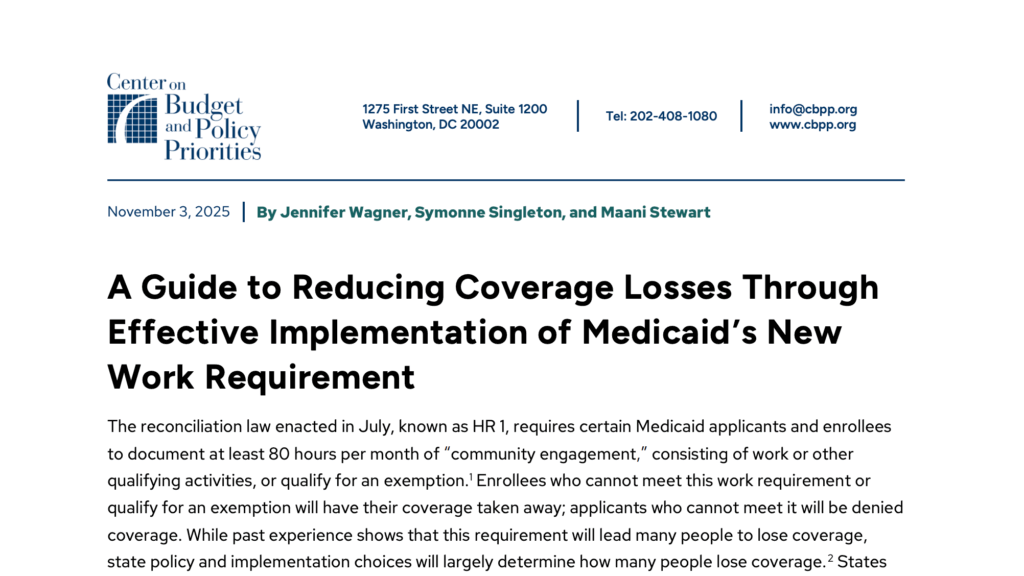
A detailed guide outlining how states can minimize coverage losses and administrative burden while implementing new Medicaid work requirements established under the 2025 federal reconciliation law.
This report outlines strategies states can adopt to improve access to SNAP, Medicaid, and WIC programs by leveraging policy options, data coordination, and streamlined service delivery.
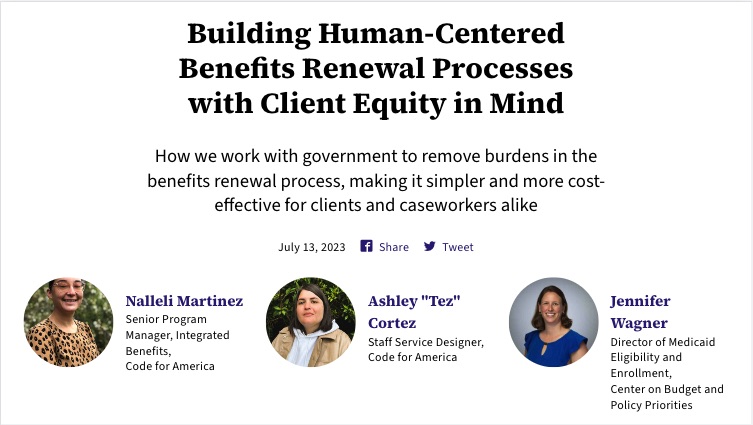
The Building Human-Centered Benefits Renewal Processes with Client Equity in Mind article by Code for America discusses the implementation of ex parte renewals in Minnesota's Medicaid program to streamline benefit renewals for aged, blind, and disabled populations, reducing administrative burdens and enhancing equity.
This report examines how implementing Asset Verification Systems (AVS) can streamline Medicaid eligibility determinations for seniors and individuals with disabilities by automating the verification of applicants' financial assets.
This report explores how state and local agencies can enhance customer service in health and human services by implementing technologies such as web-based tools, mobile applications, and call center innovations, aiming to streamline processes and improve client interactions.
The Center on Budget and Policy Priorities (CBPP) report discusses how reducing administrative burdens in Medicaid can enhance health outcomes and promote racial equity.
This report outlines critical actions states should take to maintain Medicaid coverage as the COVID-19 Public Health Emergency (PHE) concludes, aiming to prevent widespread loss of health insurance among eligible individuals.