An overview video describing the Digital Identity Risk Management process outlined in NIST's Digital Identity Guidelines, which organizations can use to develop a risk-based approach to identity management.
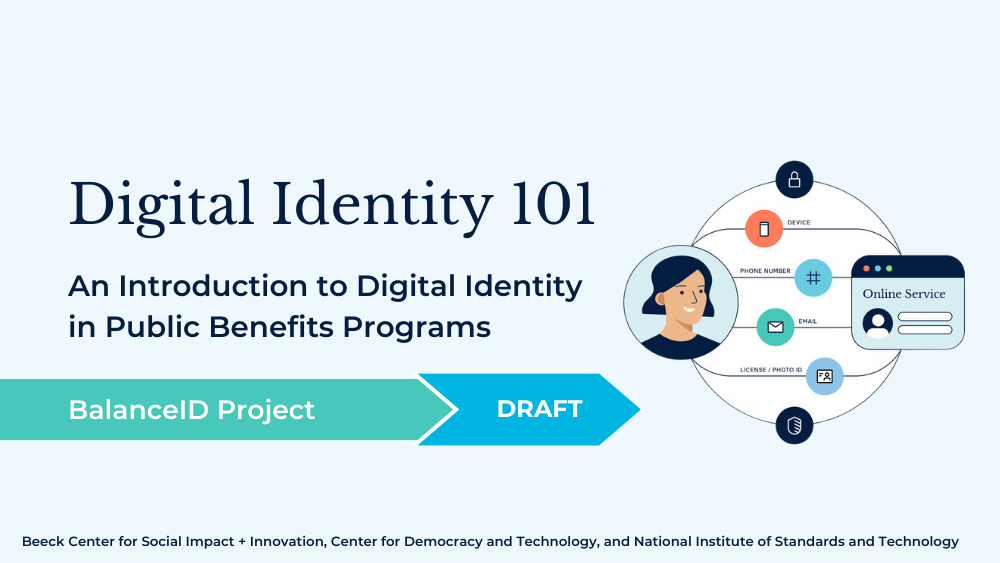
This introductory guide explains the core concepts of digital identity and how they apply to public benefits programs. This guide is the first part of a suite of voluntary resources from the BalanceID Project: Enabling Secure Access and Managing Risk in SNAP and Medicaid.
This analysis explores the dual nature of mobile state IDs, highlighting their potential to enhance digital identity verification while raising significant privacy and equity concerns.
This article advises government agencies to prioritize cybersecurity methods over AI-driven approaches when combating identity fraud in benefits programs, highlighting potential risks that automated systems pose to legitimate applicants.
This resource provides state agencies and their implementation partners with context on how and why to conduct a Digital Identity Risk Management (DIRM) process, as well as a new spreadsheet-based tool to guide agency teams through the process.
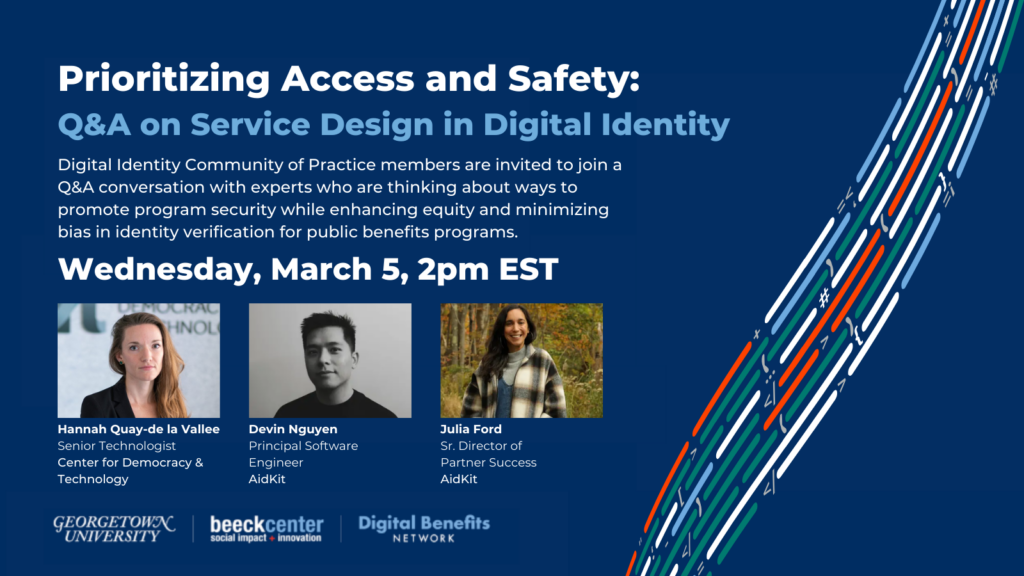
The Digital Benefit Network's Digital Identity Community of Practice held a session to hear considerations from civil rights technologists and human-centered design practitioners on ways to ensure program security while simultaneously promoting equity, enabling accessibility, and minimizing bias.
A report that defines what effective “human oversight” of AI looks like in public benefits delivery and offers practical guidance for ensuring accountability, equity, and trust in algorithmic systems.
This post argues that for the types of large-scale, organized fraud attacks that many state benefits systems saw during the pandemic, solutions grounded in cybersecurity methods may be far more effective than creating or adopting automated systems.