This report provides an overview of artificial intelligence (AI), key policy considerations, and federal government activities related to AI development and regulation.
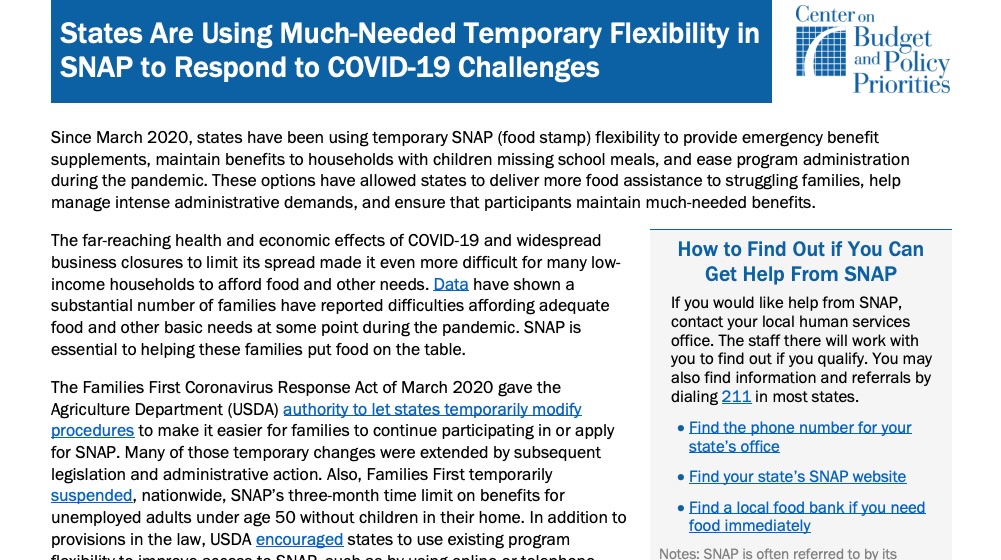
During the COVID-19 pandemic, states utilized temporary Supplemental Nutrition Assistance Program (SNAP) flexibilities to provide emergency benefits and maintain support for households with children missing school meals.
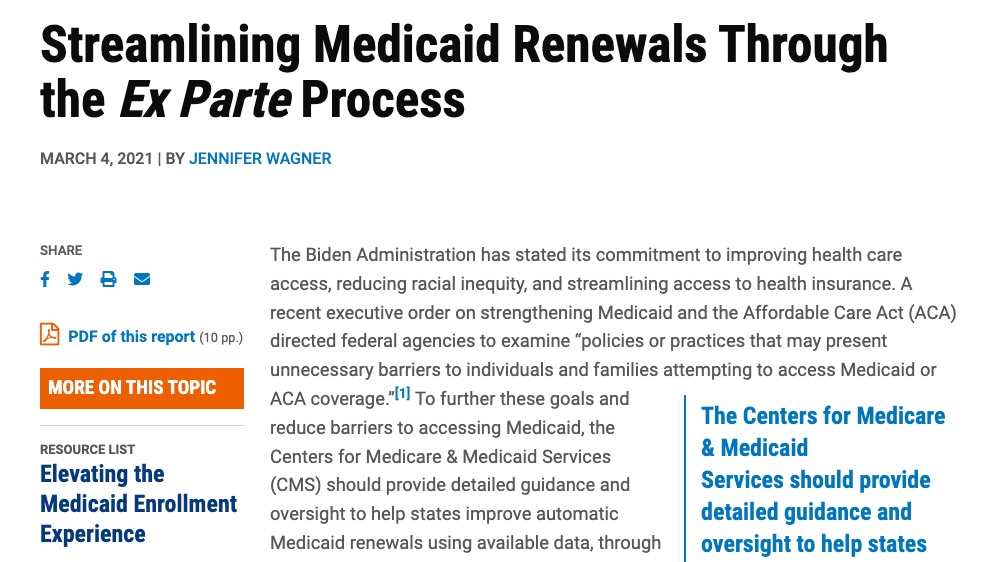
The report discusses how state Medicaid agencies can enhance efficiency and maintain coverage for eligible individuals by implementing ex parte renewals, which automatically renew beneficiaries' coverage using existing data without requiring action from enrollees.
Research identified five key obstacles that researchers, activists, and advocates face in efforts to open critical public conversations about AI’s relationship with inequity and advance needed policies.
The COVID Response Project was funded by the W.K. Kellogg Foundation to document the real-time impacts of the COVID-19 pandemic on state human services agencies and capture state perspectives on lessons learned to guide future federal policymaking and state implementation. The project was completed by the American Public Human Services Association (APHSA) in partnership with the U.S. Department of Health and Human Services, Administration for Children and Families (ACF), Office of Regional Operations. Insights from the report reflect information obtained through APHSA’s on-going support of state human services agencies’ COVID-19 response efforts as well as a series of in-depth interviews with executive leadership of the 14 state health and human services agencies in ACF’s Region 1 (New England) and Region 4 (Southeast) areas.
American Public Human Services Association (APHSA)
The Pandemic Electronic Benefits Transfer (P-EBT) program was launched as an effort to address the loss of access to free and reduced-price school meals due to widespread school closures at the onset of the COVID-19 pandemic. As schools reopened in a shifting mix of fully virtual, hybrid, and inperson formats and families lacked consistent access to school meals, these benefits were extended through the 2020–21 school year and were highly valuable to families in buffering the full extent of food insecurity they may have faced during this uncertain time. However, the complexity of administering this program was a fundamental barrier in providing timely support to families, who ultimately went without benefits for at least half of the school year. In this report, we dive into the challenges state administrators faced in launching this new program during the 2020–21 school year and reflect on considerations for the future.
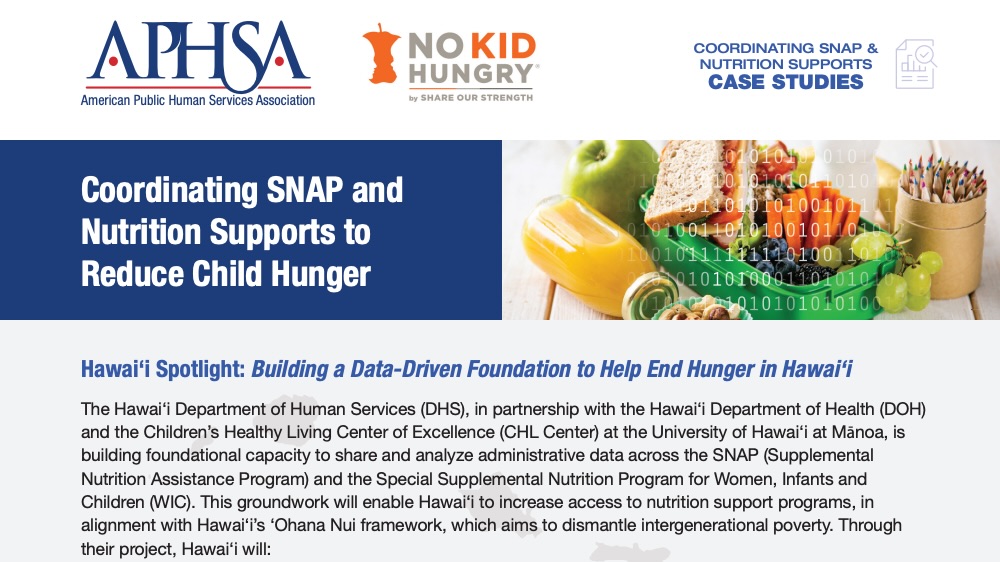
The Hawai‘i Department of Human Services (DHS), in partnership with the Hawai‘i Department of Health (DOH) and the Children’s Healthy Living Center of Excellence (CHL Center) at the University of Hawai‘i at Mānoa, is building foundational capacity to share and analyze administrative data across the SNAP (Supplemental Nutrition Assistance Program) and the Special Supplemental Nutrition Program for Women, Infants and Children (WIC). This groundwork will enable Hawai‘i to increase access to nutrition support programs, in alignment with Hawai‘i’s ‘Ohana Nui framework, which aims to dismantle intergenerational poverty.
American Public Human Services Association (APHSA)
Nava partnered with California's Employment Development Department (EDD) to rapidly develop two cloud-based digital services, enhancing unemployment benefit access during the COVID-19 pandemic.
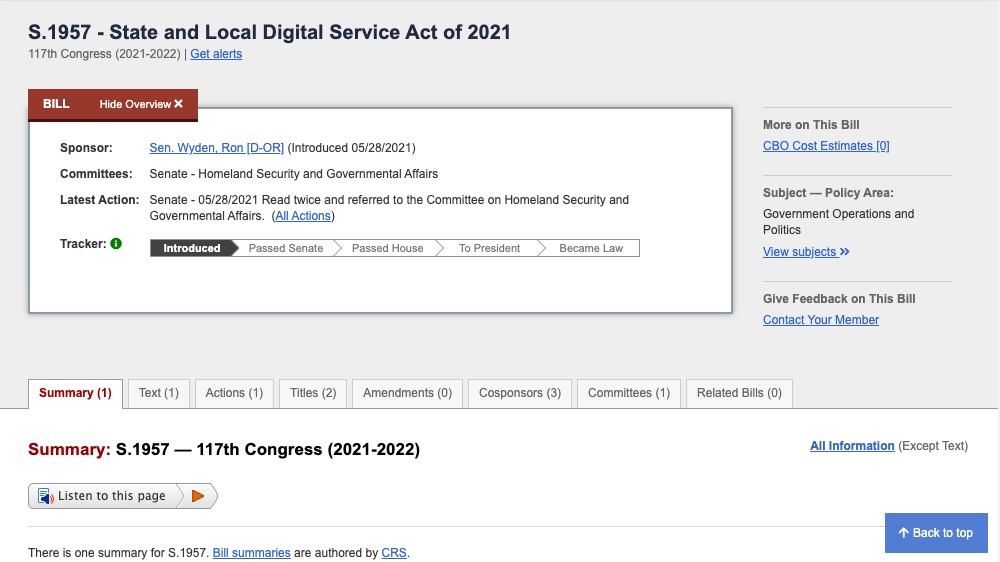
This bill provides support for the establishment of digital services in state, county, local, and tribal governments. Specifically, the bill directs the General Services Administration (GSA) to establish (1) a Digital Service Grant Program to provide grants to such governments to establish or support a digital service team, and (2) a Digital Service Planning Grant Program to provide grants to create a plan to establish a digital service team. The GSA must (1) report periodically to Congress and make publicly available on its website information regarding the grants, and (2) issue guidance to streamline the procurement of federal services and technology by states, local governments, and Indian tribes.