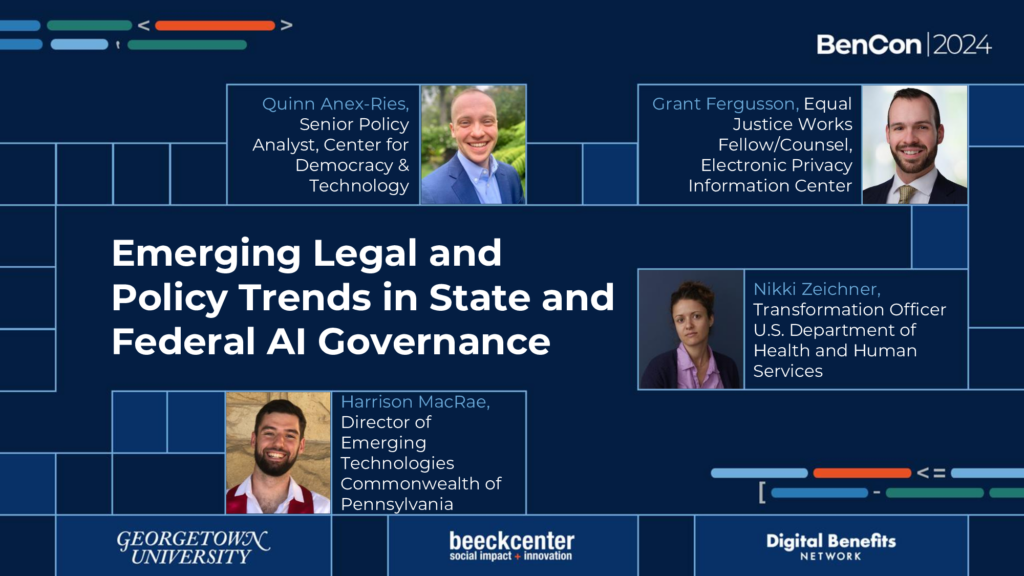
BenCon 2024 explored state and federal AI governance, highlighting the rapid increase in AI-related legislation and executive orders. Panelists emphasized the importance of experimentation, learning, and collaboration between government levels, teams, agencies, and external partners.
This playbook shares best practices and innovations related to data and analytical approaches for improving grant outcomes. Equitable data practices improve the effectiveness and efficiency of federal program dollars through better resource allocation and more informed decision-making.
This presentation was recorded at the Texting and Notification Working Group meeting coordinated in part by the Aspen Institute Financial Security Program on February 28, 2024.
Sheev Davé, Product Manager at Notify.gov (GSA), provides an overview of what makes an effective multilingual translation through the principles of designing tools that have the ability to have conversations, meeting communities where they are, use of plain language and prioritize tricky topics, key life events and using trusted delivery sources.
This blog discusses the importance of phased rollouts for government software products, emphasizing the benefits of starting small, gathering real-world user feedback, and resolving issues before a full public release.
This "Page Templates" section offers pre-built, responsive page layouts that combine various components to ensure consistent, accessible, and user-friendly experiences across Government of Canada digital services.
This tip sheet provides guidance for child welfare and social service agencies on how to effectively and respectfully collect SOGIE (Sexual Orientation, Gender Identity, and Expression) data.
U.S. Department of Health and Human Services (HHS)
The report documents how grantees implemented specialized Transitional Living Programs for LGBTQ youth and young adults aging out of foster care, highlighting approaches, challenges, and lessons learned.