This report summarizes 19 SNAP policy options (in effect as of Oct. 1, 2023) and waivers (implemented as of July 1, 2023) chosen by SNAP state agencies (50 states, the District of Columbia, Guam, and Virgin Islands) in federal fiscal year (FY) 2023.
This resource allows policymakers, employers, benefits providers, and researchers assess benefits performance for constituents and identify opportunities in market and policy innovation to ensure equitable benefits distribution.
This report describes key elements of the American Rescue Plan Act and how it would reduce the projected poverty rate for 2021. Various projections regarding the effects of the policy are described in this report.
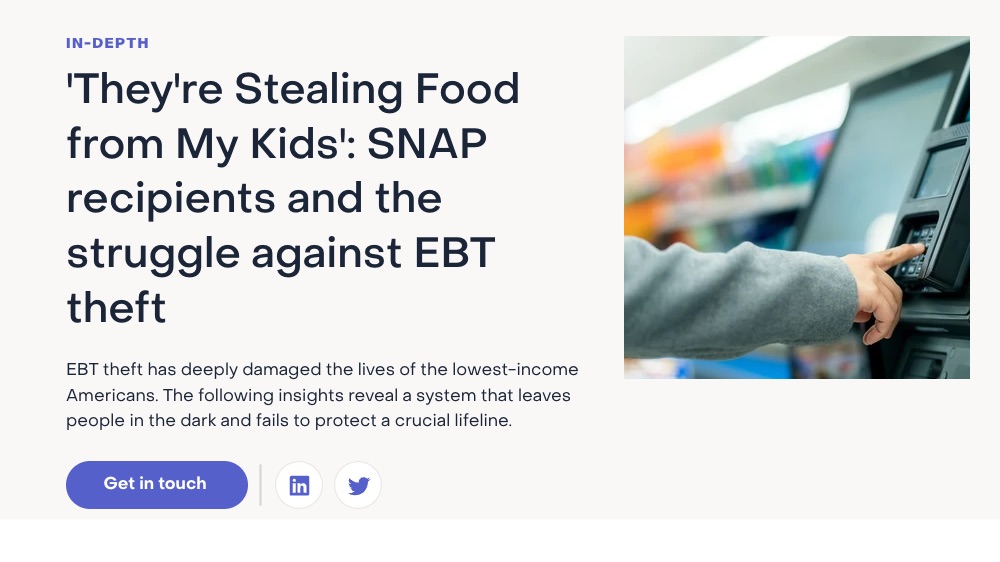
EBT theft has deeply damaged the lives of the lowest-income Americans. The following insights reveal a system that leaves people in the dark and fails to protect a crucial lifeline.
This study examines how bureaucratic interactions differ among public assistance programs—WIC, SNAP, and Medicaid—highlighting variations in participant experiences and the psychological costs associated with each.
This report explores Michigan’s implementation of the Pandemic Electronic Benefit Transfer (P-EBT) program. Drawing on interviews from individuals within the Michigan Department of Health and Human Services and input from SNAP participants via surveys distributed using the Fresh EBT app, this report provides insights into the strategies that enabled Michigan to roll out an entirely new program quickly and effectively.
This study examines how individuals assess administrative burdens and how these views change over time within the context of the Special Supplemental Nutrition Assistance Program for Women, Infants, and Children (WIC).